
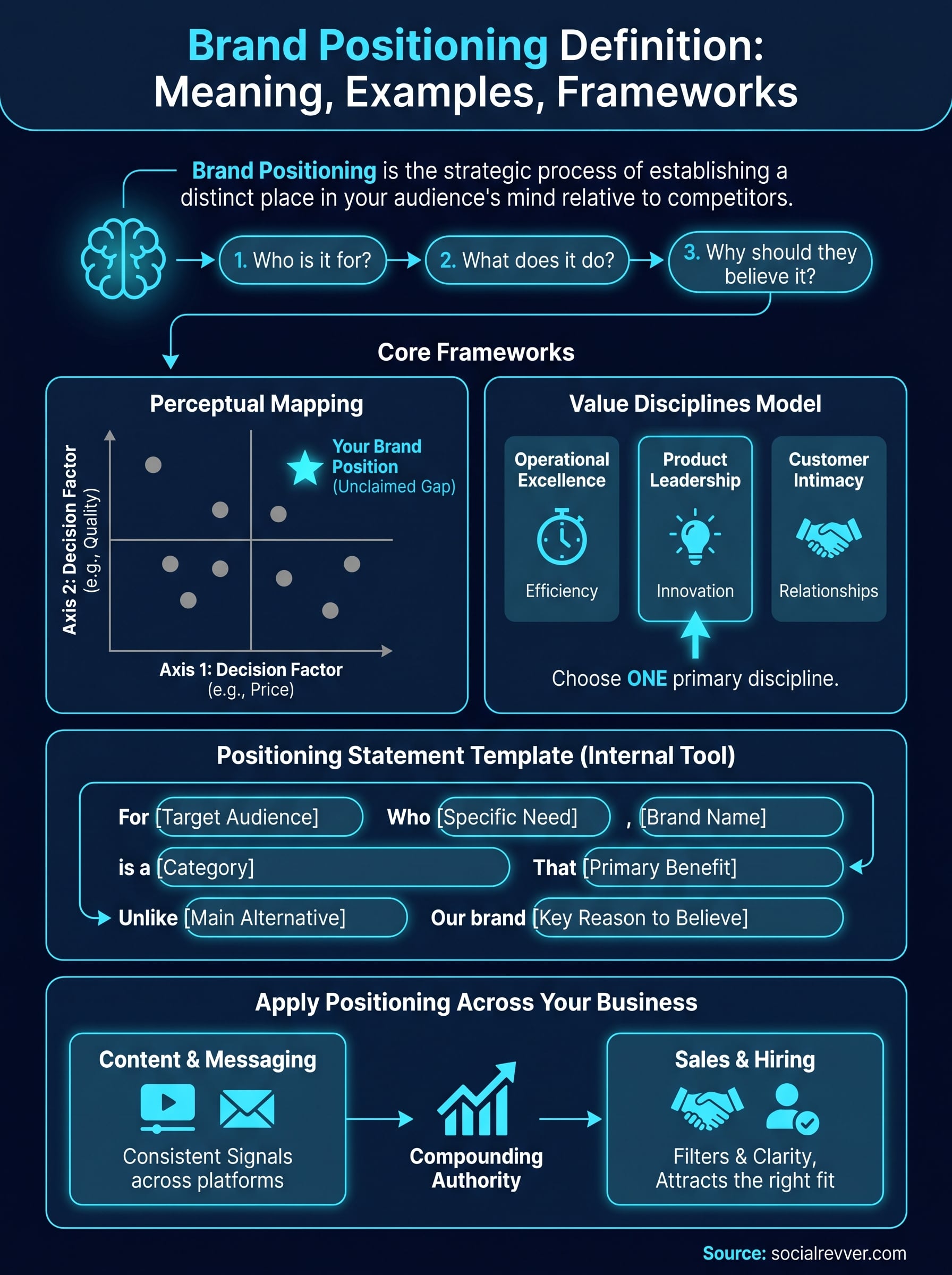
Every founder, creator, or business owner competing for attention is making a positioning choice, whether they realize it or not. Brand positioning definition refers to the strategic process of establishing a distinct place in your audience's mind relative to competitors. It's the reason someone picks you over the next option, and it shapes every piece of content, messaging, and offer you put out.
Here's the problem: most brands skip this step entirely. They jump straight into content production, ad spend, or social media without first answering the fundamental question, what do we stand for, and why should anyone care? That's a recipe for blending in. At SocialRevver, we build content systems that turn positioning into a compounding growth asset, because even the most engineered attention engine falls flat without a clear brand identity behind it.
This article breaks down what brand positioning actually means, why it matters for long-term authority, the frameworks professionals use to nail it, and real examples you can study. By the end, you'll have a working understanding of positioning strategy and the tools to apply it to your own brand, not just theory, but something actionable.
What brand positioning means in marketing
Brand positioning is the deliberate act of defining where your brand sits in a competitive market and, more importantly, in the minds of your target audience. The formal brand positioning definition used in marketing is this: a strategic framework that identifies a unique, credible, and relevant place for your brand relative to alternatives. It's not your logo, tagline, or color palette. Those are expressions of your positioning, not the positioning itself. The real work happens before any of that, when you decide what problem you solve, for whom, and why you do it better than anyone else.
Where the concept comes from
Positioning as a discipline took shape in the 1970s when Al Ries and Jack Trout argued in a series of articles, later formalized in their book Positioning: The Battle for Your Mind, that marketing success depends on occupying a distinct mental space in the customer's mind, not on product superiority alone. Their core argument was that the human brain resists complexity and defaults to ranking options in simple hierarchies. If your brand doesn't own a clear and specific position, someone else fills that slot, and you get filtered out. That insight has held up because human psychology hasn't changed.
The brand that wins is rarely the best product; it's the one people remember first for a specific thing.
What positioning actually defines
Positioning answers three questions your audience asks unconsciously: who is this for, what does it do, and why should I believe it? When you answer all three with precision and consistency, your brand becomes easy to recognize, recall, and recommend. When you leave those answers vague, you force potential customers to make assumptions, and those assumptions are usually wrong or forgettable.
Your positioning also determines what you say no to. A brand that claims to serve everyone, solve every problem, and beat every competitor on every dimension ends up meaning nothing to anyone. Specificity is the mechanism that makes positioning work. The narrower and more credible your claim, the stronger the mental foothold you create. This is why category leaders in any market, from software to fitness to financial services, tend to own one clear idea rather than a long list of benefits.
Why brand positioning matters
Strong brand positioning directly affects whether your audience chooses you or your competitor. Without a clear position, your content, offers, and messaging pull in different directions, and buyers get confused. Confused buyers don't convert. They move on to whoever communicates their value most clearly. Positioning is what makes every marketing dollar and every hour of content production more effective, because it gives all of it a single direction to point toward.
It determines how you compete
Most markets aren't won on price or features alone. They're won on perceived relevance and differentiation. When your positioning is sharp, you stop competing on price and start competing on fit. Your ideal audience self-selects toward you because your brand speaks directly to their specific situation. The clearest application of the brand positioning definition is this: it's the filter that attracts the right people and repels the wrong ones, saving you time, money, and energy on audiences that were never going to convert anyway.
Positioning doesn't just help you stand out; it changes who you attract in the first place.
It creates compounding authority over time
Every piece of content, every campaign, and every customer interaction either reinforces or dilutes your position. When those signals align, your brand authority compounds. People start associating your name with a specific outcome or category, and that association becomes harder for competitors to displace. This is why founders and business owners who maintain consistent positioning across platforms see their inbound lead quality improve over time. Inconsistency forces your audience to re-evaluate who you are every time they encounter you, which resets the recognition and trust you've worked to build.
Core frameworks for positioning
Once you understand what the brand positioning definition requires, you need a structured method to find your position. Frameworks give you a repeatable way to analyze your market, identify gaps, and make a deliberate positioning choice rather than guessing your way through it.
Perceptual mapping
Perceptual maps plot competitors along two axes that represent the most important decision factors for your audience, such as price versus quality or broad versus specialized. You place your brand and your competitors on the map to identify where open space exists that is both unclaimed and genuinely valued by your target market. The goal is to find a position your competitors have overlooked.
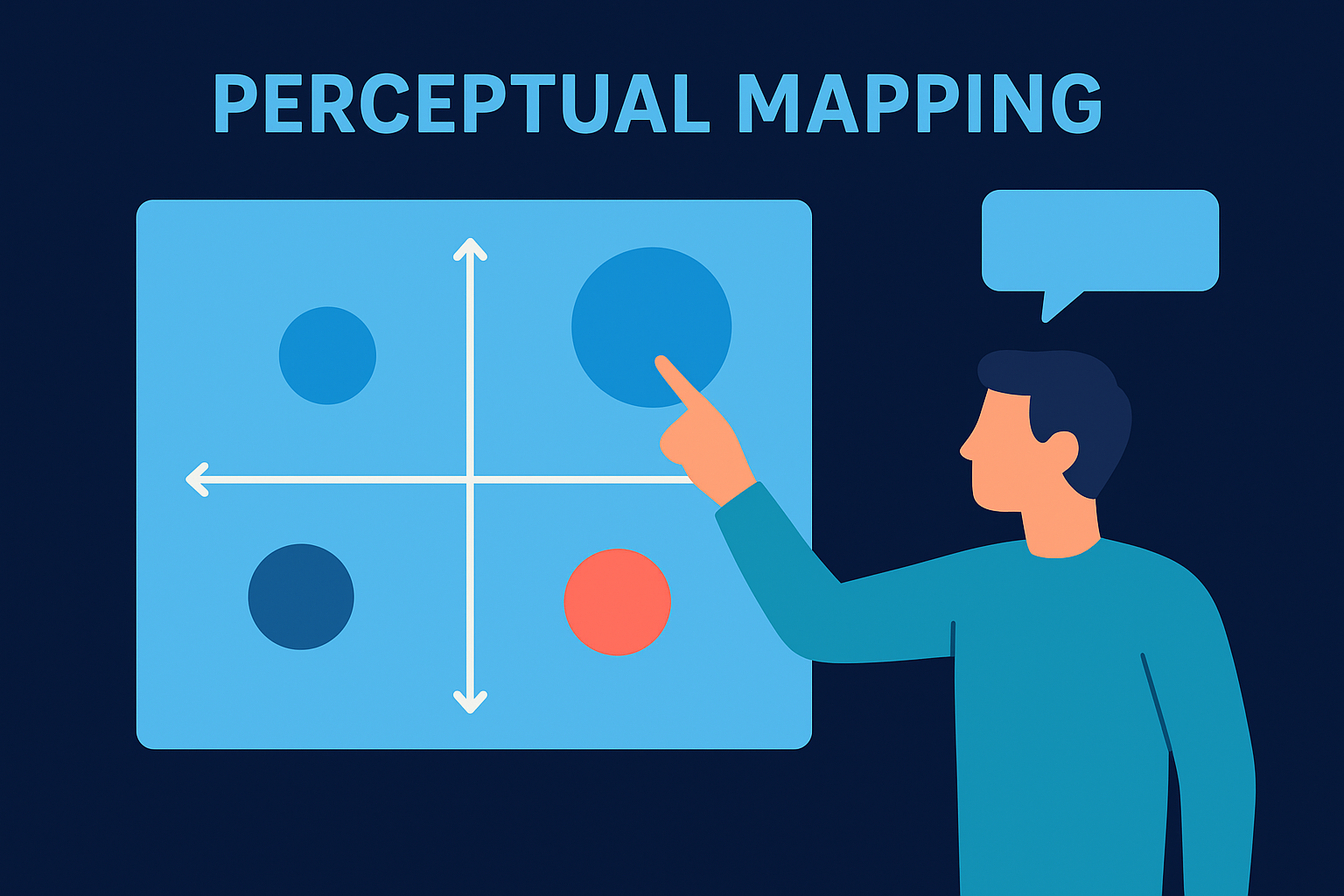
The most defensible position isn't the most obvious one; it's the gap competitors have ignored that your audience actually needs filled.
Your two axes should reflect what your specific audience uses when making a real purchasing decision. Generic attributes produce a generic map, which means you'll only find crowded positions everyone is already fighting over rather than a gap you can realistically own.
The value disciplines model
Developed by Michael Treacy and Fred Wiersema, this framework argues that leading brands consistently excel in one of three disciplines: operational excellence, product leadership, or customer intimacy. Trying to lead in all three stretches your resources and dilutes your message. Choosing one primary discipline and building your brand story around it gives your audience a concrete reason to select you over competitors.
- Operational excellence: compete on efficiency, consistency, and price
- Product leadership: compete on innovation and superior performance
- Customer intimacy: compete on personalization and deep audience relationships
How to write a brand positioning statement
A positioning statement is a one- to two-sentence internal tool that forces you to articulate the core of the brand positioning definition in concrete terms. It's not ad copy or a tagline. It's a working reference document your team uses to evaluate every message, offer, and campaign against a single standard before anything goes public.
The standard template
Most positioning statements follow a proven four-part structure that covers your target audience, the category you compete in, your primary benefit, and the reason to believe that benefit. You fill in each component based on the research and framework work you've already done, not based on how you wish your brand was perceived.
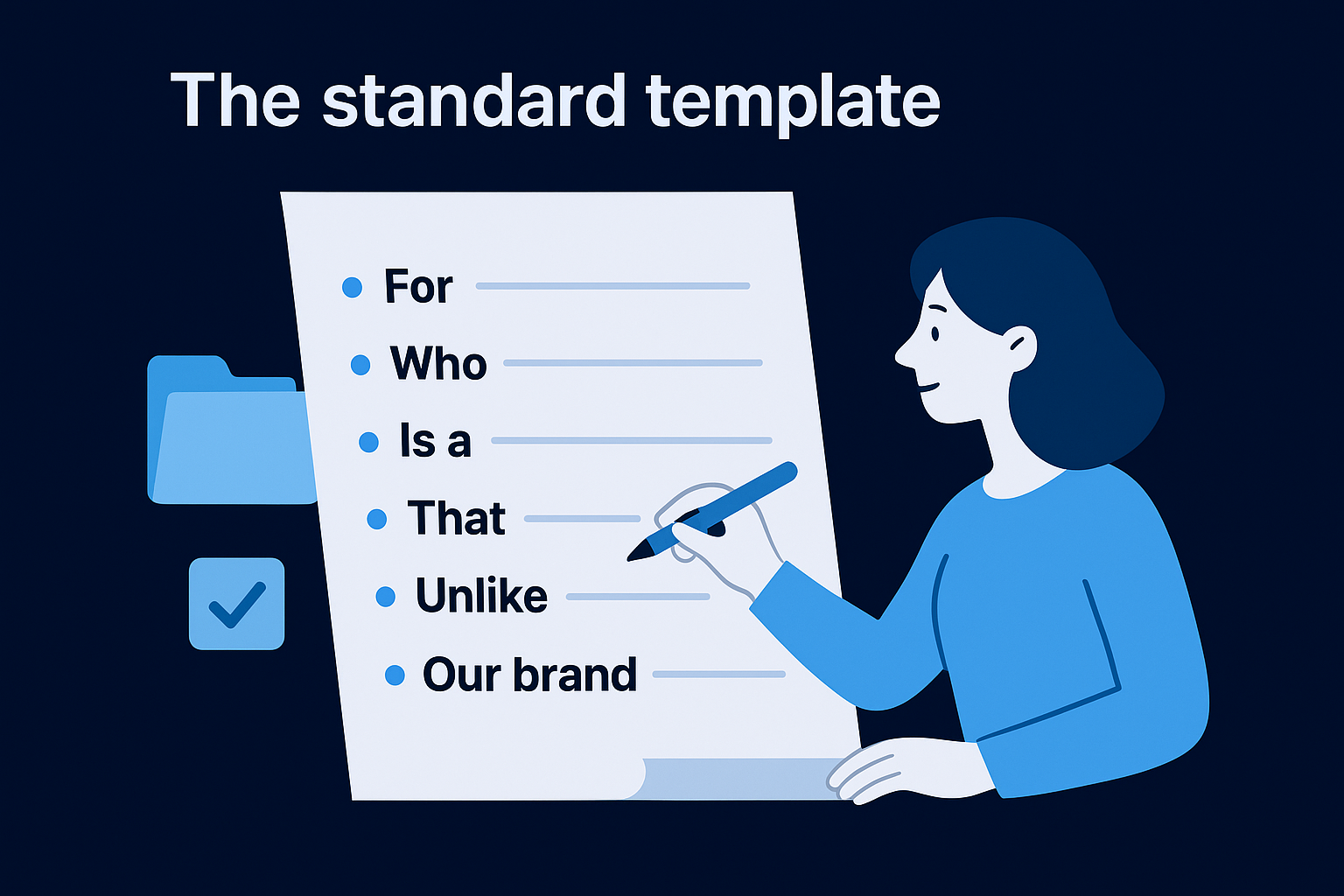
Use this template:
- For [target audience]
- Who [specific need or problem]
- [Brand name] is a [category]
- That [primary benefit or differentiator]
- Unlike [main alternative]
- Our brand [key reason to believe]
A positioning statement only works if it forces a real choice. If any competitor in your market could say the exact same thing, it isn't actually a positioning statement.
How to stress-test your statement
Once you draft your statement, run it through two filters before treating it as final. First, check whether a direct competitor could copy it word for word. If they could, your claim is too broad and needs to go narrower. Second, check whether your best current customers would recognize themselves in the target audience description. If they wouldn't, the statement doesn't reflect how your audience actually frames their own problem.
Your statement should also create internal decision-making clarity, not just marketing direction. Every person on your team, from sales to content production, should be able to use it to make faster, more consistent calls about how to represent the brand.
How to apply positioning across your business
The brand positioning definition only generates real value when you move it out of a document and into every system that touches your audience. Your positioning statement is the source of truth, but the actual work is applying it consistently across content, sales conversations, and even internal operations. When every touchpoint reinforces the same idea, your brand becomes impossible to confuse with anyone else.
Content and messaging
Your positioning should dictate every content decision you make, from the hooks you write on short-form video to the language you use in email campaigns. If your positioning claims you serve founders building investor-facing brands, then content about generic social media tips directly contradicts that claim. Consistent messaging signals specificity, and specificity is what makes your audience feel like you built your brand for them specifically.
The brands that build the fastest authority are the ones whose content always sounds like the same person, talking to the same person, about the same core problem.
Each platform you publish on should express the same core positioning idea in a format that fits the medium, not a different identity tailored to game that platform's algorithm.
Sales and hiring decisions
Positioning filters more than just your marketing. When your value proposition is defined clearly, your sales conversations get shorter because prospects already arrive pre-qualified. You spend less time convincing the wrong audience and more time closing the right one. The same logic applies to hiring, where a sharp brand position attracts candidates who already align with what you stand for, which reduces friction and builds a more coherent team faster.
A quick recap
The brand positioning definition comes down to one core idea: you decide what your brand stands for, who it serves, and why it beats the alternative, before you build anything else. Without that foundation, your content creates noise instead of authority. With it, every message, every video, and every sales conversation points toward the same clear outcome. Strong positioning compounds over time, turning each touchpoint into proof of a single, credible claim your audience learns to associate with your name.
You now have the frameworks, the statement template, and the application logic to move this from concept into practice. The next step is actually doing the work: mapping your market, defining your statement, and aligning your content system to it consistently. If you want a team to help you build that system from the ground up, apply to work with SocialRevver and get a free 40+ slide strategy built around your brand: apply for your free social media strategy.