Most copy sounds good. It reads well. It might even win compliments from your team. But it doesn't convert, and that's the only metric that actually matters. The gap between "nice writing" and writing that drives revenue is exactly what conversion copywriting services fill. They exist to turn every headline, email, landing page, and script into a measurable business asset, not just polished prose.
If you're a founder or business owner evaluating whether to hire a conversion copywriter, or trying to figure out what separates a $500 project from a $15,000 one, you're in the right place. Understanding the process, the typical rates, and the actual ROI these services deliver is the difference between making a smart investment and lighting money on fire.
At SocialRevver, conversion-focused writing is baked into everything we build. Our Scripting Engine produces short-form video scripts engineered for specific audience psychology and action, not generic content calendars. We've seen firsthand how the right words, structured the right way, turn passive viewers into inbound leads. That experience informs every recommendation in this guide.
This article breaks down what conversion copywriting services actually include, how agencies and freelancers price them, what kind of return you can realistically expect, and how to evaluate providers before you sign anything. No fluff, just the information you need to make a decision and move forward.
Why conversion copywriting services matter
Most businesses underestimate how much weak copy costs them. You can drive thousands of visitors to a landing page through paid ads or organic content, but if the copy doesn't move people toward an action, every click becomes a sunk cost. Conversion copywriting services exist precisely to fix that leak in your revenue pipeline.
The real cost of copy that doesn't convert
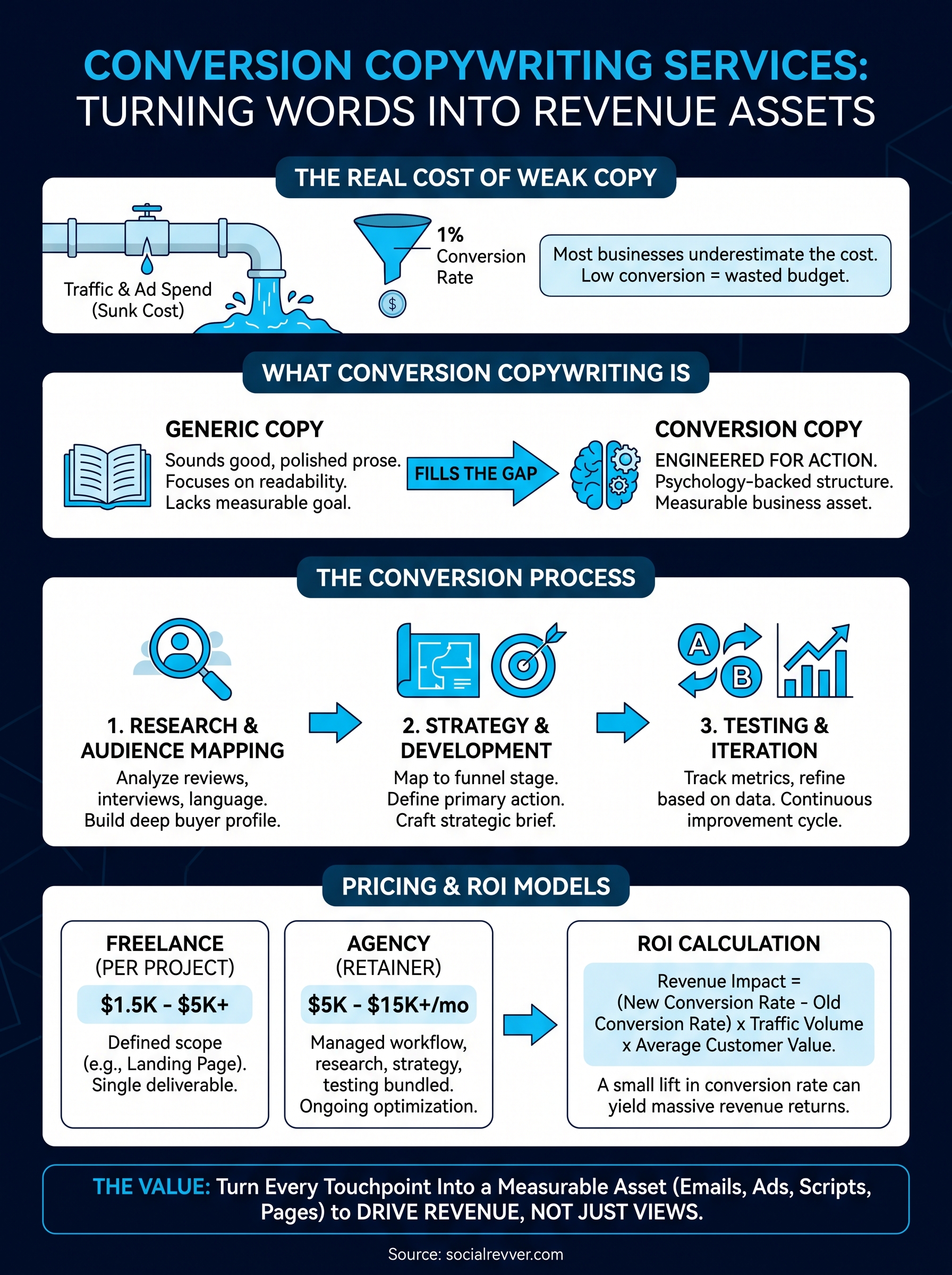
Every page, email, or video script you publish without a conversion-focused structure is a missed opportunity with a price tag attached. If your landing page converts at 1% instead of 3%, you're paying three times more per customer in ad spend or content effort to get the same result.
The conversion rate gap between average and optimized copy often determines whether a marketing channel becomes profitable or stays a money pit.
That math gets brutal at scale. A $10,000-per-month paid media budget hitting a low-converting page can drain six figures in a year with almost nothing to show for it. Improving the copy alone, without touching the ads or traffic strategy, is frequently the highest-leverage move a business can make.
Where conversion copy actually shows up
Conversion copy runs through every touchpoint your audience hits before they decide to buy, sign up, or reach out. That includes email sequences, paid ad headlines, product pages, video scripts, onboarding flows, sales decks, and social media captions. Each surface is either moving someone closer to a decision or letting them drift away.
Hiring a specialist matters for exactly this reason. A generalist writer fills those formats with readable text, but a conversion copywriter studies behavioral triggers, audience psychology, and the specific moment in a buying journey each piece occupies. The output looks similar on the surface but performs completely differently in practice.
Why most in-house teams struggle here
Writing persuasive copy that converts requires dedicated research, testing, and a psychological framework that most in-house teams simply don't have the bandwidth to develop. Your marketing team is already managing campaigns, social channels, and reporting. Asking them to also master persuasion architecture usually produces writing that's competent but not conversion-focused.
Bringing in outside conversion copywriting services gives you access to specialists who have tested messaging across dozens of industries and audience types. They apply frameworks your team hasn't built yet to your specific offer, and they do it without the months of trial and error it would take to develop those frameworks internally.
What to look for in a conversion copywriter
Not every writer who offers conversion copywriting services actually delivers conversion-focused work. The market is full of copywriters who produce clean, engaging prose but have never built a systematic approach to driving action. Knowing what separates a high-performing specialist from a competent generalist will save you time, money, and a lot of frustrating revision cycles.
Evidence of results, not just samples
A strong conversion copywriter shows you metrics, not just writing samples. You want to see landing page conversion rates before and after their work, email open-to-click ratios, or ad performance tied to specific copy they wrote. Portfolio pieces that look polished but carry no performance data signal that the writer values aesthetics over outcomes.
If a copywriter can't point to measurable lifts in conversion rate, click-through rate, or revenue from their past work, they haven't been doing conversion copywriting.
When evaluating candidates, ask directly: "What results did this piece generate?" A specialist who operates on data will answer that question immediately. One who operates purely on craft will redirect the conversation toward tone and style.
Deep research and psychological frameworks
Audience research is the foundation of copy that converts. A skilled conversion copywriter runs customer interviews, analyzes reviews, and studies competitor messaging before writing a single word. They map your buyer's objections, desires, and decision triggers before choosing how to structure any given piece.
You should also verify that the writer understands funnel positioning. Copy for a top-of-funnel video script operates differently than copy for a sales page where someone is one click from purchase. A specialist who grasps those distinctions will tailor the psychological approach of each piece to the exact stage of the buying journey it serves, which is what separates competent writing from copy that actually moves people to act.
How the conversion copywriting process works
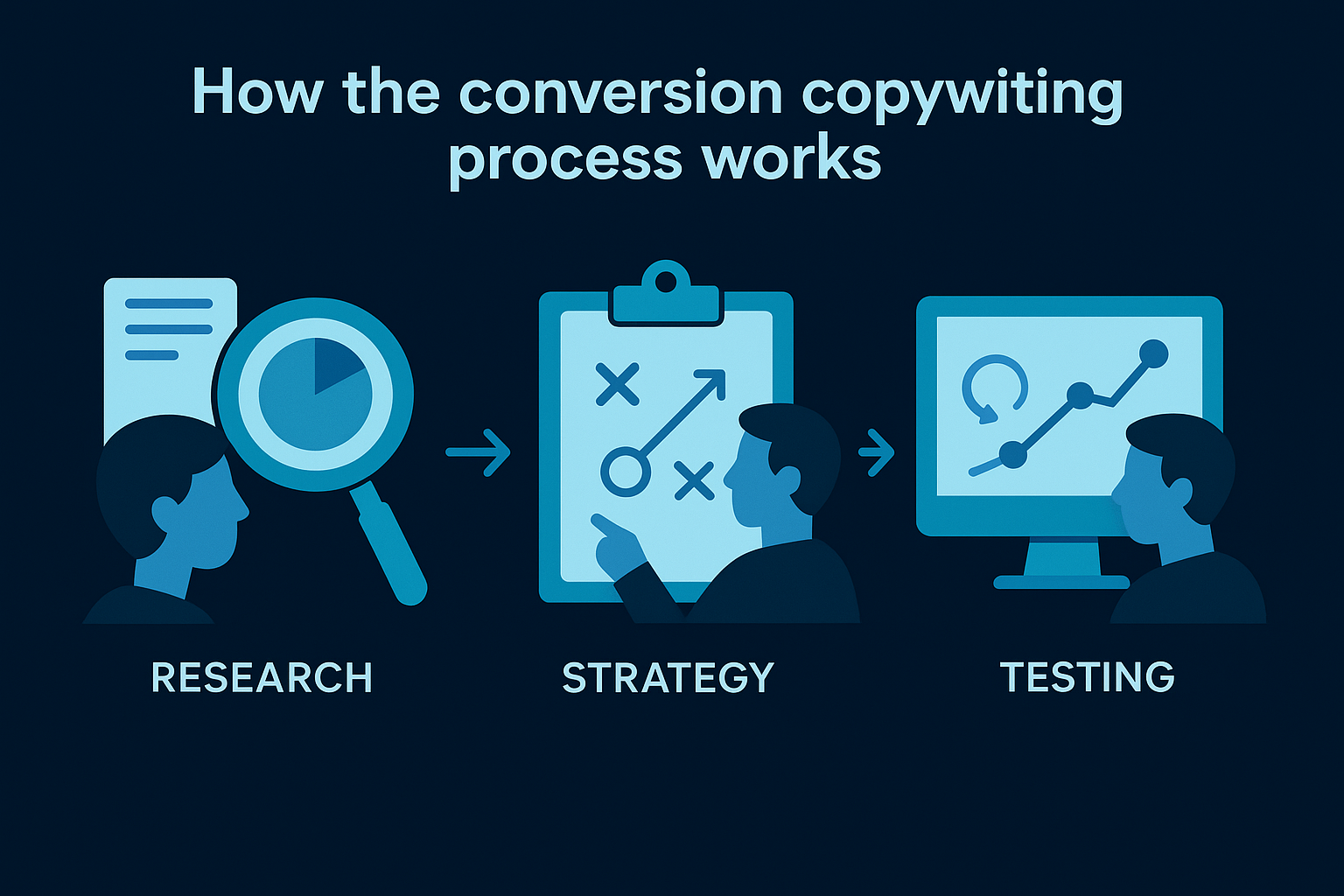
When you hire conversion copywriting services, you're not buying a document. You're buying a structured process that moves through research, strategy, writing, and iteration in a specific sequence. Understanding each phase helps you hold providers accountable and know exactly what to expect at each stage.
Phase 1: Research and audience mapping
Every effective conversion copywriter starts by building a deep profile of your buyer before touching the keyboard. This includes analyzing customer reviews, conducting interviews, and studying the language your audience already uses to describe their problem. That raw material becomes the vocabulary and emotional architecture of every piece they write.
The words your customers use to describe their problem are the exact words your copy should use to describe the solution.
Phase 2: Strategy and copy development
Once the research is complete, the copywriter maps each piece to a specific stage of your buying funnel and assigns a primary action it needs to drive. The draft that follows isn't built from instinct but from a strategic brief that locks in the audience, the offer, and the single conversion event the copy needs to serve.
A strong brief typically covers:
- Funnel position: top, middle, or bottom of the buying journey
- Primary objection: the specific resistance the copy needs to overcome
- Desired action: the one thing you want the reader to do next
Phase 3: Testing and iteration
Publishing the first draft is the beginning, not the end. Strong conversion copywriting builds a feedback loop where performance data from live copy informs revisions. Your copywriter tracks click-through rates, conversion rates, and drop-off points to identify which elements are working and which need adjustment.
This cycle of testing and refinement is what turns a one-time deliverable into a compounding asset. Even a modest lift in conversion rate, say from 2% to 4%, can double your revenue from the same traffic, making iteration the highest-ROI phase of the entire process.
Conversion copywriting rates and pricing models
Pricing for conversion copywriting services varies widely depending on who you hire, how you structure the engagement, and what deliverables are included. A freelance specialist charging per project will land in a completely different range than a full-service agency bundling research, strategy, writing, and testing into a monthly retainer.
What you pay for conversion copy matters far less than what it returns. The real question is the multiple, not the number.
Freelancer vs. agency rates
When you hire a freelance conversion copywriter, expect to pay anywhere from $1,500 to $5,000 for a single landing page, depending on their track record and niche expertise. Senior specialists with documented results can charge $8,000 or more for a full sales page. Email sequences typically run $150 to $500 per email.
Agencies command higher rates because they bundle research, strategy, writing, and revision cycles into a managed workflow. A full-service conversion copywriting engagement through an agency often starts at $5,000 per month and scales based on volume and complexity of deliverables.
| Format | Freelancer Range | Agency Range |
|---|---|---|
| Landing page | $1,500 - $5,000 | $4,000 - $10,000 |
| Email sequence (5 emails) | $750 - $2,500 | $2,500 - $6,000 |
| Monthly retainer | $2,000 - $5,000 | $5,000 - $15,000+ |
Choosing the right pricing model
Project-based pricing works well when you have a defined deliverable with a clear scope, such as a single launch sequence or a redesigned product page. You pay once, get the work, and own the asset outright without an ongoing commitment.
Retainer agreements make more sense when you need ongoing copy production across multiple channels. A retainer gives your provider enough time to understand your audience deeply and refine messaging based on live performance data, which compounds into significantly better results over time.
How to forecast ROI and track performance
Before you spend anything on conversion copywriting services, build a basic projection model. You don't need a spreadsheet with 40 variables. You need three numbers: your current conversion rate, your average customer value, and your monthly traffic volume. Those three inputs let you calculate exactly how much a conversion rate improvement is worth in dollars before a single word gets written.
Calculate the revenue impact of a conversion rate lift
Start with your current baseline. If your landing page converts at 2% from 5,000 monthly visitors, you're generating 100 customers per month. Lift that to 4% with stronger copy, and you're generating 200 customers from the same traffic, with zero increase in ad spend. Multiply the difference by your average customer lifetime value, and you have a clear picture of what the copy investment returns.
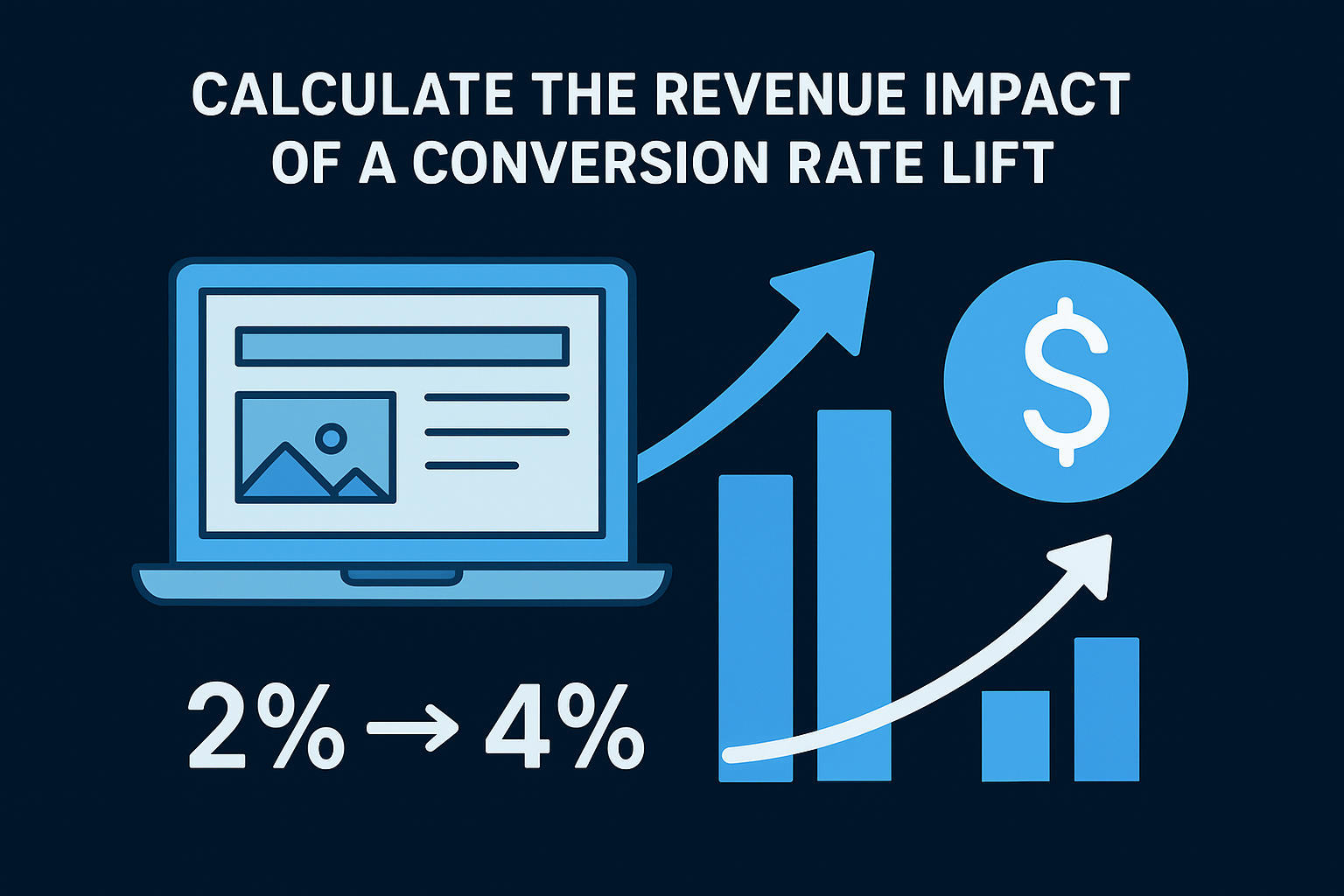
A 1% to 2% conversion rate improvement on a high-traffic page can generate more revenue than doubling your ad budget.
That math gives you a minimum threshold to evaluate any provider. If a $5,000 copywriting engagement would need to move your conversion rate by only 0.5% to break even, that's a low bar worth taking seriously.
Set up a tracking system before you launch
Measurement only works if you establish a clean baseline before any copy goes live. Set up conversion tracking through a tool like Google Analytics 4 or your ad platform's native reporting. Tag your primary conversion event, whether that's a form submission, a purchase, or a click to a booking page, so you can isolate performance changes directly tied to the new copy.
Track the metrics that matter: conversion rate, cost per acquisition, and revenue per visitor. Review them at 30 and 60 days post-launch, not 7 days, because traffic volume and seasonal noise can distort early results. Consistent measurement over a meaningful window is what separates a reliable performance signal from a misleading one.
Next steps
You now have everything you need to evaluate conversion copywriting services with clear eyes: what they include, how providers price their work, and how to calculate whether a specific engagement makes financial sense before you commit. The decision isn't complicated once you've run your own numbers and matched the deliverable scope to a provider with documented performance data backing their rates.
If your growth bottleneck sits in content production and you need short-form video scripts built around conversion, not just engagement, SocialRevver's Scripting Engine is designed for exactly that. Every script we produce ties directly to your audience psychology and drives a specific action, making your content work as a revenue asset, not a content calendar checkbox. If you want to see what that looks like applied to your brand, apply to work with our team and get a free 40+ slide social media strategy.