Brands will spend over $32 billion on influencer marketing strategy in 2026, according to Influencer Marketing Hub's latest benchmarks. That number keeps climbing because the model works, when it's built right. But most businesses still treat influencer partnerships like a slot machine: pick a creator, pay for a post, and hope something sticks. That's not a strategy. That's a gamble.
The difference between brands that generate real ROI from influencer campaigns and those that burn budget comes down to structure. A clear system for identifying the right creators, negotiating deals that protect your margins, producing content that actually converts, and measuring outcomes against revenue, not just impressions. Without that framework, you're paying for someone else's audience without capturing any of it.
At SocialRevver, we build data-driven content systems that turn short-form video into a predictable growth channel. We see firsthand how influencer marketing and organic brand content work together, and how they fall apart when either side lacks a real plan. The same behavioral science and performance analysis we apply to our clients' content pipelines directly informs how smart influencer partnerships should be structured.
This guide breaks down the full process, step by step. From setting goals and finding creators to structuring deals, managing campaigns, and tracking the metrics that actually matter. Whether you're launching your first influencer campaign or rebuilding one that underperformed, you'll walk away with a system you can execute on immediately.
What influencer marketing means in 2026
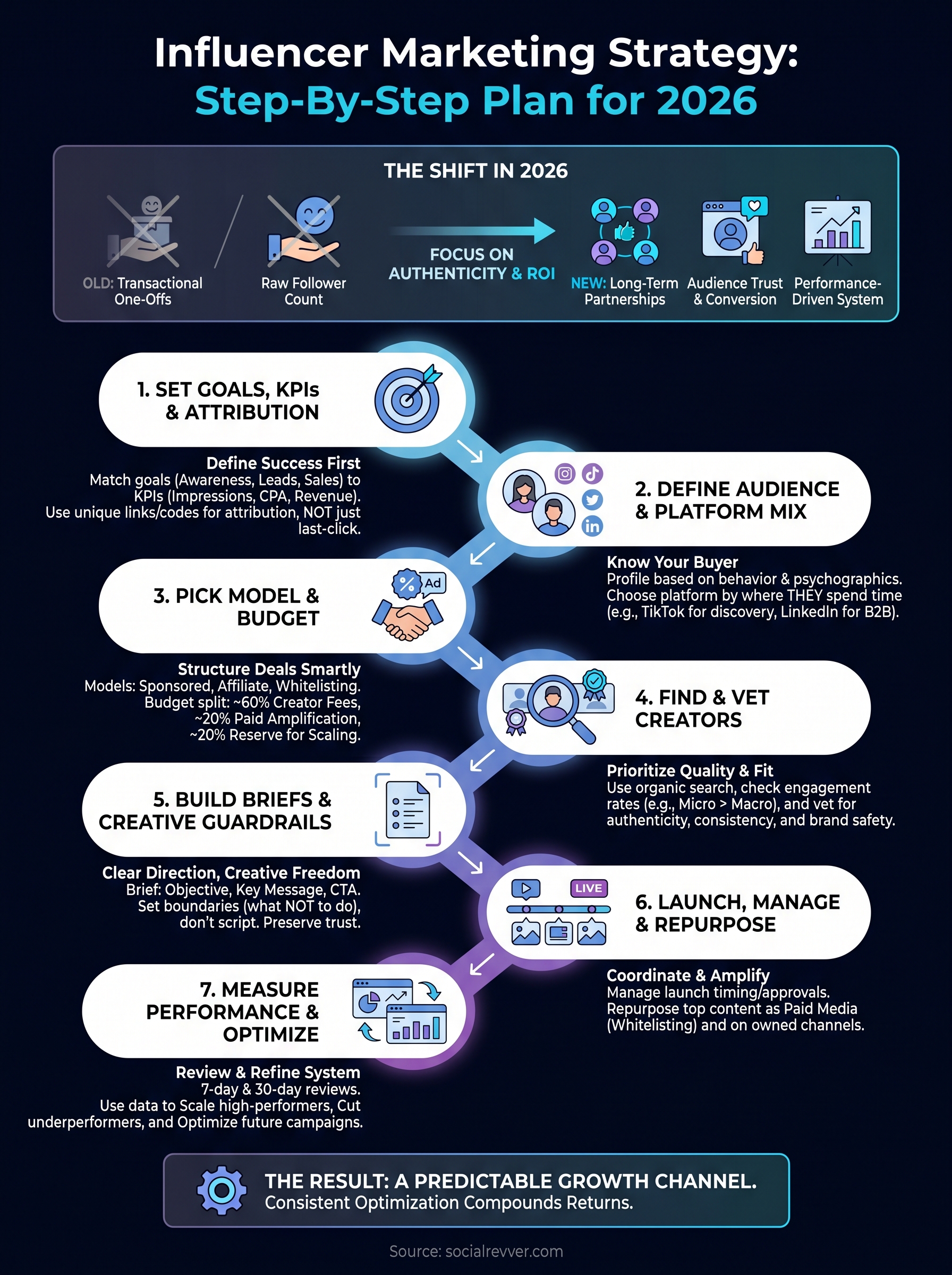
Influencer marketing in 2026 looks fundamentally different from how it operated five years ago. The era of paying a celebrity to hold a product and smile for the camera is mostly dead. What replaced it is a more nuanced, performance-driven system where content authenticity, audience trust, and conversion architecture carry more weight than raw follower counts. If you're building an influencer marketing strategy today, you need to understand exactly what the landscape looks like before you spend a single dollar.
The shift from one-off posts to ongoing partnerships
The biggest structural change in influencer marketing is the move away from transactional, one-off sponsored posts toward long-term creator relationships. Platforms now reward consistent creators over viral-and-gone accounts. When you build a relationship with a creator over multiple campaigns, their audience associates your brand with that creator's identity rather than treating it as a paid interruption.
Brands that maintain ongoing creator partnerships see an average of 2-3x higher audience recall compared to one-time sponsored posts, according to Influencer Marketing Hub's 2025 benchmark report.
Repeated exposure builds trust, and trust is what converts a passive viewer into a paying customer. Single activations generate surface-level awareness at best. If you want measurable revenue attribution from influencer spend, you need a model built on continuity, not isolated transactions.
The creator tier landscape has changed
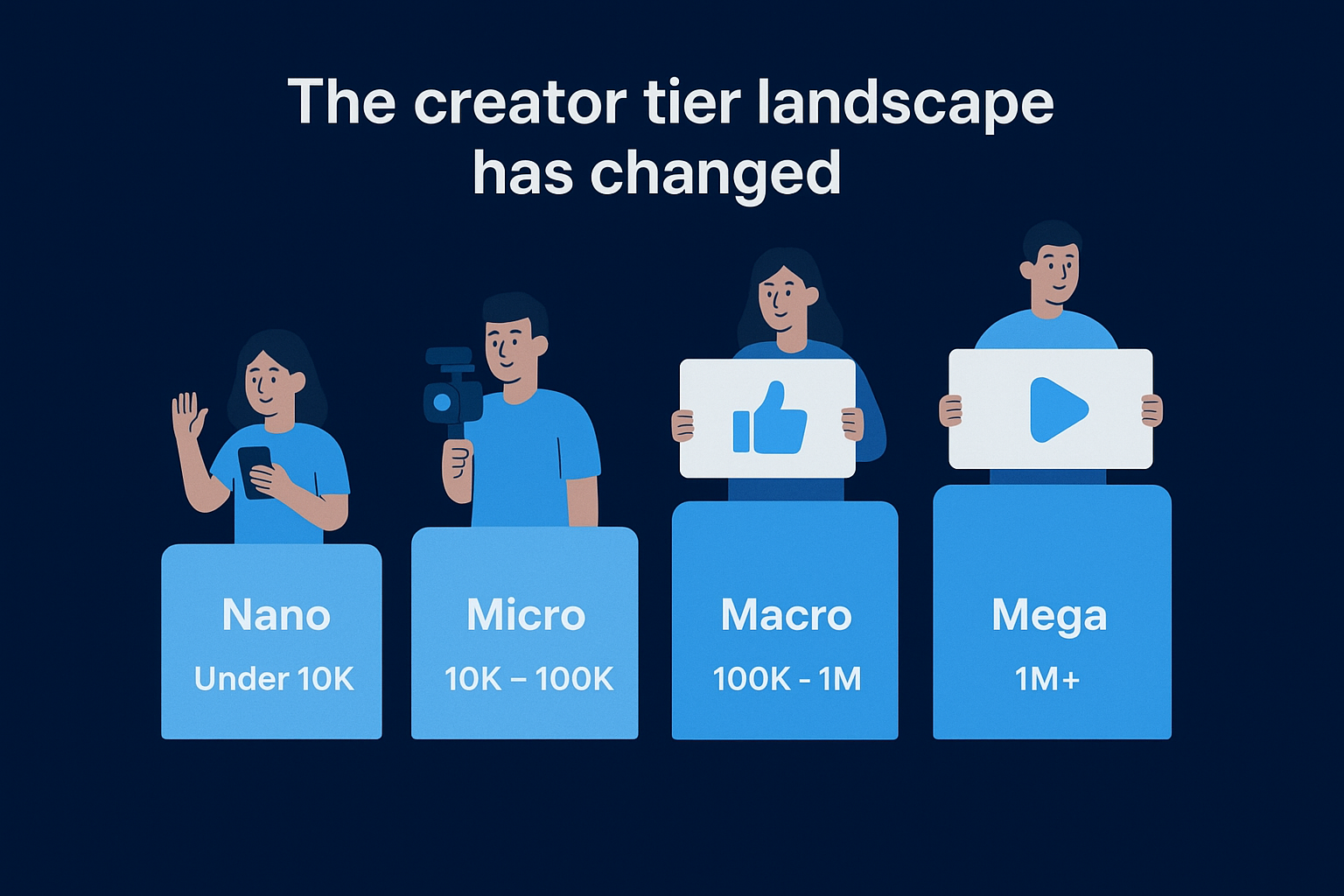
Understanding creator tiers matters because each tier serves a different function in your funnel. Mega influencers (over 1 million followers) generate broad reach but typically deliver lower engagement rates and higher costs per impression. Macro influencers (100K to 1M followers) balance reach with niche relevance and tend to work well for authority-building campaigns. Micro influencers (10K to 100K) deliver the highest engagement rates and audience trust, making them highly effective for direct response and conversion-focused campaigns. Nano influencers (under 10K followers) work well for hyper-local or community-specific activations where personal credibility matters most.
| Tier | Follower Range | Best Use Case | Avg. Engagement Rate |
|---|---|---|---|
| Nano | Under 10K | Community/local reach | 5-8% |
| Micro | 10K - 100K | Conversions, DTC brands | 3-6% |
| Macro | 100K - 1M | Awareness and authority | 1-3% |
| Mega | 1M+ | Mass reach campaigns | 0.5-1.5% |
Your budget and campaign objective should determine which tier you prioritize, not follower count alone.
What actually drives results now
The platforms themselves have changed how content gets distributed, and that directly affects how influencer-generated content performs. TikTok's algorithm, YouTube Shorts, and Instagram Reels all prioritize content based on viewer behavior signals like watch time, saves, and shares, rather than follower relationships. This means a micro influencer with strong retention metrics can consistently outperform a mega influencer whose audience has become disengaged. The platform matches content to new audiences automatically, but only when the content earns it through actual performance.
This shift also opens a compounding opportunity for brands that plan for it. High-performing creator content can be repurposed as paid media through whitelisting and dark posting arrangements, where you amplify the best-performing organic creator posts with ad spend targeting cold audiences. A video that earns strong organic signals already has proof it resonates. Paid amplification then scales that signal to people who've never heard of the creator or your brand. Brands that build this repurposing loop into their campaigns extract significantly more value from every creator deal they sign.
Step 1. Set goals, KPIs, and attribution
Every influencer marketing strategy fails at the measurement stage when no one defined what success looks like before launch. Your goal determines everything downstream: which creators you pick, what content you commission, how much you pay, and how you decide whether to scale or cut a campaign. Starting without a defined objective is the single most expensive mistake you can make before you spend anything.
Match your goal to a campaign type
Different business objectives map to different campaign structures and KPIs. Awareness campaigns prioritize reach, impressions, and video views because you're introducing your brand to new audiences. Conversion campaigns need cost per acquisition (CPA), click-through rate, and tracked revenue as their north star. Authority-building campaigns are harder to measure directly but show up in branded search volume, inbound inquiry quality, and follower growth on your owned channels.
Use this framework to align your goal with the right metrics before you brief a single creator:
| Business Goal | Primary KPI | Secondary KPI |
|---|---|---|
| Brand awareness | Impressions, reach | Share rate, saves |
| Lead generation | Cost per lead | Click-through rate |
| Direct sales | Revenue, CPA | Conversion rate |
| Authority building | Branded search lift | Follower growth |
| Product launch | Reach + saves | Comment sentiment |
Choose the right attribution model
Attribution is where most influencer campaigns fall apart. Most brands default to last-click attribution, which credits the final touchpoint before a sale and completely ignores the role influencer content played earlier in the buying journey. A viewer watches a creator post about your product, searches your brand a week later, clicks a paid search ad, and buys. Last-click gives the ad the credit. You cut the influencer. That's a measurement error, not a campaign failure.
Set up UTM parameters, unique discount codes, and custom landing pages for every campaign so you can track direct traffic from each creator independently.
Each creator should get their own unique link or promo code so you can isolate performance at the individual level. Your existing analytics tools, whether Google Analytics 4 or your e-commerce platform's native reporting, can handle this without any additional software. Build your attribution setup before the campaign launches, not after you're trying to figure out what worked.
Step 2. Define your audience and platform mix
Picking creators before you know your audience is like casting a movie before you've written the script. Your influencer marketing strategy lives or dies on how clearly you understand who you're trying to reach and where those people actually spend their time. Skip this step and you'll end up paying for access to large audiences who have no intention of ever buying what you sell.
Know your audience before you pick a platform
You need to build a specific audience profile before you open a single creator database. Demographics like age, income level, and job title give you the basic outline, but behavioral data gives you the targeting precision you need. What problems is your buyer actively trying to solve? What type of content do they consume when making purchase decisions? The sharper your audience profile, the easier it becomes to identify which creators speak directly to that person every single day.
If you can describe your ideal buyer in one specific sentence, you can evaluate any creator in under five minutes.
Use this profile template before you move to platform selection:
- Demographics: Age range, gender split, income bracket, location
- Psychographics: Core beliefs, aspirations, primary pain points
- Content behavior: Platforms used daily, preferred formats (video, text, audio)
- Purchase triggers: What motivates them to buy, typical decision timeline
- Objections: What stops them from buying in your category
Match the platform to the behavior
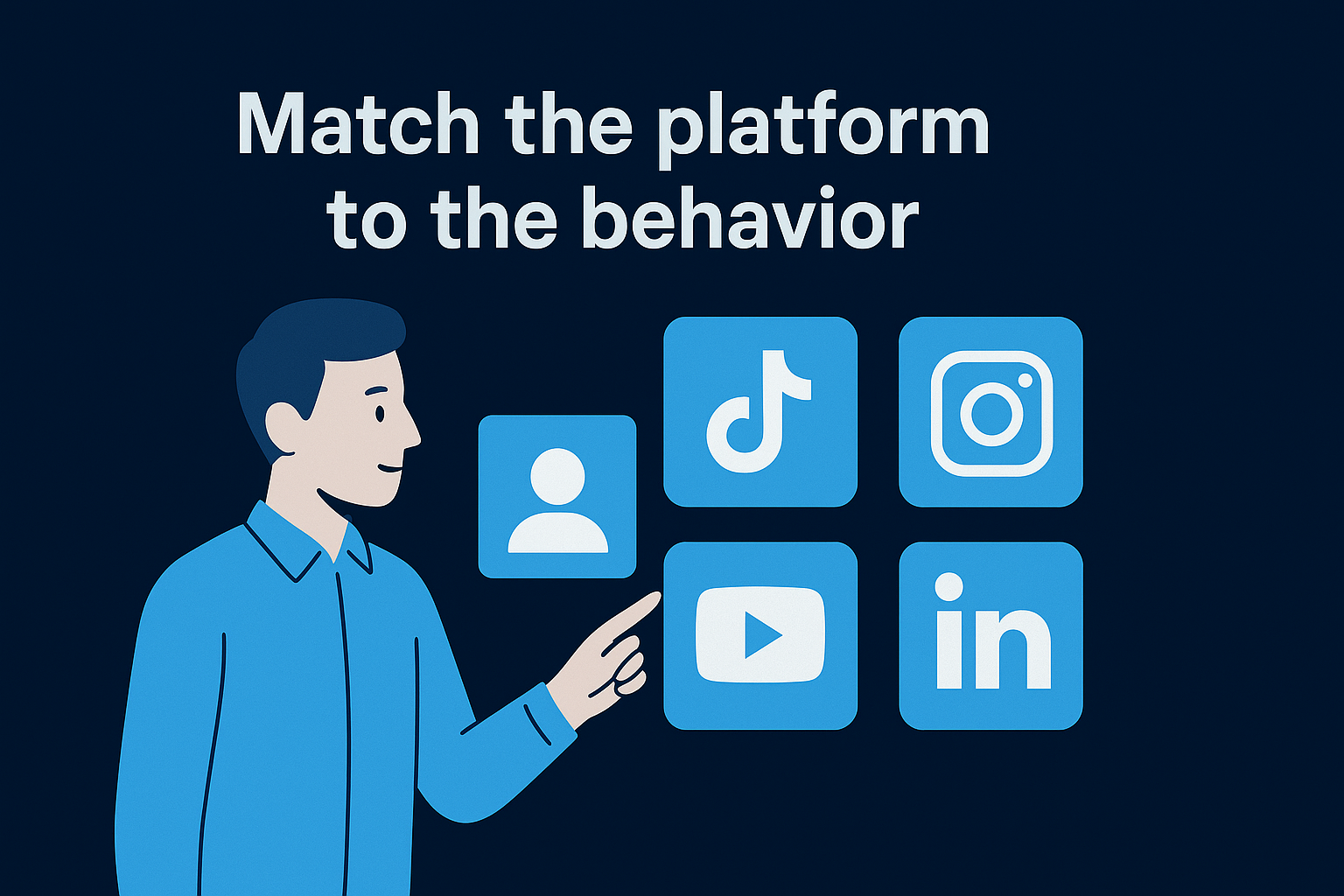
Once your audience profile is clear, platform selection becomes a direct decision based on where that profile spends time and how they engage with content there. Don't default to TikTok because it's growing or LinkedIn because it sounds authoritative. Each platform serves a different content function, and your buyer's platform behavior should drive that choice, not industry trends or what your competitors happen to be doing.
| Platform | Primary Audience | Best Content Type | Strongest Use Case |
|---|---|---|---|
| TikTok | 18-34, discovery-oriented | Short-form video | Brand awareness, DTC products |
| Instagram Reels | 25-44, aspirational buyers | Visual short-form | Lifestyle, fashion, beauty |
| YouTube Shorts | 18-45, research-driven | Educational video | High-consideration purchases |
| 28-50, B2B professionals | Authority content | SaaS, consulting, B2B services | |
| Podcasts | 25-54, high-income earners | Long-form audio | Premium products, niche audiences |
Your platform mix should follow your audience profile, not the other way around.
Step 3. Pick the right partnership model and budget
The structure of your deal determines what you actually get from an influencer relationship, not just how much you pay for it. Before you approach any creator, you need to decide what type of partnership fits your campaign goals and your operational capacity. Getting this wrong means you can end up paying for reach when you need conversions, or paying per post when an ongoing relationship would compound returns over time.
Choose your partnership model
Not every partnership is a sponsored post. Each model carries different cost structures, content rights, and performance expectations, so matching the right format to your objective before you start outreach will save you significant budget and negotiation time.
| Model | What You Pay For | Best For |
|---|---|---|
| Sponsored post | Single piece of content | Brand awareness, product launches |
| Affiliate/commission | Revenue share per sale | DTC, e-commerce, SaaS |
| Ambassador program | Ongoing content retainer | Authority building, long-term trust |
| Whitelisting | Ad rights to creator's account | Paid media scaling |
| Product gifting | Product only, no cash | Nano and micro testing |
Affiliate and commission models carry the least financial risk because you only pay when a sale happens. Ambassador programs deliver compounding brand recognition over time, but they require consistent relationship management to stay productive. Whitelisting arrangements are especially powerful if you plan to run paid ads, since content published from a creator's account consistently outperforms the same content run from a brand account when targeting cold audiences.
Set a realistic budget
Your budget needs to treat creator fees, content production costs, and paid amplification as three separate line items. Most brands underestimate total spend because they only account for the creator fee, then have no capital left to scale campaigns that are actually working.
A practical starting point: allocate 60% of your influencer budget to creator fees, 20% to paid amplification of top-performing posts, and hold 20% as a reserve to extend campaigns that hit their KPIs early.
Use this budget allocation template before you open any creator negotiations:
- Creator fees: 60% of total campaign budget
- Paid amplification: 20% (boosting content with strong organic signals)
- Reserve scaling fund: 20% (extend deals that exceed performance targets)
This framework keeps your influencer marketing strategy flexible enough to respond to actual performance data, rather than locking all capital into creator fees before you know what is working.
Step 4. Find and vet creators for fit and safety
Finding the right creator is less about follower count and more about audience alignment and content consistency. A creator who speaks directly to your buyer profile, publishes on a regular schedule, and maintains genuine trust with their community is worth ten accounts with inflated numbers and passive comment sections. Your influencer marketing strategy only produces real results when the people watching the content actually match the people you want to buy from you.
Where to find qualified creators
You don't need an expensive platform subscription to build a solid creator list. Start with organic discovery by searching relevant keywords and topics on TikTok, Instagram, and YouTube to surface creators who are already producing content in your category. Look for accounts that appear in your target audience's feed naturally, because if your ideal buyer already follows them, the audience fit is pre-validated. Affiliate networks and creator marketplaces like Amazon's influencer program or Meta's Creator Marketplace can supplement your outreach list with verified performance data at no upfront cost.
Use this search checklist to build your initial creator pool:
- Search your product category keywords on each target platform
- Review the "suggested accounts" section on profiles you've already identified
- Check which creators your competitors have tagged or partnered with publicly
- Ask your existing customers which creators they follow in your niche
Vet every creator before you commit
Once you have a candidate list, audience quality matters more than audience size. Request a media kit or ask for direct access to the creator's analytics before you negotiate any deal. You want to confirm that their followers are real, geographically relevant, and aligned with your buyer profile. Engagement rate is the clearest performance signal you have: a micro influencer with 40,000 followers and a 5% engagement rate delivers more active attention than a macro account with 500,000 followers and a 0.6% rate.
Before you sign any agreement, review the creator's last 90 days of published content for tone consistency, comment quality, and any brand safety concerns that could expose your business to reputational risk.
Run every final candidate through this vetting checklist before outreach:
| Check | What to Look For |
|---|---|
| Engagement rate | Above 2% for macro, above 3% for micro |
| Audience location | Matches your primary market geography |
| Comment quality | Genuine responses, no bot patterns |
| Content consistency | Regular posting cadence, stable brand voice |
| Past partnerships | No competitor conflicts or brand safety issues |
Step 5. Build briefs and creative guardrails
A weak brief produces weak content. When creators don't have a clear picture of what you need, they default to what has worked for their audience in the past, which may have nothing to do with your conversion goals or brand positioning. A well-structured brief is the single document that aligns your business objectives with the creator's voice, without turning their content into a corporate script that their audience immediately tunes out.
What to include in a creator brief
Your brief needs to answer every question a creator might have before they start writing or filming. Ambiguity at the brief stage becomes misaligned content at the delivery stage, and revision cycles eat into your launch timeline. Cover each of these elements every time:
| Brief Element | What to Specify |
|---|---|
| Campaign objective | Awareness, clicks, or conversions |
| Key message | One primary point the content must communicate |
| Call to action | Exact action you want the viewer to take |
| Mandatory inclusions | Product name, discount code, link placement |
| Brand voice guidance | Three adjectives that describe your brand's tone |
| Content length | Minimum and maximum duration or word count |
| Approval process | Deadline for draft submission and feedback turnaround |
Send the brief at least two weeks before your target publish date so the creator has time to develop the concept and you have time to review it properly.
Set boundaries without killing creativity
Creators build trust with their audiences because they communicate in a way that feels natural to that specific community. Over-scripting content destroys that trust signal and turns sponsored posts into ads that viewers skip. Your guardrails should define what the content cannot do, not dictate every word and cut.
Specify any hard restrictions upfront: competitor mentions, claims you can't legally support, visual elements that conflict with your brand standards. Leave the creative execution to the creator once those boundaries are clear. A single page listing what is off-limits, combined with two or three examples of content you responded well to from other creators, gives them enough direction to work confidently while preserving the authentic tone that makes their audience trust them. That trust is the core asset you're paying to access, so protect it by keeping your creative guardrails focused on protection rather than control.
Step 6. Launch, manage, and repurpose content
Publishing content is not the finish line. It's the starting point for active campaign management and the beginning of your repurposing cycle. Your influencer marketing strategy only generates compounding returns when you treat each creator post as a reusable asset rather than a one-time expense that expires when it falls off the feed. The brands that extract the most value from creator deals are the ones that build a system around every post, before it goes live and after it does.
Coordinate launch timing and approvals
Before any content goes live, build a shared approval workflow that keeps both sides accountable without slowing your publish schedule. Send a clear timeline to each creator that includes the draft submission date, your feedback turnaround window (48 hours maximum), and the confirmed publish date. Review every piece of content against your original brief before approving it. Check the key message, the call to action, all mandatory inclusions, and confirm there are no brand safety concerns you missed during vetting.
If a creator submits content that misses a brief requirement, respond with a specific edit request tied to an exact line or frame, not a vague note asking for general revisions.
Use this pre-launch checklist before every post goes live:
- Draft received and reviewed against the original brief
- UTM link or promo code confirmed and tested as functional
- Written approval sent to creator with publish date locked
- Performance monitoring alerts set for the first 24-hour window
- Creator added to your campaign tracking sheet with post URL recorded
Repurpose top-performing content
Once a post is live, monitor performance in the first 48 hours for strong signals: saves, shares, watch-through rate, and comment quality. Any creator post that exceeds your baseline engagement benchmarks is a candidate for paid amplification through whitelisting. Run that creator's top-performing post as a dark post in your paid media account, targeting cold audiences who match your buyer profile but have no prior connection to the creator or your brand.
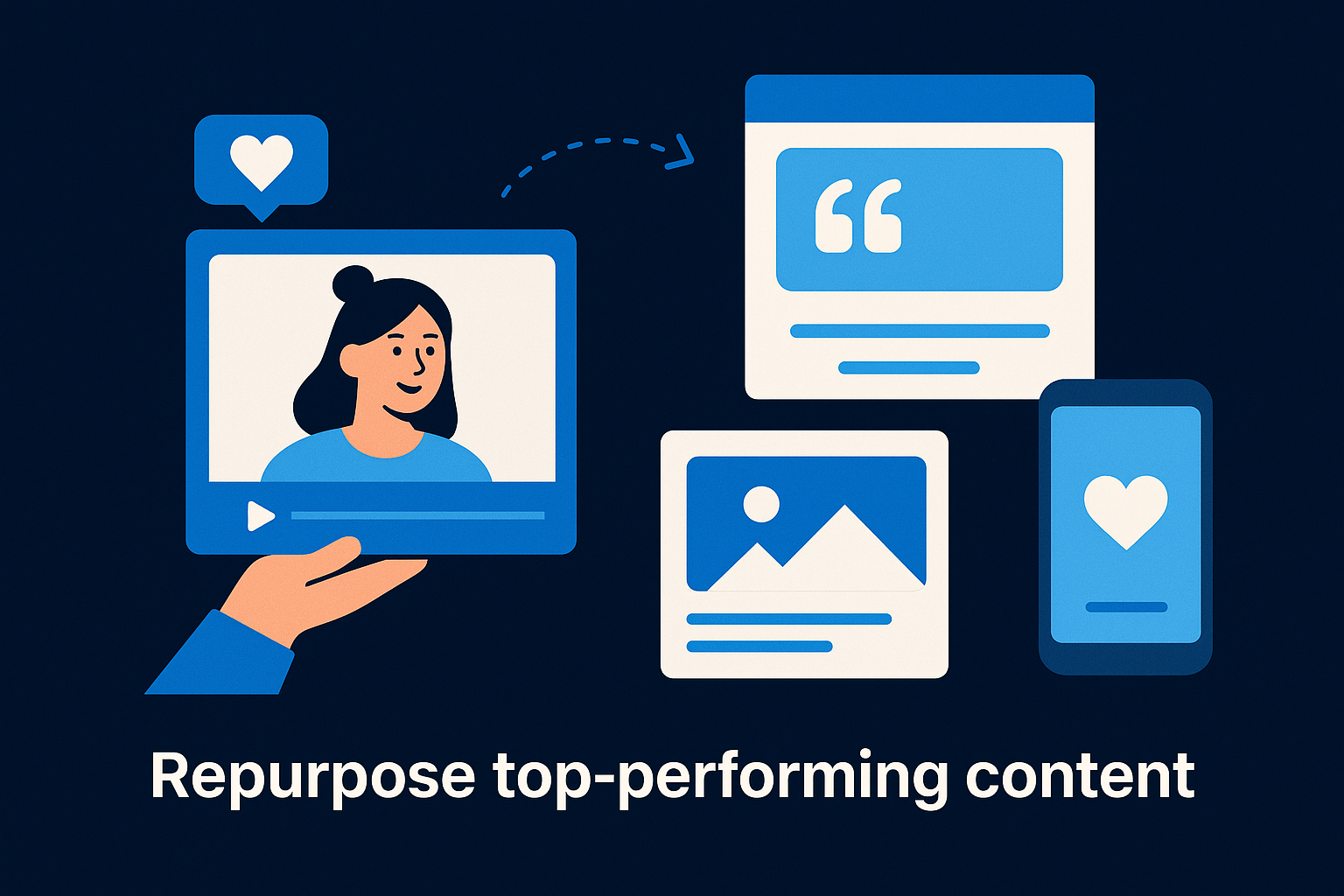
Beyond paid amplification, extend high-performing content further with minimal production cost. Pull strong quotes from creator videos and reformat them as static graphics for your owned social accounts. Clip the highest-retention segment from a longer video for use in email campaigns or on product landing pages. Each repurpose multiplies the revenue potential of a single creator deal without adding a dollar to your production budget.
Step 7. Measure performance and optimize the system
Measurement without a review process is just data collection. The final step in your influencer marketing strategy is building a feedback loop that turns raw performance numbers into decisions: which creators to extend, which content to amplify, and which campaigns to cut before they drain any more budget. Consistent optimization separates brands that compound returns over time from those that run the same underperforming playbook every quarter.
Build a performance review cadence
Your campaign data is only useful if you review it on a fixed schedule. Set a 7-day post-launch review and a 30-day campaign close review for every creator partnership you run. The 7-day check focuses on early engagement signals like watch-through rate, saves, and promo code usage, which tells you whether the content is resonating and whether paid amplification is worth activating. The 30-day review closes the loop on revenue attribution, audience growth on your owned channels, and cost per result against the KPI you set in Step 1.
If a creator's content consistently underperforms your baseline engagement benchmarks across two campaigns, reallocate that budget to a higher-performing creator rather than running a third test.
Use this monthly reporting template to standardize every campaign review:
| Metric | Target | Actual | Action |
|---|---|---|---|
| Impressions | Set at brief stage | Pull from creator analytics | Scale if exceeding target |
| Engagement rate | 3%+ micro, 1.5%+ macro | Calculate from likes + comments | Review brief if under target |
| Promo code uses | Set by budget CPA goal | Pull from e-commerce dashboard | Extend deal if profitable |
| Cost per acquisition | Based on margin target | Total spend / conversions | Cut or renegotiate if over |
| Branded search lift | Baseline vs. campaign period | Pull from Google Search Console | Attribute to awareness campaigns |
Identify what to cut and what to scale
Not every creator deserves a second deal, and not every underperforming post means the creator is wrong for your brand. Separate content-level performance from creator-level performance before you make any decisions. A strong creator with one weak post may have received a vague brief. A creator who consistently misses your CPA target across multiple content formats is a budget drain regardless of their follower count.
Build a simple creator scorecard after each campaign: engagement rate, conversion rate, content brief adherence, and communication reliability. Any creator who scores well across all four categories moves to your preferred partner list for future campaigns. Creators who underperform on conversion metrics but show strong reach and engagement are candidates for awareness-only budgets rather than direct response campaigns.
Next steps
You now have a complete influencer marketing strategy built around systems, not guesswork. Every step in this guide connects to the next: your goals shape your creator selection, your briefs drive content quality, and your measurement cadence tells you exactly where to put more budget and where to pull it back. The framework only works when you follow it in sequence, so start with Step 1 before you reach out to a single creator.
Pick one campaign objective, build your audience profile, and identify five creators to vet this week. That's a concrete starting point you can act on today. If you want a faster path to predictable content performance, our team at SocialRevver builds the entire system for you, from strategy through distribution, using behavioral data from over 750,000 analyzed videos. Apply to work with our team and get a free 40-plus slide social media strategy built around your brand.