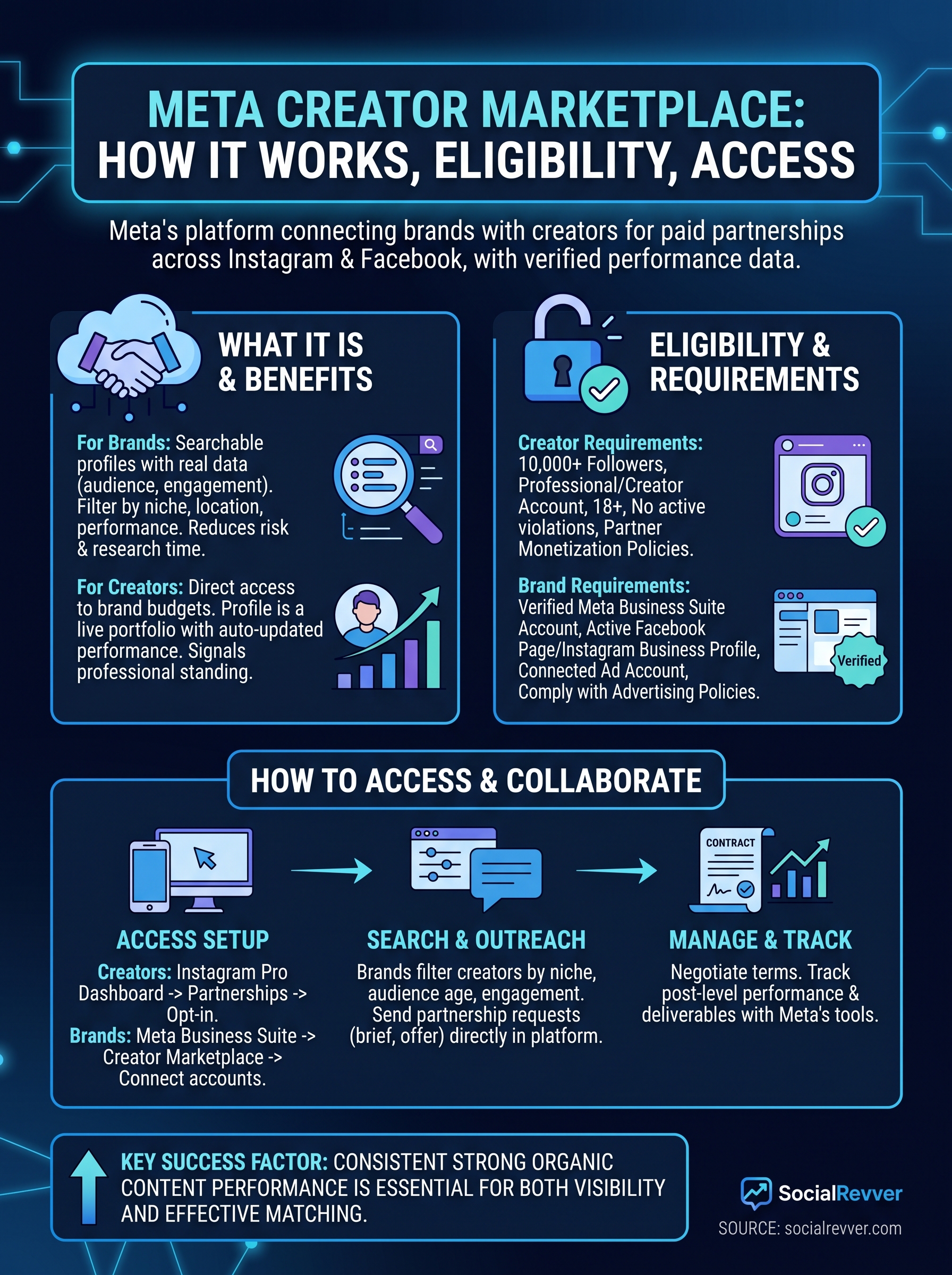
The Meta Creator Marketplace is Meta's built-in platform for connecting brands with creators across Instagram and Facebook for paid partnership campaigns. It's where sponsorship deals get structured, negotiated, and tracked, all without leaving Meta's ecosystem.
For creators, getting listed means direct access to brand budgets. For brands, it means a searchable database of vetted creators with real performance data attached to their profiles. But eligibility isn't automatic, the interface isn't always intuitive, and the rules have shifted multiple times since launch.
This article breaks down exactly how the Meta Creator Marketplace works in 2026, who qualifies, how to get access from both sides, and what actually happens once you're inside. At SocialRevver, we build short-form content systems that drive the kind of consistent organic performance brands look for when they search the marketplace. Understanding how this platform operates is a direct advantage whether you're pitching to brands or sourcing creators for campaigns.
What Meta Creator Marketplace is
Meta Creator Marketplace is a discovery and deal management platform built inside Meta Business Suite. Meta launched it to give brands a structured way to find Instagram creators for paid campaigns, and to give creators a channel to surface themselves to advertisers without relying on cold outreach or third-party agencies. The core function is simple: brands search a database of creators, review real performance metrics, and send partnership requests directly through the platform.
Meta Creator Marketplace removes the guesswork from influencer sourcing by putting verified audience data and content performance side by side with creator profiles.
How it fits within Meta's ecosystem
The marketplace sits inside the Meta Business Suite, which means it operates alongside your ad accounts, pages, and Instagram profile in one place. Brands access it through their business accounts, while creators connect their Instagram presence through the Creator Studio or Meta's professional dashboard. Everything stays within Meta's infrastructure, so performance data, payments, and messaging all run through tools you likely already use.
What the platform actually shows
When a brand opens the marketplace, each creator profile displays follower count, audience demographics, engagement rates, and recent content samples. This removes the step of requesting a media kit separately. Brands filter by niche, location, audience age, and platform metrics to narrow the pool before reaching out.
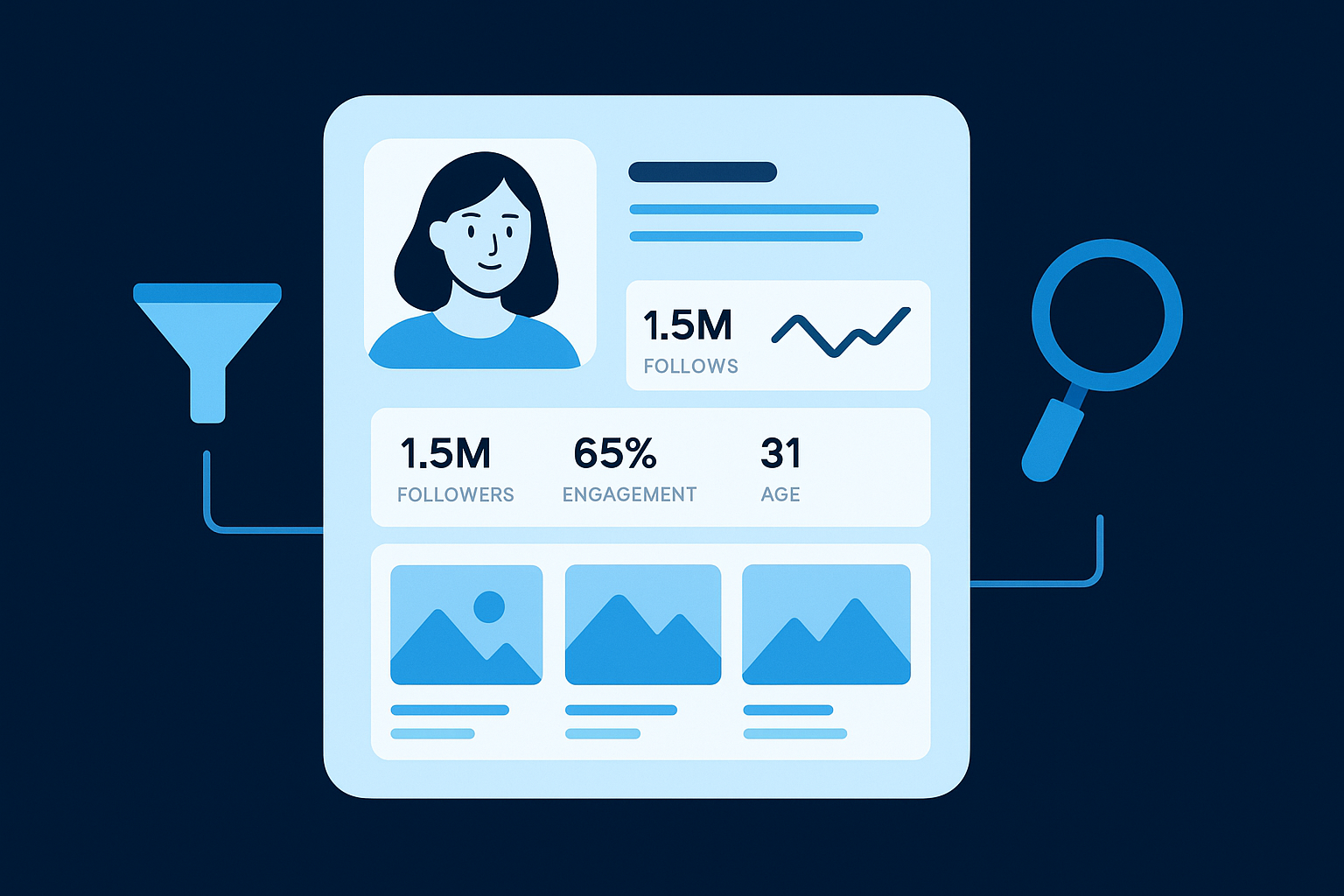
From the creator side, your profile becomes a live portfolio that updates automatically as your content performance shifts. You don't submit static numbers. Meta pulls the data directly from your account, which means your profile reflects your actual recent performance rather than a curated highlight reel you built six months ago.
Why brands and creators use it
Both sides of the influencer market deal with the same core problem: finding the right match without wasting time on dead-end outreach. The meta creator marketplace solves this by putting both parties in the same room with verified data already on the table.
What brands get from it
Brands gain access to searchable, filter-ready creator profiles that include actual audience data rather than self-reported numbers. You can narrow your search by niche, location, engagement rate, and follower size before you send a single message. This cuts campaign research time significantly and reduces the risk of partnering with creators whose audiences don't align with your target customer.
Filtering by audience demographics before outreach means you spend your budget on creators whose followers actually match your buyer profile.
What creators get from it
Creators gain direct visibility to brand budgets without needing a management team or agency relationships. Your profile surfaces automatically to brands running relevant searches, which turns your content performance into an inbound lead channel.
Being listed also signals professional standing to the brands searching the platform. Brands treat the marketplace as a shortlist of credible, active creators, so your presence there works as a form of qualification before any conversation even starts.
Eligibility and requirements to join
Not every Instagram account qualifies automatically for the meta creator marketplace. Meta sets minimum thresholds for creators, and brands need a verified business setup before they can access the search tools. Both sides have distinct entry requirements.
Meeting the baseline requirements gets you into the marketplace, but strong content performance is what makes brands actually reach out.
Creator requirements
To join as a creator, your Instagram account must have at least 10,000 followers and comply with Meta's Partner Monetization Policies. Your account also needs to be set to professional or creator mode, not a standard personal account. Additional requirements include:
- Being 18 years or older
- Located in an eligible country
- No active policy violations on your profile
Brand requirements
Brands access the marketplace through a verified Meta Business Suite account tied to an active Facebook Page or Instagram Business profile. Your business must comply with Meta's advertising policies before gaining search access.
You also need a functioning ad account connected to your business profile. Meta uses this link to verify your business intent and give you full access to the creator discovery tools inside the platform.
How to access and set up your account
Accessing the meta creator marketplace looks different depending on whether you're a brand or a creator, but both paths start from the same place: Meta Business Suite at business.facebook.com.
For creators
Open Instagram's professional dashboard on mobile, scroll to the "Partnerships" section, and tap "Branded content and partnerships." From there, you can opt into the marketplace and confirm your profile is visible to brands. Meta pulls your performance data automatically once you enable discovery, so there's no manual uploading of stats.
Turning on creator marketplace visibility takes under two minutes, but your profile only becomes competitive when your recent content performance is consistently strong.
Your profile will display your niche categories, audience demographics, and recent post performance to any brand running a search. Keep your Instagram bio clear and your content focused on a specific topic so the platform categorizes your profile correctly.
For brands
Log into Meta Business Suite, navigate to "All Tools," and select "Creator Marketplace" from the advertise section. Connect your Instagram Business profile and ad account during setup. Meta walks you through a short onboarding flow before unlocking the full search and outreach tools. Verify your business information matches your ad account details to avoid access delays.
How to find partners and run collaborations
Once you're inside the meta creator marketplace, the search and outreach tools guide you through the entire campaign workflow. Brands can build a targeted creator shortlist using filters before sending a single message, which keeps your outreach focused and your budget aligned with the right audiences.
Searching and filtering creators
The search interface lets you apply multiple filters at once, so you can layer audience demographics on top of content niche and follower range. This approach narrows a large database down to a focused group of creators whose followers actually match your buyer profile. Save your filter combinations so future campaigns start from a refined baseline rather than a blank search.
You can filter by niche, audience location, follower count, age range, and engagement rate to match creators to specific campaign goals.
Sending partnership requests and managing deals
When you identify a creator you want to work with, send a partnership request directly through the platform. Include your campaign brief, deliverable expectations, and compensation offer in the initial message. Creators review the terms and accept, decline, or counter within the same thread.
Handling negotiation inside the marketplace keeps your deal history organized and gives you verified performance data for every collaboration.
Once both sides agree, Meta's branded content tools let you track post-level performance and confirm deliverable completion without switching platforms.
Next steps
The meta creator marketplace gives you a direct path between brand budgets and creator audiences, but getting listed or gaining search access is only the starting point. Your results depend on how consistently your content performs before any brand or creator ever contacts you.
If you're a creator, strong organic content is what turns your profile from visible to in-demand. Brands filter by real performance metrics, so your recent post performance determines whether you show up in the searches that matter. If you're a brand, the marketplace surfaces qualified options, but your campaign outcomes still depend on how well your creator selection aligns with your target audience.
Building that foundation takes a repeatable content system, not a one-time push. If you want a data-driven approach that drives the kind of consistent performance brands look for, apply to work with SocialRevver and get a free 40+ slide social media strategy built for your brand.