You've posted consistently for months and your follower count barely moves. Meanwhile a competitor with worse content is somehow everywhere. That gap almost never comes down to luck. Organic social media growth follows patterns, and once you see them, the guesswork disappears.
If you're searching for ways to grow without throwing money at ads, here's the direct answer: it comes down to a handful of repeatable tactics around hooks, posting cadence, and audience psychology, not one viral fluke. Social media organic growth rewards accounts that treat content like a system with feedback loops, not a creative gamble you run once a week and hope works.
That's exactly how we approach it at SocialRevver, where we've analyzed over 750,000 short-form videos to isolate what actually drives reach and retention. This article breaks down eight strategies pulled from that data, covering everything from scripting and pacing to distribution timing. Each one is something you can apply immediately, whether you're managing your own brand or trying to scale organic growth on social media for a client without adding another dollar to your ad budget.
1. Build a data-driven content system
Most accounts treat content like a series of one-off bets. You post something, hope it lands, then move on to the next idea with zero memory of what worked. Organic social media growth stops being random the moment you build a system that tracks patterns across every post and feeds those findings back into your next batch of content.
How it works
A content system starts with a real dataset, not gut feeling. At SocialRevver, our Strategy Intelligence layer pulls from a library of over 750,000 short-form videos to map which hooks, pacing choices, and structural patterns correlate with high retention across different niches. You don't need that scale to start, but you do need a repeatable process:
- Audit your last 20-30 posts and rank them by watch time or engagement rate, not just likes.
- Tag each post by hook style, length, topic, and format so you can spot patterns.
- Isolate your top 10% and identify what they share structurally.
- Build a script template from those winning patterns and test it on your next five posts.
- Repeat monthly, updating your template as new data comes in.
This turns content creation into an engineering loop instead of a fresh guess every week.
Why it works
Platforms reward retention and rewatch behavior, and both are predictable once you've seen enough examples. Social media organic growth compounds when you stop reinventing your approach every post and start refining a formula that already has proof behind it. A system also removes the emotional rollercoaster of "did this one do well?" because you're measuring against your own historical benchmarks, not vibes.
Content stops being a gamble the moment you start treating it as data you can act on.
Who it's best for
This approach suits founders and business owners who can't afford to spend hours guessing what to post next. If you're managing a brand alongside actual operational responsibilities, a data-driven system gives you leverage: your content improves even when you're not the one analyzing it. It's less useful for someone posting purely as a hobby with no growth target, but for anyone treating their account as a business asset, this is the foundation everything else on this list builds on.
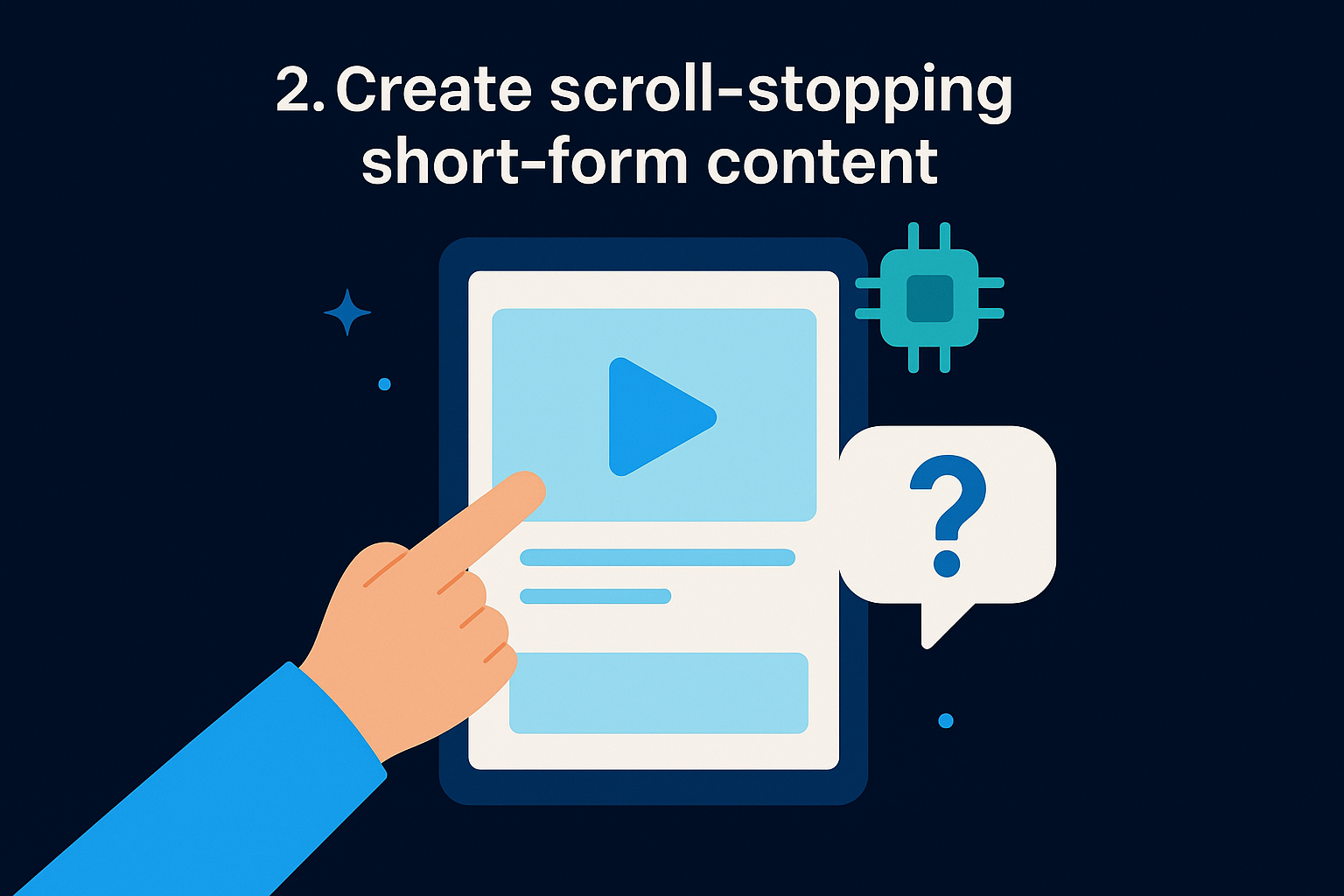
2. Create scroll-stopping short-form content
A data-driven system tells you what to make. This strategy is about execution: the actual footage, pacing, and hook that stop a thumb mid-scroll. Without this piece, even the best strategy dies in the first two seconds of a video nobody finishes watching.
How it works
Scroll-stopping content isn't about better cameras or bigger budgets. It's about front-loading tension in the first 1-2 seconds and keeping visual movement constant enough that the brain has no reason to swipe away. A few non-negotiables:
- Open with a hook that creates a question, not a slow intro or logo animation.
- Cut every 2-3 seconds to maintain motion and prevent drop-off.
- Add captions and sound design so the video works muted or with sound.
- Keep the payoff close to the hook, don't make viewers wait 20 seconds for the point.
Our AI-supported editing pipeline applies these rules automatically, but you can hand-edit to the same standard if you're disciplined about pacing.
Why it works
Platforms measure watch time and rewatches as their primary ranking signals, not likes. Short-form content built on strong hooks and tight cuts keeps people watching longer, which tells the algorithm to push it further.
If someone can guess your point in the first three seconds, you've already lost the scroll.
This is the mechanical engine behind organic growth social media accounts rely on when they scale past a plateau.
Who it's best for
Creators and brands producing frequent video content benefit most here, especially those competing in crowded niches where attention is scarce. If you're posting occasionally or relying on static images, this matters less, but for anyone serious about video-first growth, it's essential.
3. Post consistently on a strategic schedule
Consistency without strategy just means posting at random times and hoping the algorithm notices. Real growth comes from pairing a steady cadence with timing that matches when your specific audience is actually online, not some generic "best time to post" chart copied from a blog.
How it works
Start by pulling your audience activity data from each platform's native analytics, then build a posting calendar around those windows instead of your own schedule. A workable cadence looks like this:
- Post 4-7 times per week minimum on your primary short-form platform.
- Batch-produce content in weekly or biweekly sessions so posting never depends on daily motivation.
- Test two or three time slots per week and track which one produces the strongest first-hour engagement.
- Lock in the winning slot for 30 days before testing again.
Why it works
Platforms interpret consistent posting as a signal that an account is active and worth continued distribution. Organic growth on social media slows dramatically when accounts post sporadically, because the algorithm has less data to work with and less reason to keep surfacing your content to new viewers. A strategic schedule also compounds: each post benefits from the momentum of the last one instead of starting cold.
Consistency tells the algorithm you're worth betting on again tomorrow.
Who it's best for
This strategy fits brands and creators who've struggled with sporadic results despite decent content quality. If your posting has been inconsistent for months, fixing cadence alone often produces a visible lift before you touch anything else.
4. Engage authentically to build real community
Algorithms push content further when real people stick around to comment, reply, and share. Engagement signals matter as much as views, and you build them by treating your comment section like an actual conversation instead of a broadcast channel you ignore after hitting publish.
How it works
Reply to comments within the first hour of posting, since early interaction tells the platform your content is sparking discussion worth amplifying. Beyond that:
- Ask a specific question in your caption or video to prompt replies, not a generic "thoughts?"
- Reply with follow-up questions, not just "thanks!" or an emoji.
- Comment on other accounts in your niche daily, adding real value rather than dropping your handle.
- DM new followers occasionally with something genuinely relevant, not a sales pitch.
Why it works
Platforms treat comments and replies as stronger ranking signals than likes because they represent active investment, not passive scrolling. Organic social media growth accelerates when your audience feels seen, because people who get a reply come back and bring others with them. This is also how casual viewers turn into a loyal following that defends your brand and shares your work unprompted.
A follower who gets a real reply becomes a fan who brings three more.
Who it's best for
This strategy suits founders and creators building authority rather than chasing raw follower counts. If you're trying to attract talent, investors, or high-value clients through your presence, authentic engagement does more for credibility than any single viral post ever will.
5. Leverage platform algorithms and trends
Every platform tells you what it wants to promote right now, if you're paying attention to the right signals. Ignoring trending audio, formats, and features basically means opting out of free distribution that the algorithm is actively trying to hand you.
How it works
Check each platform's trending page or discovery tab daily, not weekly, since trend windows often close within 48-72 hours. Then:
- Adapt trending audio or formats to your niche instead of copying them generically.
- Use new platform features early, since algorithms often boost adopters of fresh tools like new editing formats or interactive stickers.
- Watch competitor content in your space for early trend signals before they peak.
- Skip trends that don't fit your brand, forcing relevance reads as inauthentic and hurts retention.
Why it works
Platforms are built to push whatever keeps people on the app longer, and trends are proof of concept that a format already works. Riding a trend early puts your content in front of the same discovery algorithm that's already primed to distribute it widely. This is one of the fastest levers for organic social media growth because you're borrowing momentum instead of building it from zero.
Trends are the algorithm telling you exactly what it wants to promote next.
Who it's best for
This works best for creators and brands with a fast production turnaround who can adapt within a day or two. If your approval process takes weeks, trend-jacking will always arrive too late to matter, so lean harder on evergreen strategies from earlier in this list instead.
6. Collaborate with influencers and complementary brands
Your existing audience has a ceiling. Borrowing someone else's audience is often the fastest way to break through it, as long as the fit is real and not just a numbers grab. Organic growth on social media speeds up dramatically when two audiences with overlapping interests get introduced to each other in a way that feels native, not forced.
How it works
Start small and niche instead of chasing the biggest account you can find. A workable approach:
- Identify 5-10 accounts with an adjacent audience, not a competing one.
- Pitch a specific format, like a duet, a co-hosted video, or a shoutout swap, rather than a vague "let's collab" message.
- Prioritize engagement rate over follower count, since a smaller account with an active audience often outperforms a large one with dead comments.
- Track the referral traffic from each collab so you know which partnerships to repeat.
Why it works
Audiences trust recommendations from people they already follow more than they trust an ad or a cold discovery post. Complementary partnerships also introduce your content to a fresh discovery pool the algorithm hasn't tested you against yet, which resets the ceiling on how far a single post can travel.
Borrowed attention only works when the audiences actually overlap.
This is a proven lever for social media organic growth because it compresses months of audience-building into a single well-matched partnership.
Who it's best for
Business owners and creators looking to break into a new market segment benefit most here. If you're trying to reach a specific buyer persona your current audience doesn't include, a well-chosen collaboration gets you there faster than organic reach alone ever could.
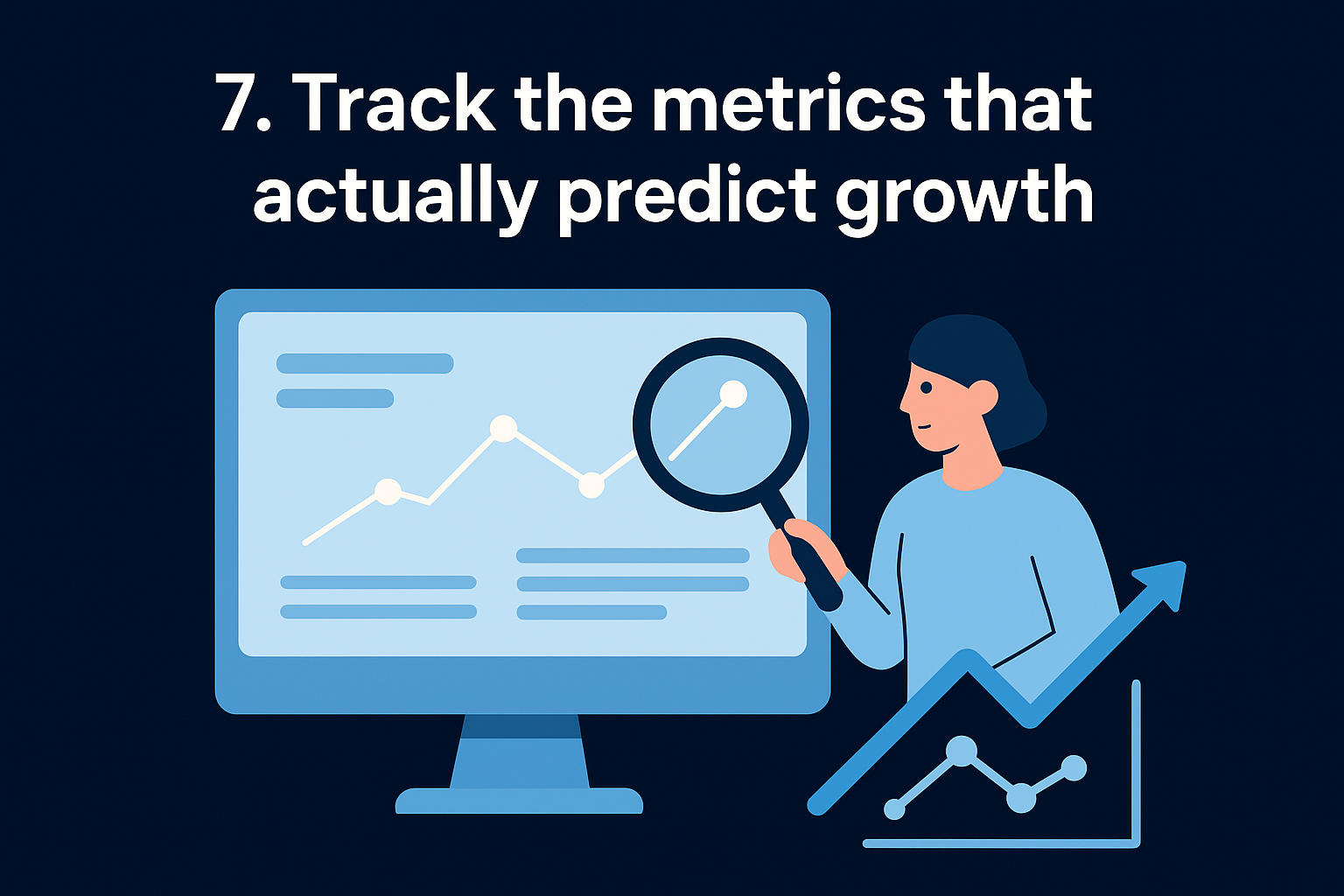
7. Track the metrics that actually predict growth
Follower count feels like the obvious scoreboard, but it's a lagging indicator that tells you almost nothing about what to do next. Organic social media growth gets easier to steer once you stop watching vanity numbers and start tracking the metrics that actually predict whether an account is about to break out or plateau.
How it works
Build a simple weekly dashboard instead of glancing at platform analytics once a month. Focus on these signals:
| Metric | Why it matters |
|---|---|
| Average watch time | Predicts algorithmic distribution better than any other single number |
| Rewatch rate | Signals content strong enough to earn a second play |
| Shares per 1,000 views | Shows content spreading beyond your existing audience |
| Follower conversion rate | Reveals how many viewers actually convert to followers |
Review these numbers every week, not just after a post underperforms, and compare each new video against your own historical average rather than a generic benchmark.
Why it works
Platforms optimize for the same signals: time on video, rewatches, and shares. Social media organic growth stalls when creators chase likes and comments alone, because those metrics correlate weakly with what the algorithm actually rewards. Tracking the right numbers turns every post into a data point instead of a guess, feeding straight back into the content system from strategy one.
The metrics that predict growth aren't the ones on your profile page.
Who it's best for
This fits founders and business owners who need proof their content investment is working, not just a feeling that things are improving. If you're reporting results to a team or investors, watch time and conversion data make a far stronger case than follower counts ever will.
Making organic growth predictable
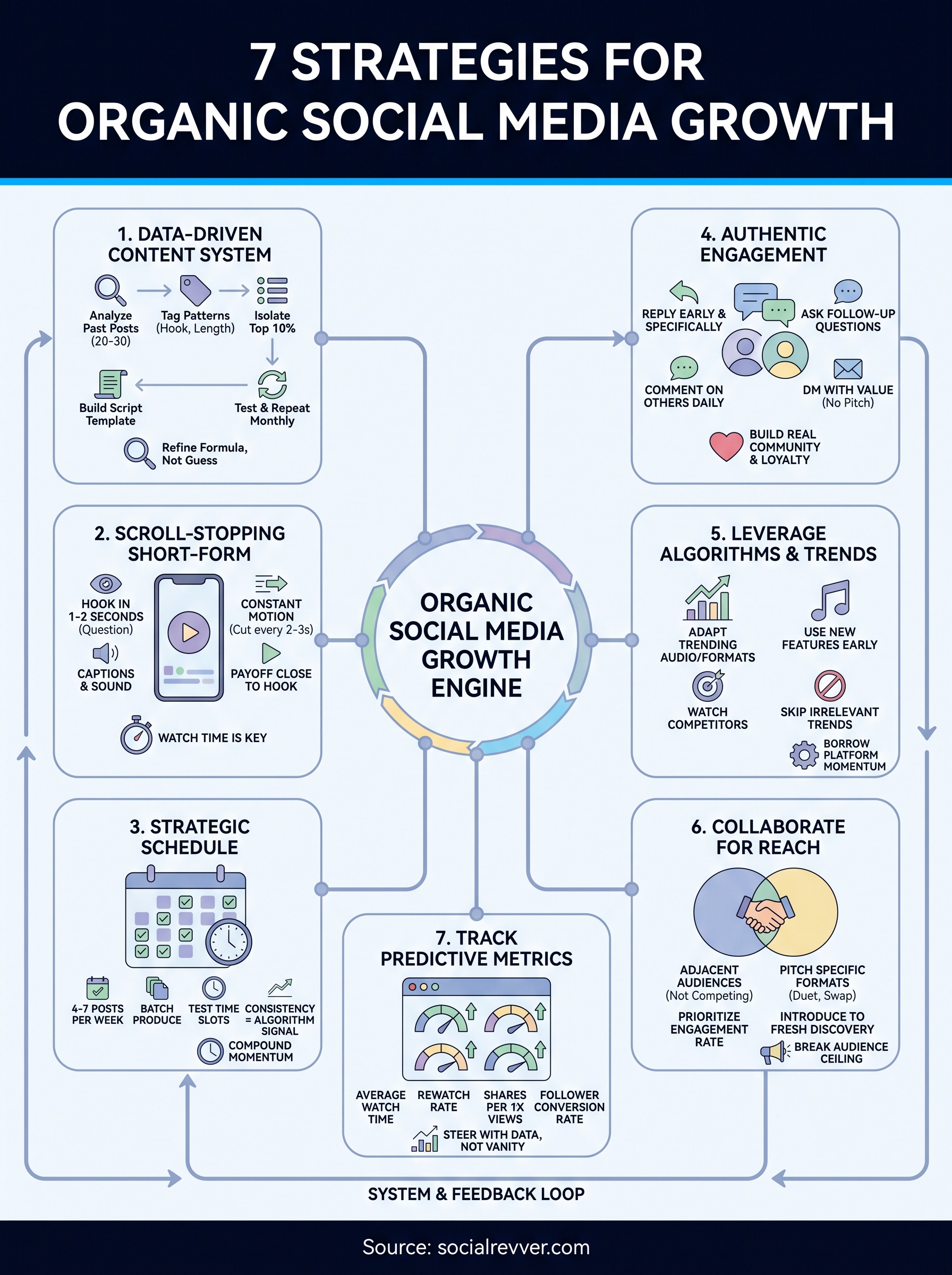
None of these eight strategies work in isolation. A data-driven system tells you what to make, scroll-stopping edits get it watched, and strategic posting plus real engagement decide whether the algorithm keeps handing you distribution. Skip any one piece and the others carry less weight, since organic social media growth compounds only when the full loop runs together, week after week.
Running all seven pieces manually while also operating a business is a lot to sustain. That's the exact gap SocialRevver exists to close: we handle the strategy, scripting, editing, and distribution feedback loop so your organic growth on social media stops depending on whoever has time to post that day. You get the system, we run the engine.
If you'd rather see this applied to your own account than keep testing tactics solo, get your free 40+ slide social media strategy and see exactly where the growth is hiding.