
Influencer marketing platforms have become essential infrastructure for brands that want to run creator partnerships at scale. The Aspire influencer marketing platform is one of the most talked-about options in that space, offering tools for discovery, campaign management, and performance tracking. But does it actually deliver on what it promises? That depends on what you need it to do and how it fits into your broader growth strategy.
At SocialRevver, we build managed short-form content systems that turn organic social into a predictable revenue channel. Influencer marketing platforms like Aspire sit on the other side of the same equation, helping brands tap into existing creator audiences rather than building their own. Understanding both approaches matters because the strongest growth strategies often combine owned content with strategic creator partnerships.
This article breaks down Aspire's core features, pricing structure, user reviews, and creator portal access. Whether you're evaluating Aspire for your brand or signing up as a creator, you'll walk away with a clear picture of what the platform offers and where it falls short. We'll also cover how it stacks up for founders and business owners who need results beyond vanity metrics.
What Aspire is and who it's for
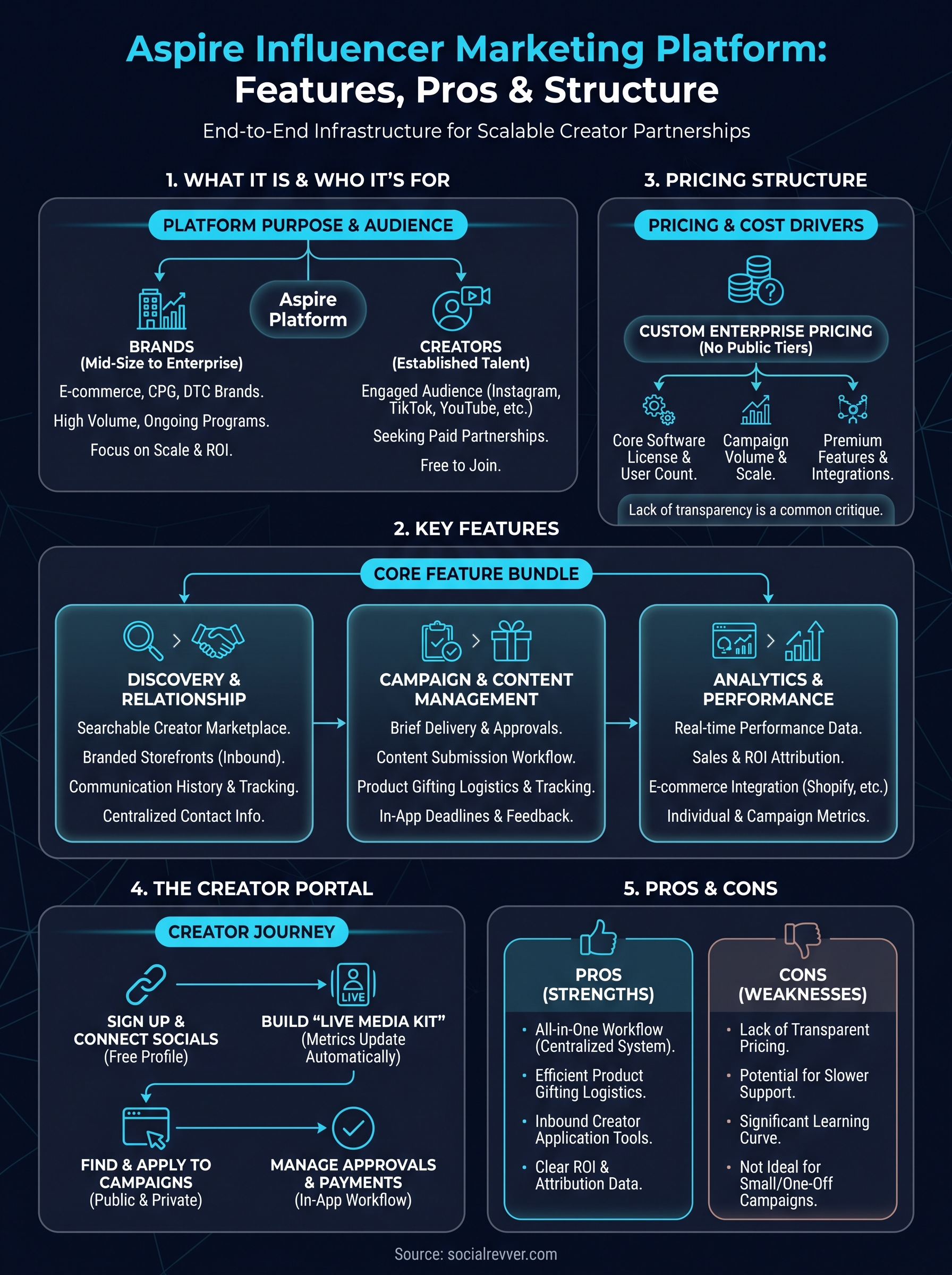
Aspire is a software-as-a-service platform built to help brands find, manage, and measure influencer partnerships at scale. Originally launched as AspireIQ, the company rebranded and has positioned itself as an end-to-end influencer marketing solution that covers everything from creator discovery to campaign analytics. The platform connects brands with creators across Instagram, TikTok, YouTube, Pinterest, and Facebook, making it one of the more channel-diverse tools in the influencer marketing category.
The platform's core purpose
The aspire influencer marketing platform exists to solve a specific operational problem: managing creator relationships at volume is time-consuming and disorganized without dedicated infrastructure. Campaign briefs, contracts, content approvals, payments, and performance data all tend to live in separate places when brands try to run influencer programs manually. Aspire centralizes those workflows into a single dashboard so your team can move faster without losing track of deliverables.
Running influencer campaigns without a dedicated system usually means spreadsheets, missed deadlines, and inconsistent results, which is exactly the problem Aspire was built to fix.
Brands using the platform can search a creator marketplace, invite influencers directly, manage gifting logistics, and track ROI in one place. That combination of workflow and data tools is what separates Aspire from basic outreach tools or a simple CRM setup.
Who gets the most out of it
Aspire is built primarily for mid-size to enterprise brands with dedicated marketing teams that run ongoing influencer programs. If you're a brand that needs to manage dozens or hundreds of creator relationships simultaneously, the platform's workflow tools start to justify the cost. E-commerce brands, consumer packaged goods companies, and direct-to-consumer businesses tend to be its best-fit customers because they have both the product volume and the budget to sustain long-term creator campaigns.
Creators and independent influencers also use Aspire to find brand partnership opportunities by joining the platform's creator marketplace. If you're a content creator, brands running active campaigns can discover your profile through search and filters. The fit is strongest for creators with an established, engaged audience on at least one major platform, since brands rely on performance data to decide who they approach and how much they pay.
Key features and what they do
The aspire influencer marketing platform bundles several distinct tools into one dashboard, each designed to remove a specific friction point from running creator campaigns. Understanding what each feature actually does helps you decide which ones matter for your workflow.
Creator discovery and relationship management
Aspire gives you access to a searchable creator marketplace where you can filter by audience demographics, engagement rate, platform, niche, and follower count. You can also build branded storefronts that let creators apply to work with your brand directly, which shifts the outreach dynamic from cold contact to inbound interest.
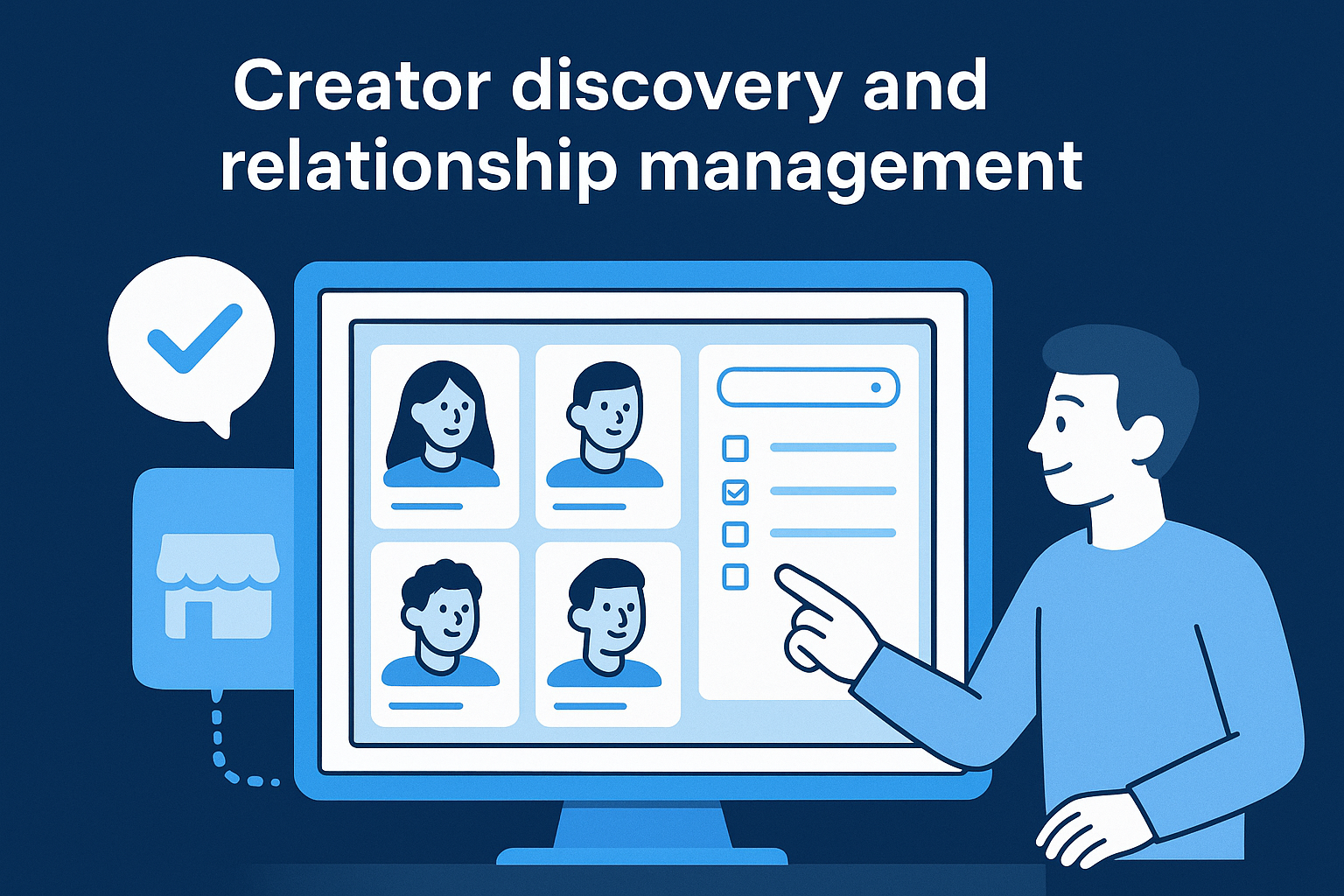
The ability to receive inbound creator applications is one of Aspire's strongest differentiators compared to platforms that require you to do all the prospecting yourself.
Beyond search, the platform includes relationship management tools that let you track communication history, past campaign performance, and payment status for each creator in one place.
Campaign management and content approval
Once you activate a campaign, Aspire handles brief delivery, content submission, and approval workflows inside the platform so nothing gets buried in email threads. You can set deadlines, review creator drafts, leave feedback, and approve content for posting without switching tools.
The platform also manages product gifting logistics, including shipping tracking, which is useful for e-commerce brands running seeding campaigns at scale.
Analytics and performance tracking
Aspire pulls real-time performance data from connected social accounts and links directly to sales metrics through integrations with e-commerce platforms. You can measure reach, engagement, conversions, and estimated media value at both the individual creator level and the campaign level, giving your team clear attribution data rather than gut estimates.
Pricing, plans, and what affects cost
Aspire does not publish a standard pricing page with fixed tiers. Instead, the platform uses custom enterprise pricing based on your team size, campaign volume, and the specific features you need. If you want an actual number, you have to contact their sales team and go through a discovery call before they quote you anything.
What Aspire charges for
The platform structures its pricing around three main components: the core software license, the number of active users on your account, and access to premium features like advanced analytics or dedicated support. Brands that run high-volume gifting campaigns or need deep e-commerce integrations typically land on higher-cost packages because those workflows require more infrastructure from the platform's side.
The lack of transparent pricing is one of the most consistent complaints in Aspire user reviews, particularly from smaller brands trying to budget before committing to a demo.
What drives your final cost up
Several variables push your quote higher than the baseline. Campaign scale matters most, since managing 200 creators requires more platform capacity than managing 20. Your integration requirements also factor in, because connecting Aspire to Shopify, Salesforce, or other systems often adds to the contract value. Dedicated account management and onboarding support are typically add-ons rather than standard inclusions, so if your team needs hands-on help getting started, expect that to increase your monthly spend.
If you're a smaller brand or just starting to test influencer partnerships, the custom pricing model can feel like a barrier. Aspire is clearly built for marketing teams with existing budgets allocated specifically to creator programs rather than businesses experimenting with the channel for the first time.
How the creator portal works
The creator side of the aspire influencer marketing platform works separately from the brand dashboard. If you're a content creator looking to land paid partnerships, you create a free creator account that gives you access to a marketplace where brands actively search for talent and run open applications. Your access level differs significantly from what brands see, so it helps to understand exactly what the portal gives you before you invest time setting it up.
Signing up and building your profile
You sign up through Aspire's creator portal by connecting your social media accounts during registration. The platform pulls in your follower count, engagement rate, and recent content automatically so brands can evaluate you without you having to manually enter that data. Your profile functions as a live media kit that updates as your metrics change, which means keeping your accounts active directly improves your discoverability inside the platform.

A strong profile with connected accounts and consistent engagement data significantly increases your chances of getting approached by brands running targeted searches.
Finding and applying to campaigns
Once your profile is live, you can browse open brand campaigns that are accepting creator applications. Some brands post campaigns publicly and let creators apply directly, while others run private searches and reach out to creators they select. You submit your application through the platform, and all communication, content approvals, and payment processing happen inside Aspire rather than through email or outside tools. Payments typically process after you submit your content and the brand approves it, though payment timelines vary by brand and campaign terms.
Pros, cons, and common questions
The aspire influencer marketing platform earns genuine praise in some areas and draws consistent criticism in others. Knowing both sides before you commit to a demo or a contract saves you time and sets the right expectations for your team.
What Aspire does well
Aspire's strongest asset is its all-in-one workflow, which keeps discovery, communication, approvals, and payments inside one system. Brands that previously managed creators across email, spreadsheets, and payment tools report that centralizing everything noticeably reduces administrative overhead. The platform also handles product gifting logistics better than most alternatives, which is a specific advantage for e-commerce brands running seeding programs at scale.
If your team manages more than 20 active creator relationships at once, the workflow consolidation alone tends to justify the platform's cost for most enterprise marketing teams.
Where Aspire falls short
The lack of transparent pricing is the most repeated complaint across user reviews. Smaller brands often go through a full sales process only to find the cost sits well outside their budget. Beyond pricing, some users report that customer support response times slow down after onboarding, which creates friction when issues come up mid-campaign. The platform also carries a real learning curve, and teams without dedicated influencer marketing experience may need several weeks before they run campaigns efficiently.
Common questions about Aspire
Two questions come up consistently from both brands and creators. First, is Aspire free for creators? Yes, creator accounts are free to create and maintain. Second, does Aspire work for small brands? Technically yes, but the pricing structure and feature depth are designed for teams running ongoing, high-volume programs rather than occasional one-off campaigns.
Next steps
The aspire influencer marketing platform fits a specific profile: brands with dedicated marketing teams, ongoing creator programs, and the budget to support enterprise software. If that describes your situation, booking a demo is the logical next step so you can see the actual pricing and decide if the feature set justifies the cost for your team's workflow.
If you're a creator, setting up a free profile costs you nothing and gives you direct access to brands actively searching for talent. Keeping your connected accounts active and your engagement consistent is what drives discovery inside the platform.
Building your own content system is a separate but equally important lever. Short-form content compounds over time and generates inbound attention without depending on brand budgets or third-party platform access. If you want a managed system that turns your social presence into predictable revenue, see how SocialRevver builds that for you.