Most small businesses assume influencer marketing for small business is out of reach, reserved for brands with six-figure ad budgets and celebrity endorsements. That assumption is wrong, and it's costing them one of the most effective acquisition channels available. The truth is, a creator with 3,000 engaged followers in your niche can drive more qualified leads than a billboard seen by 300,000 strangers.
The real opportunity sits with nano and micro-influencers: creators with smaller audiences who actually talk to their followers, reply to comments, and build genuine trust. Partnering with them doesn't require a massive spend. It requires a system, a clear process for finding the right people, structuring deals that work on a tight budget, and turning that collaboration into content that keeps producing results long after the initial post goes live.
That's where this guide comes in, and where our work at SocialRevver connects directly. We build data-driven short-form content systems for founders and business owners, and influencer-generated content is one of the highest-leverage inputs we see feeding those systems. Below, you'll get a step-by-step playbook for launching influencer partnerships that fit a small business budget, from identifying creators worth your investment to structuring campaigns that actually move revenue.
What to set up before you start
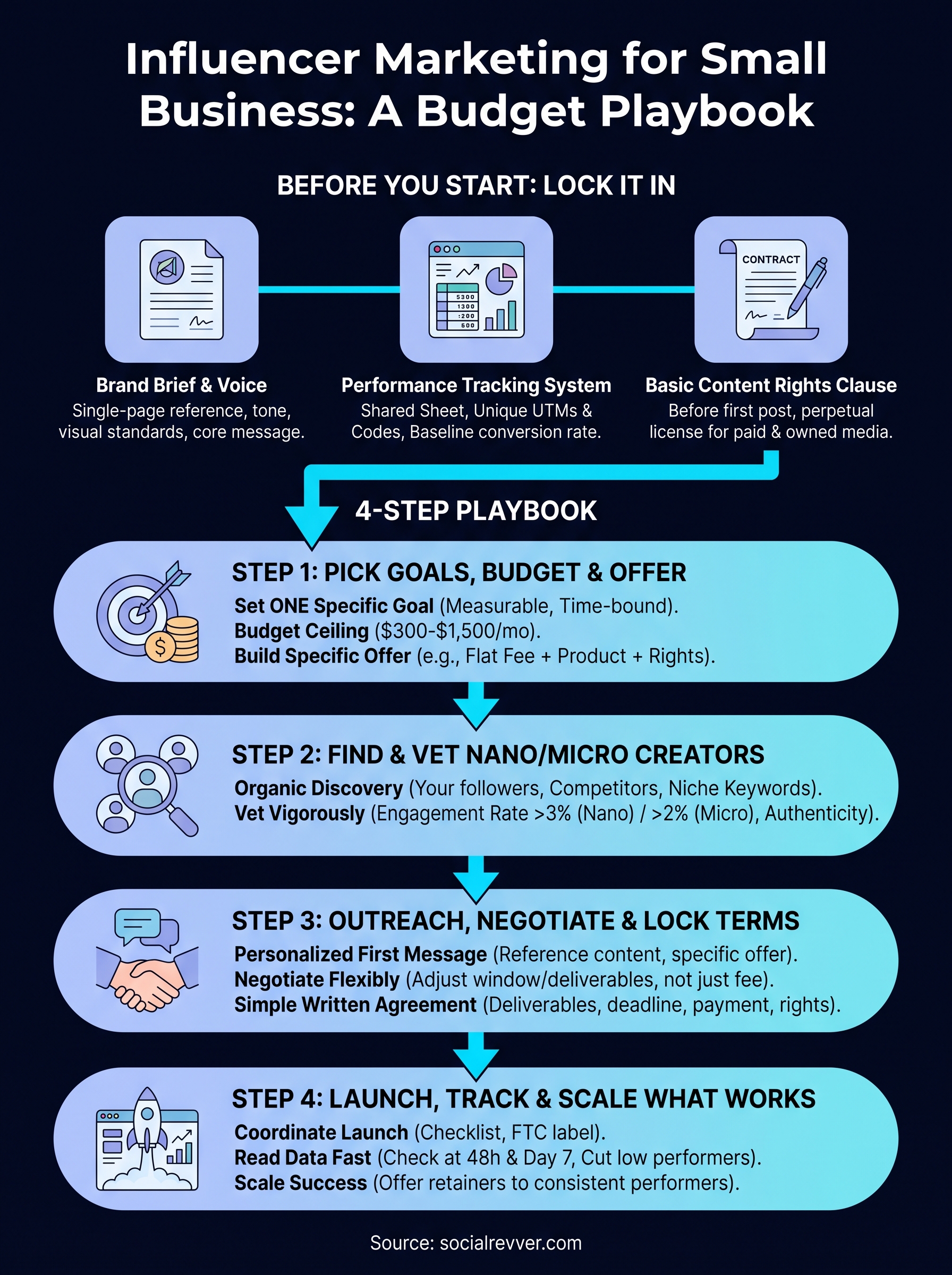
Before you contact a single creator, you need three things locked in: a clear picture of your brand, a system to measure results, and a basic legal framework. Skipping this setup phase is the most common reason influencer marketing for small business fails to generate repeatable results. Without it, you can't tell which partnerships are working, and you lose any content the creator makes the moment the deal ends.
Define your brand voice and visual standards
Your brand voice document doesn't need to be long. A single-page reference that covers your tone, your core message, and two or three things you never want a creator to say is enough to start. Pair it with three to five visual examples showing the aesthetic you expect, whether that's a specific color palette, shooting style, or caption format.
Creators produce better content when they understand what you stand for, not just what you sell.
Give every creator a short brief that includes a one-sentence brand promise, a description of your target audience, and one or two content formats you've already seen perform well on your own channels. This brief becomes your standard operating document for every future partnership, so build it once and reuse it.
Set up a basic performance tracking system
Expensive software isn't required to track campaign results effectively. A shared Google Sheet with columns for creator name, platform, post date, promo code or link, reach, engagement rate, clicks, and conversions gives you everything you need to compare partnerships and cut what isn't working.
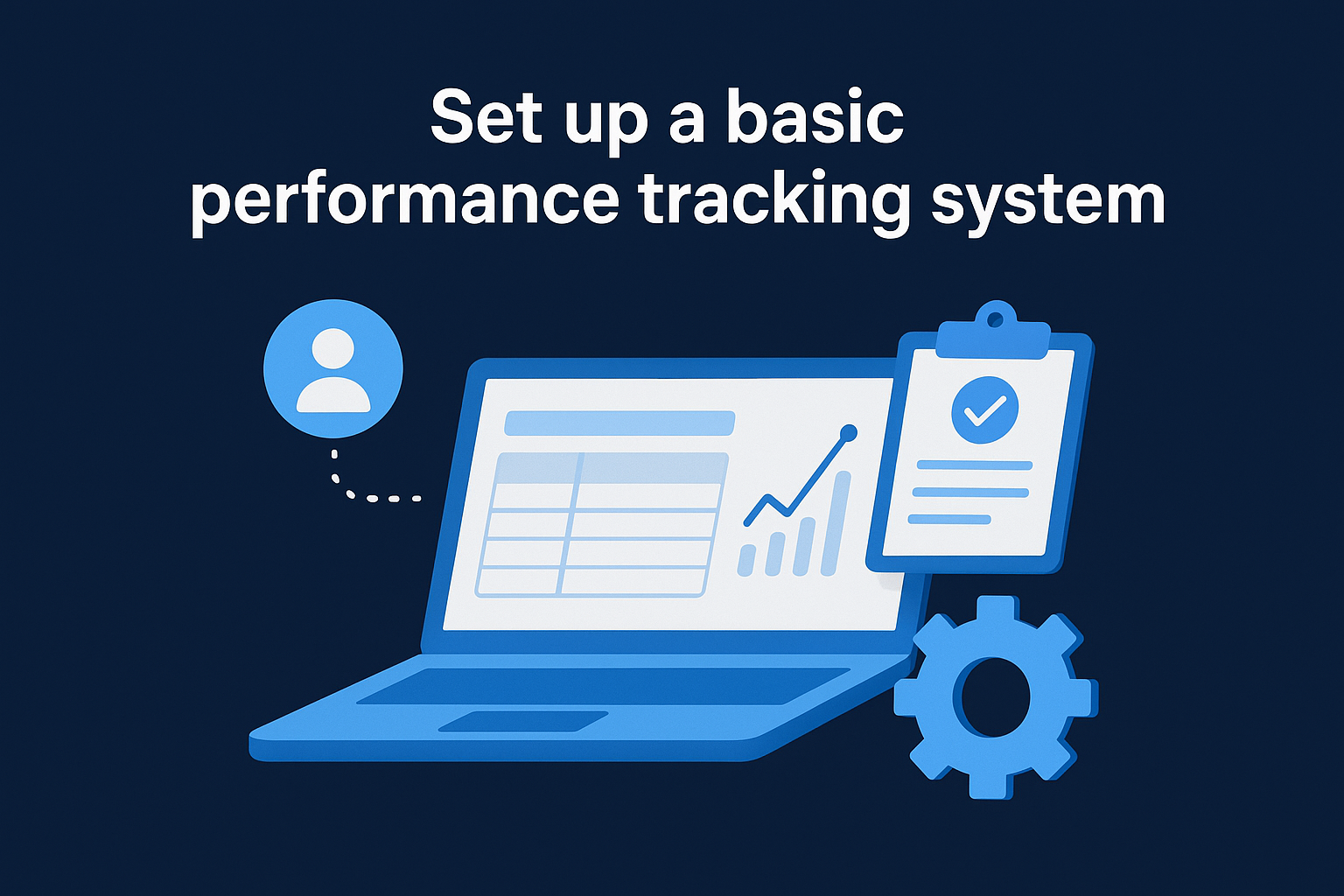
Set these up before any campaign launches:
| Tracking element | Purpose |
|---|---|
| Unique UTM link per creator | Attribute web traffic and conversions by source |
| Unique discount code per creator | Tie revenue directly to a specific partnership |
| Baseline conversion rate | Compare influencer traffic against your existing average |
Prepare a basic content rights clause
Add a rights clause to every agreement before the first post goes live, not after. A single paragraph is sufficient: state that you receive a perpetual, royalty-free license to repurpose the content across your owned and paid media channels, including ads, your website, and social accounts. Without this clause in writing, you may not legally be able to run a creator's video as a paid ad, which eliminates one of the highest-value uses of influencer content.
Step 1. Pick goals, budget, and offer
Running influencer marketing for small business without a defined goal is the fastest way to burn a small budget. Before you search for a single creator, decide what one outcome matters most: new email subscribers, direct product sales, or local foot traffic. One primary goal keeps your brief tight and makes it easier to measure whether a partnership worked.
Set one specific goal
Your goal needs to be measurable and time-bound. "More brand awareness" is not a goal. "Fifty new email sign-ups in 30 days from creator traffic" is a goal. Write it in a single sentence with a number attached, and that number becomes the benchmark every creator partnership gets measured against.
Run each campaign against the same goal for at least 60 days before changing it. Consistency in measurement gives you meaningful comparison data across multiple creator partnerships, which is what lets you figure out who to pay again.
Decide what you can realistically spend
Set a monthly budget ceiling before you begin outreach. Most small business influencer budgets sit between $300 and $1,500 per month when working with nano and micro creators.
| Budget split | Allocation |
|---|---|
| Creator fees or gifting | 65% |
| Boosting top-performing posts | 35% |
Build an offer creators will say yes to
Give creators a clear, specific offer in your first message. A practical structure that works:
- Flat fee ($75 to $300) + free product for one short-form video
- Usage rights included for 90 days across paid and owned channels
- Performance bonus ($50) if the post hits a mutually agreed reach threshold
A specific offer tells the creator you run a professional operation, which filters out anyone who isn't serious about the work.
Step 2. Find and vet nano and micro creators
Finding the right creators is the part of influencer marketing for small business where most owners waste time. You don't need a platform subscription or an agency to build a solid list. Organic discovery and manual vetting take more effort up front, but they consistently produce better partnership fits than algorithm-matched databases.
Where to look for creators
Start your search directly on the platform where your audience spends time. Search your niche keywords on Instagram, TikTok, and YouTube Shorts, then filter by recent posts rather than top posts. Creators who appear in recent results are actively publishing, which matters more than a high-performing post from eight months ago.
Three reliable places to find candidates:
- Your own follower list: Search your existing followers for accounts with 1,000 to 25,000 followers who already use or mention your product.
- Competitor comment sections: People who engage publicly with similar brands often create content in the same space.
- Niche keyword and hashtag searches: Use three to five specific terms and scroll past the top results to find mid-tier creators.
How to vet before you reach out
Once you have a shortlist, check four numbers before sending a single message. Engagement rate (likes plus comments divided by followers) should sit above 3% for nano creators and above 2% for micro creators. Audience authenticity is easy to spot manually: look for real comments with full sentences, not strings of emojis or generic phrases like "great post."
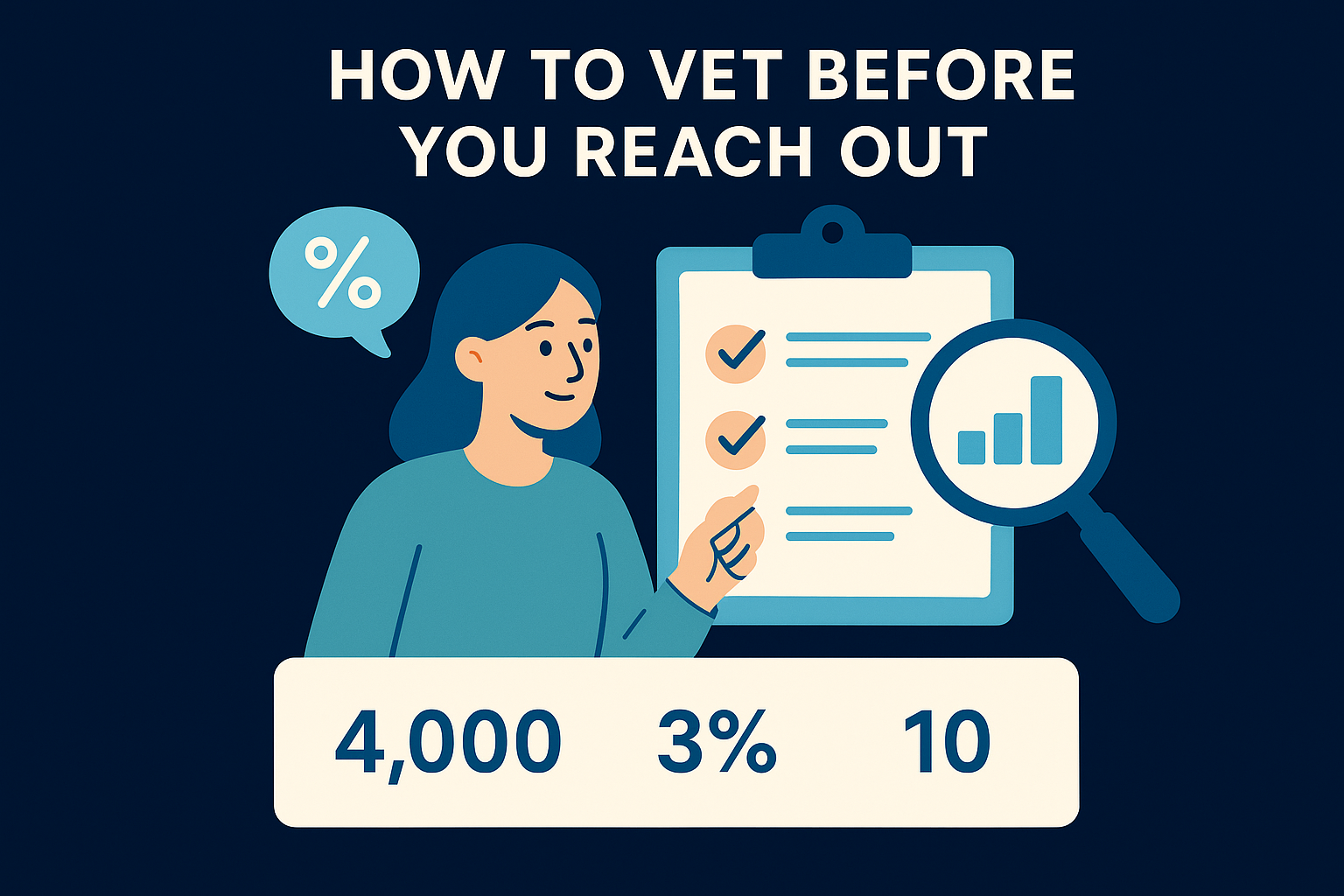
A creator with 4,000 engaged followers who trusts your product will outperform a 40,000-follower account that treats every sponsorship as a transaction.
Confirm their last ten posts show consistent publishing and that their visual and tonal quality aligns with the brand brief you built in the setup phase.
Step 3. Outreach, negotiate, and lock terms
Most creators get generic partnership pitches every week. If your first message reads like a mass email, it gets ignored. The key to influencer marketing for small business outreach is making the creator feel like you chose them specifically. Personalization and a clear offer in your opening message are the two things that separate a reply from a delete.
Write a first message that gets a reply
Keep your outreach short, direct, and specific to that creator. Reference one piece of their recent content and connect it to why your product fits their audience. End with a specific offer so the creator knows exactly what you're proposing before they reply.
Use this as your starting template:
"Hi [Name], I watched your recent video on [specific topic] and thought your audience would connect with [product name]. I'd like to offer [flat fee + free product] for one short-form video with 90-day usage rights across my channels. Reply if you want the full brief."
Negotiate without losing the deal
When a creator counters your offer, don't move only on the fee. Adjust one variable at a time: shorten the usage window, reduce the number of deliverables, or swap part of the cash fee for product. This approach keeps your budget ceiling intact while still giving the creator flexibility to agree.
Lock the agreement in writing
Send a brief written agreement before any work starts. Cover four key points: deliverable description, posting deadline, payment amount with timing, and content usage rights. A simple Google Doc that both parties confirm by email reply is legally sufficient and faster than a formal contract.
Step 4. Launch, track, and scale what works
Getting the post live is the beginning, not the finish line. Influencer marketing for small business only compounds when you treat each campaign as a data collection event rather than a one-off transaction. The goal at this stage is to extract every usable insight from each partnership and feed it directly into the next one.
Coordinate the launch
Send your creator a final launch checklist the week before the post goes live so nothing gets missed at the last minute. Confirm the posting date, caption requirements, promo code, UTM link, and disclosure language. In the United States, the FTC requires that paid partnerships are clearly labeled, so make sure your creator includes a visible sponsored content label in the caption before the post goes live.
A coordinated launch protects your brand legally and ensures all tracking elements are active before the first viewer clicks.
Read the data and cut fast
Pull your tracking sheet 48 hours after each post goes live and log the initial engagement rate, click-through rate, and any revenue tied to the creator's unique promo code. Check the same metrics at day seven for the full picture. If a partnership delivers fewer clicks than your baseline conversion rate suggests it should, don't renew it regardless of the follower count.
Scale what earns
When a creator consistently hits or beats your benchmark, book a follow-up campaign immediately before their schedule fills. Offer a three-month retainer at a fixed monthly fee in exchange for one post per month. Repeat partners require less briefing time, deliver better content as they learn your brand, and generate compounding audience exposure over time.
Your next 30 days
You now have a complete framework for influencer marketing for small business that fits a real budget. The gap between reading this and getting results is one decision: start with one creator, one goal, and one campaign. Run it for 30 days, pull the data, and let the numbers tell you what to do next.
Your 30-day action list:
- Days 1 to 5: Finalize your brand brief, tracking sheet, and rights clause
- Days 6 to 10: Build a shortlist of 10 vetted creators and send your first five outreach messages
- Days 11 to 20: Confirm one partnership, send the brief, and coordinate the launch
- Days 21 to 30: Pull performance data, log results, and decide who gets a follow-up offer
If you want a professionally built content system doing this work at scale, apply to work with SocialRevver and get a free 40-slide strategy built for your brand.