Later started as a simple Instagram scheduling tool. Now it's positioned itself as a full-stack platform that includes later influencer marketing capabilities, creator discovery, and campaign management. If you're evaluating it for your brand or business, you need to know exactly what you're getting, and where it falls short.
At SocialRevver, we build data-driven content systems for founders, creators, and business owners who treat attention like a growth lever, not a guessing game. We've worked alongside nearly every major platform and tool in this space, so we know what actually moves the needle when it comes to scaling organic reach and converting it into revenue.
This article breaks down Later's influencer marketing features, pricing tiers, and real user reviews so you can decide whether it fits your strategy. We'll cover what it does well, where it gets outperformed by competitors, and who it's actually built for, without the fluff.
What Later influencer marketing is
Later built its reputation on visual content scheduling, but its influencer marketing suite, branded as Later Influence, extends well beyond posting calendars. The platform connects brands with a searchable database of creators, lets you manage outreach campaigns, track deliverables, and measure performance, all inside a single dashboard. It targets small-to-mid-sized brands and agencies that want to run creator partnerships without juggling spreadsheets and email threads.
Later Influence consolidates creator discovery, campaign management, and performance reporting into one connected system, which reduces the coordination overhead most brands struggle with.
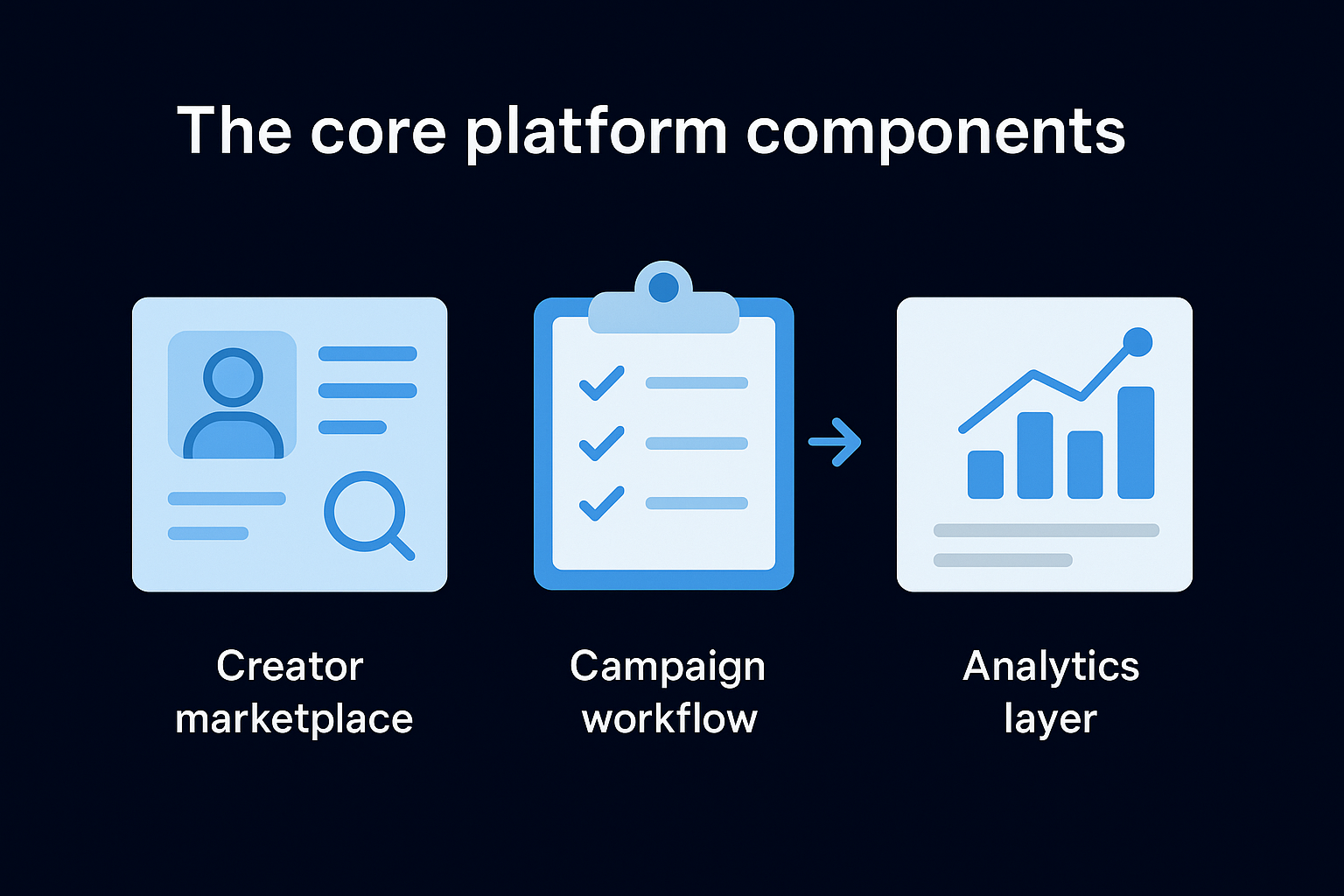
The core platform components
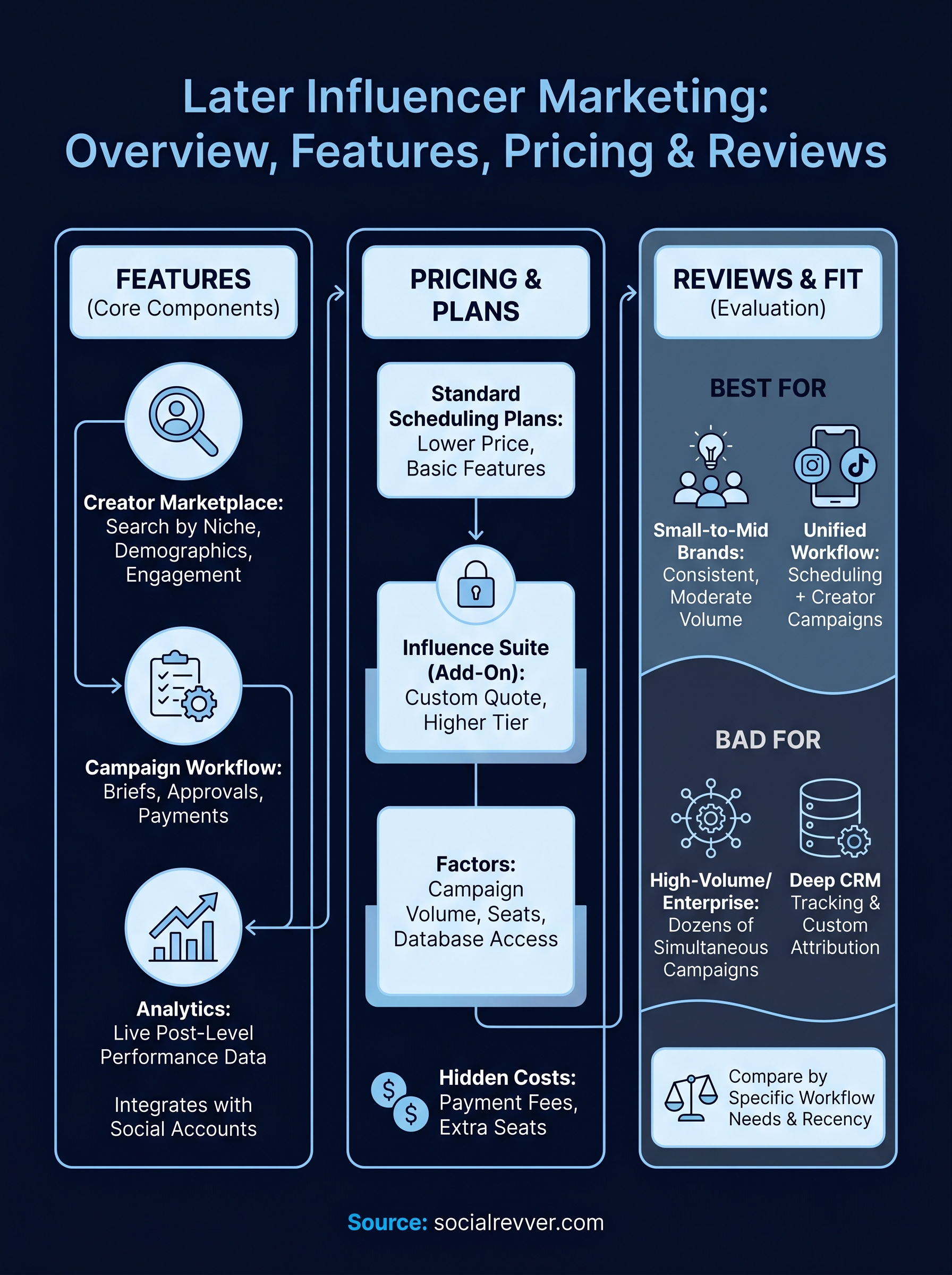
Later Influence includes three main functional areas: a creator marketplace, a campaign workflow tool, and an analytics layer. The creator marketplace lets you search and filter creators by niche, audience demographics, engagement rate, and platform. The campaign tools handle brief distribution, content approvals, and payment processing. Analytics pull post-level performance data directly from connected social accounts so you don't have to manually collect screenshots.
The platform supports Instagram, TikTok, YouTube, and Pinterest, which covers most channels brands use for short-form and visual content. You can manage multiple concurrent campaigns, assign team members to specific workflows, and set up automated reminders for creator deliverables, which removes a lot of the manual follow-up work.
How it differs from pure scheduling
Later's scheduling roots still show up in how the platform is structured. Most later influencer marketing workflows tie directly into its content calendar, so you can view both your owned posts and creator-generated content in the same unified timeline. This is practical when you want to coordinate brand posts around a campaign launch.
What separates it from standalone influencer tools is the combined interface, which reduces the number of platforms your team needs to manage. For lean marketing teams handling multiple moving parts, that consolidation carries real operational value.
Who it fits and when it is a bad match
Later influencer marketing tools work best for specific use cases, and knowing where the platform fits saves you from expensive trial periods that go nowhere. Understanding the right match upfront helps you spend your budget where it produces real results.
Who it works for
Later fits small-to-mid-sized brands that run consistent creator campaigns and want their scheduling and campaign tools in one place. If your team manages Instagram and TikTok simultaneously and needs a lightweight workflow for coordinating 5-20 creators per campaign, Later gives you enough structure without overwhelming your process.
Later is a strong fit if your team already uses it for scheduling and wants to add creator partnerships without onboarding an entirely separate platform.
When it is a bad match
Later starts to break down if you run a high-volume operation with dozens of simultaneous campaigns that require deep CRM-style tracking. Enterprise-level operators and large agencies managing hundreds of creator relationships will hit the platform's limits quickly, especially around reporting depth and custom attribution. If your primary goal is building long-term audience authority through owned short-form content rather than sponsored partnerships, Later's core toolset does not directly solve that problem for you.
Features to look for in Later Influence
When you evaluate later influencer marketing tools, the feature set determines whether the platform saves your team time or creates new bottlenecks. Later Influence includes a solid core, but you need to know which capabilities matter most before committing your budget.
Creator Search and Filtering
Creator discovery quality separates strong influencer platforms from weak ones. Later's search lets you filter by audience demographics, engagement rate, niche, and follower range, which gives you enough precision to avoid wasting outreach budget on mismatched creators. The more granular your filtering options, the faster you move from prospecting to live campaigns.
Filtering by engagement rate rather than follower count consistently surfaces creators whose audiences actually respond, which directly impacts your campaign ROI.
Campaign Workflow and Reporting
Deliverable tracking and content approvals are where most campaigns lose time, and Later handles both inside a single workflow. You can set deadlines, review submitted content, and request revisions without leaving the platform. The reporting layer pulls live performance data from connected accounts, which means you get actual metrics rather than self-reported numbers from creators. Prioritize platforms where the analytics connect directly to social accounts, not just creator-submitted screenshots.
Pricing, plans, and total cost considerations
Later's pricing structure splits across its scheduling product and its Influence suite, which means the cost you see advertised rarely reflects what you actually pay. Before you commit, you need to understand how those two layers interact and where the real expenses stack up.
Plan Tiers and What They Include
Later's standard scheduling plans start at lower price points designed for individual creators or small teams, but the Influence features sit behind a separate, higher-tier subscription. The Influence-specific tier is not publicly listed with a fixed price, which means you typically go through a sales conversation to get a quote. Campaign volume, number of seats, and creator database access all factor into what you end up paying.
Always request a line-item breakdown of what the Influence tier includes before signing a contract, since several features are gated behind add-ons.
Hidden Costs to Watch
Payment processing fees for creator payments and additional user seats are the two costs most teams underestimate. If you need custom reporting or dedicated account support, those often come at a premium on top of the base plan. Factor in onboarding time as well, since switching your existing workflows into a new platform carries a real productivity cost that does not show up on any pricing page.
How to evaluate reviews and compare options
Reviews for later influencer marketing platforms cluster around two extremes: glowing testimonials from low-volume users and frustrated complaints from teams that outgrew the tool quickly. Neither tells the full story. When you read reviews, filter by reviewer company size and use case to find feedback that actually mirrors your situation.
Reviews from agencies managing 50+ creators per month give you more signal than reviews from solo brand managers running one-off campaigns.
Where to find reliable feedback
G2 and Capterra aggregate verified user reviews with structured rating categories, which makes it easier to compare Later against alternatives on specific dimensions like reporting depth and customer support response time. Look at review recency as well, since platforms update their feature sets frequently and older reviews may not reflect the current product.
How to compare alternatives
When you stack Later against competing tools, build a comparison grid based on your actual workflow requirements rather than feature lists from vendor marketing pages. Identify the three or four capabilities your team uses most, then score each platform against only those. Pricing transparency, reporting depth, and creator database size tend to be the deciding factors for most teams evaluating where to invest their influencer marketing budget.
Next Steps
Later influencer marketing tools give you a functional starting point if you need to manage creator campaigns alongside your scheduling workflow. The platform handles the basics well, but it works best when your needs stay within its scope. If you run high-volume campaigns or need deep attribution reporting, you will likely find gaps that slow your team down rather than speed it up.
Your decision should come down to one question: are you building a short-term campaign tool or a long-term growth system? Most brands that treat content as a revenue engine eventually outgrow platform-dependent solutions and need a data-driven infrastructure behind their social presence. That is the difference between renting attention and owning it.
If you want a system built around your specific audience, niche, and goals rather than a generic dashboard, get your free 40+ slide social media strategy from the SocialRevver team and see what a purpose-built content engine looks like for your brand.