
Every founder, creator, and business owner operates in a market where multiple companies sell similar products or services. The difference between the brand people choose and the brand people ignore often comes down to one thing: positioning. So what is brand positioning, exactly, and why does it matter more than most business leaders realize?
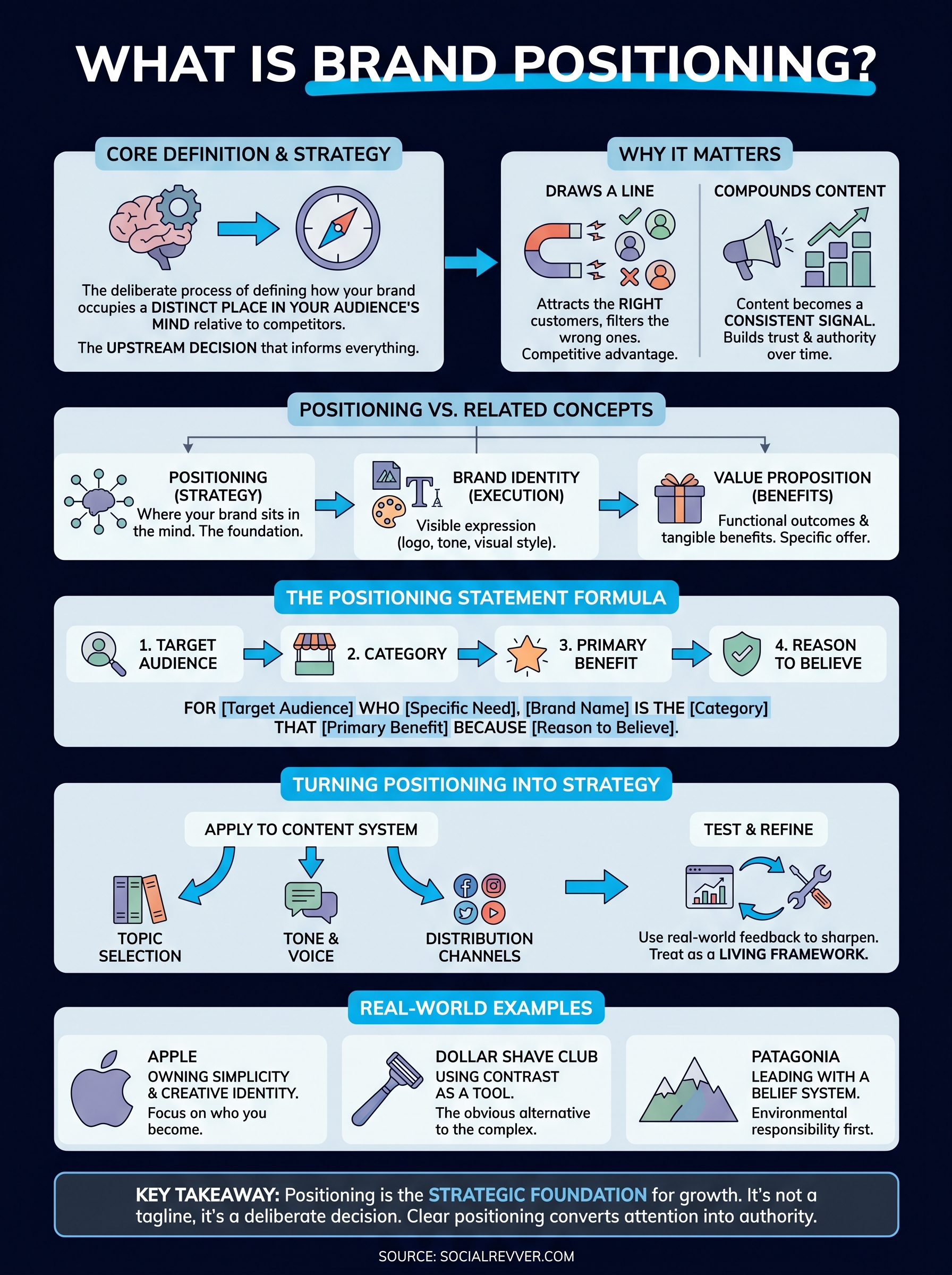
Brand positioning is the deliberate process of defining how your brand occupies a distinct place in your audience's mind relative to competitors. It's not a tagline. It's not a logo. It's the strategic decision about what you stand for, who you serve, and why you're the obvious choice. Get it right, and every piece of marketing you produce, from a 60-second video to a full sales deck, carries a consistent signal that builds trust and authority over time.
At SocialRevver, we see the impact of positioning every day. The clients who grow fastest through short-form content aren't just posting more, they have a clear positioning strategy that makes every script, hook, and visual reinforce the same core message. Without that foundation, even the best content system produces noise instead of results. Positioning is the upstream decision that determines whether attention converts into revenue.
This article breaks down brand positioning from the ground up: what it means, why it's essential to your marketing strategy, how to build a positioning statement that actually works, and real-world examples you can learn from. Whether you're launching a new brand or repositioning an established one, this is the strategic framework you need before spending another dollar on content or advertising.
Why brand positioning matters
Understanding what is brand positioning starts with recognizing what it actually does for your business. Positioning isn't a one-time branding exercise. It is a strategic foundation that shapes every decision your team makes, from the tone of a sales email to the structure of a short-form video script. When your positioning is clear, your target audience immediately understands why you exist and why your offer is built specifically for them.
Strong positioning doesn't just attract the right customers. It actively filters out the wrong ones, which saves you time, money, and energy.
It draws a line between you and everyone else
Most business owners try to appeal to as many people as possible. That instinct is understandable, but it is the fastest way to become forgettable in a crowded market. Clear positioning signals to the right buyer that your brand was built for them specifically, while signaling to everyone else that they should keep looking. That boundary isn't a weakness, it is a competitive advantage because buyers who self-select based on strong positioning convert faster and retain longer.
Your positioning also gives your content and messaging a consistent signal to send across every channel. Audiences build trust through repetition, and when every piece of content reinforces the same core identity, that trust compounds over time. Without that consistency, even a high-volume content strategy produces noise instead of authority.
It turns your content into a compounding asset
Content without positioning is just activity. Content built on a sharp positioning foundation accumulates authority because every piece reinforces the same message to the same audience. Platforms reward consistency, and more importantly, your audience does too. Each video, post, or article that speaks directly to your defined market position adds another data point that tells your audience: this brand understands me.
When you know your market position, you also know which topics to own, which angles to avoid, and which perspectives will resonate most with your target buyer. That clarity turns your content calendar from a guessing game into a predictable growth system. For founders and business owners who want their organic presence to generate real inbound leads, this is the strategic layer that makes everything else work.
Brand positioning vs similar concepts
Brand positioning often gets confused with brand identity and brand messaging, but these are distinct concepts that serve different functions. Understanding what is brand positioning versus related terms helps you avoid a common mistake: investing in visual design or taglines before the core strategic decision is made. Positioning is the upstream foundation that informs everything else you build.
Brand positioning vs brand identity
Brand positioning is the strategic decision about where your brand sits in your audience's mind relative to competitors. Brand identity is the visible expression of that decision, including your logo, colors, typography, and tone of voice. One is strategy; the other is execution. A strong visual identity built on weak positioning still fails to create differentiation because the underlying message isn't clear enough to stick.
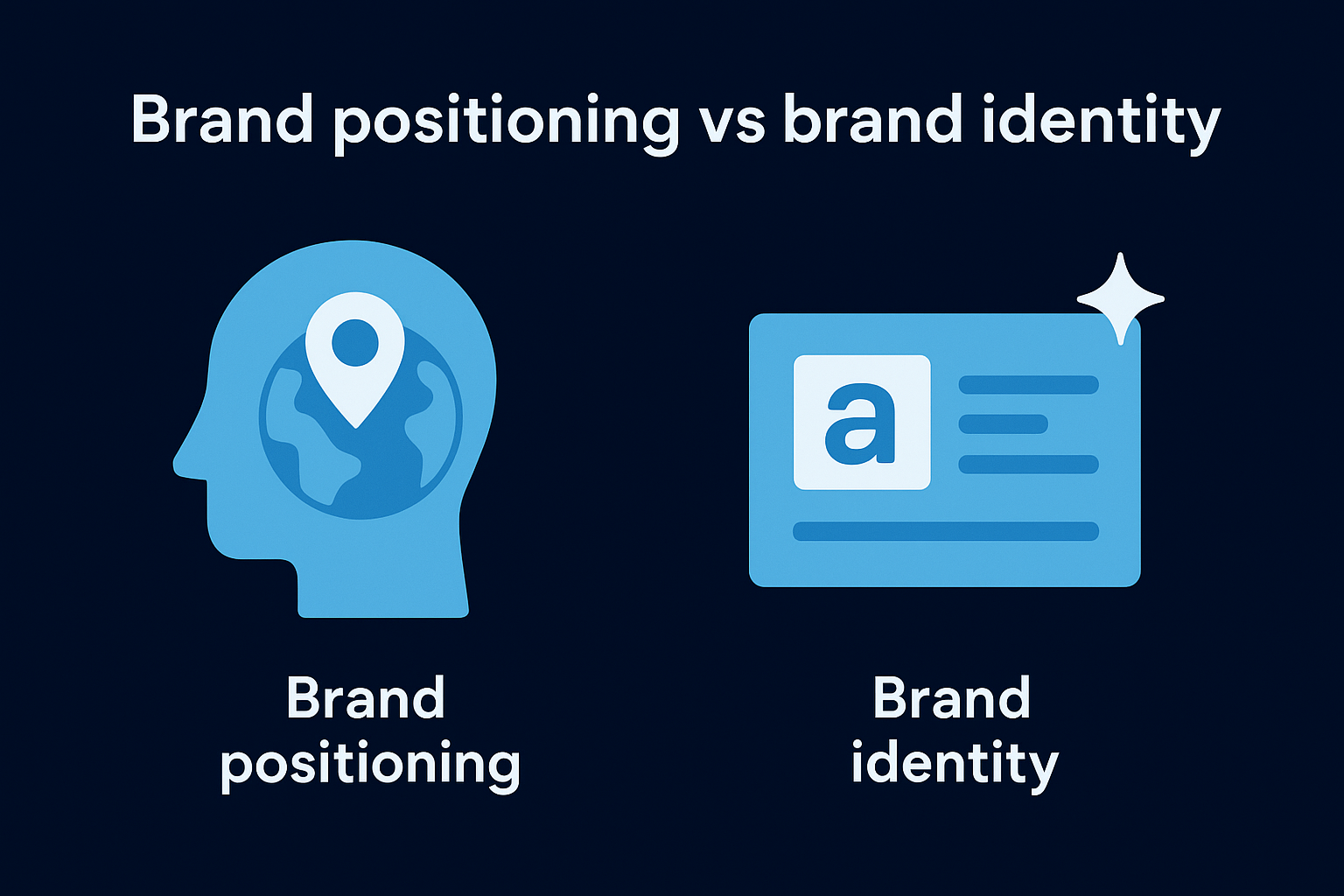
Positioning defines the territory your brand occupies. Identity is how you show up once you're there.
Brand positioning vs value proposition
Your value proposition answers a specific question: what do customers get from your product or service that they can't find elsewhere? It focuses on functional outcomes and tangible benefits. Positioning is broader. It shapes how your audience perceives your brand overall, including the emotional and psychological associations tied to your name, not just the list of deliverables you provide.
These two concepts work together, but they aren't interchangeable. A value proposition can shift as you introduce new products or serve new segments. Your core positioning should remain consistent over time because it builds the mental associations that create long-term brand authority. Think of your value proposition as what you offer and your positioning as who you are in the market. Getting both right means your audience doesn't just buy from you once, they return because they genuinely identify with your brand.
How to write a brand positioning statement
A positioning statement is a single internal reference document that defines exactly where your brand stands in the market. Most people confuse it with a tagline or marketing copy, but it serves a different purpose: it is a strategic anchor your whole team uses to stay aligned. Understanding what is brand positioning at this practical level means compressing your strategy into a few clear sentences that guide every downstream decision, from how you script a short-form video to how your sales team opens a call.
The core formula
Most effective positioning statements follow a simple four-part structure: your target audience, the category you compete in, the primary benefit you deliver, and the reason your audience should believe it. Each element earns its place because removing any one of them creates a gap in your audience's understanding, and they won't fill that gap in your favor.
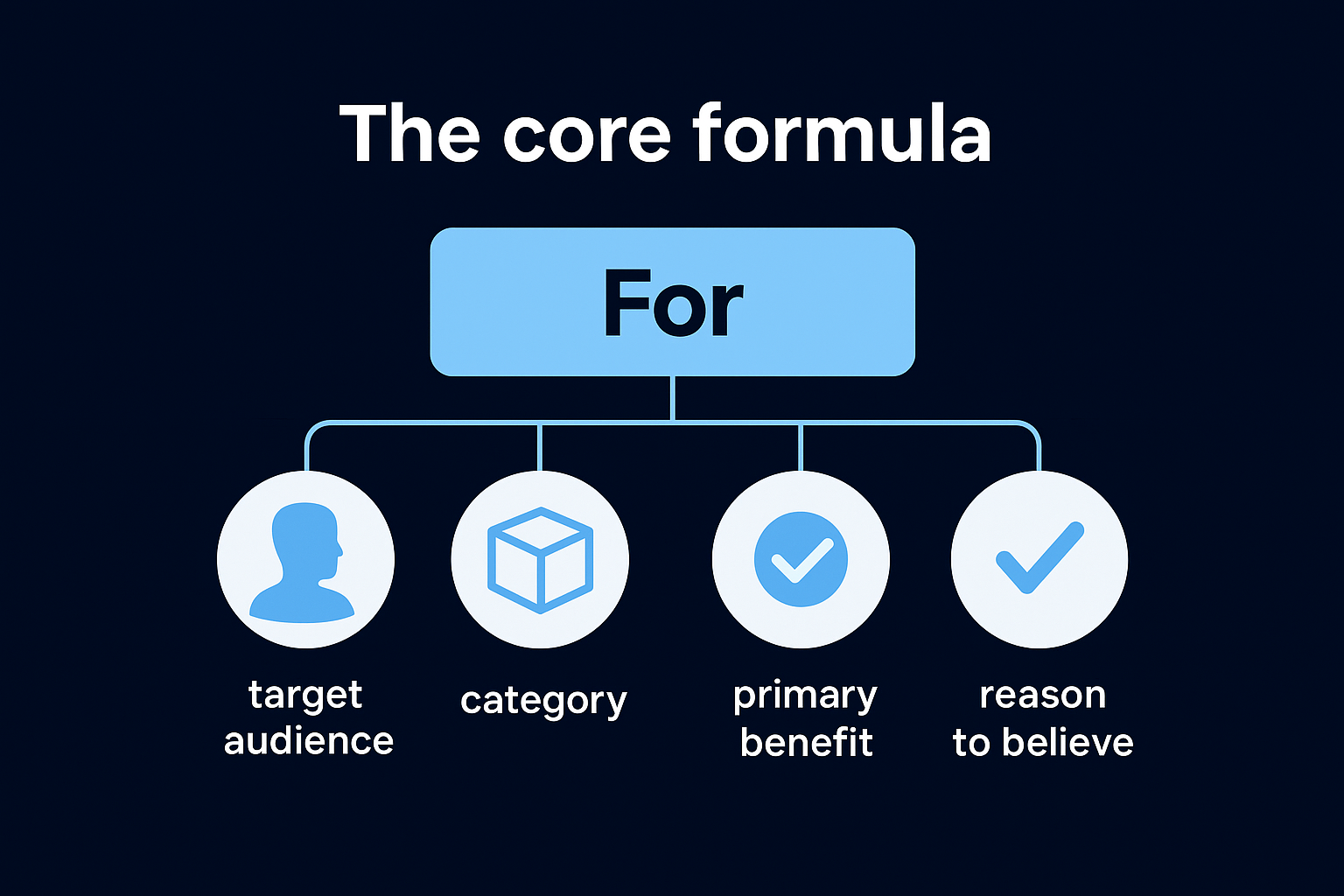
Use this template as a starting point: "For [target audience] who [specific need], [brand name] is the [category] that [primary benefit] because [reason to believe]."
Key questions to answer first
Before you fill in the template, you need honest answers to a few foundational questions. Who is your primary buyer, specifically? What do they care about most when choosing within your category? Where do competitors consistently fall short, and what real gap does your offer fill?
Write something accurate and defensible based on what you actually deliver, not what sounds impressive in a pitch deck. A positioning statement that overpromises creates distrust the moment a customer's experience doesn't match the claim. Keep it specific, keep it grounded, and revisit it any time your product, audience, or competitive landscape shifts in a meaningful way.
How to turn positioning into a real strategy
A positioning statement is only valuable if it connects to real execution. Once you understand what is brand positioning and have your statement written, the next step is translating that strategic anchor into the daily decisions that shape how your audience experiences your brand. Without that connection, positioning stays on paper and never reaches the people you're actually trying to serve.
Apply positioning to your content system
Your positioning should directly inform every content decision you make, from the topics you cover to the hooks you use to open a video. When you write a script, check whether the angle reinforces your defined market position. When you choose a platform, ask whether your target audience actually spends time there. Your content output becomes a strategy the moment each piece traces back to the same positioning foundation rather than trending topics or gut instinct.
Consistent content built on clear positioning is how attention compounds into authority over time.
Use your positioning statement to filter decisions across three areas:
- Topic selection: Only cover subjects that reinforce your defined authority
- Tone and voice: Match the language your target buyer uses, not industry jargon
- Distribution channels: Focus on platforms where your specific audience already lives
Test and refine as you grow
Real-world feedback will tell you things your initial positioning statement cannot predict. Watch which content performs best, which messages drive the most qualified inbound leads, and which objections keep coming up in sales conversations. Those signals are data, and they let you sharpen your positioning without abandoning the core identity you've built.
Treat positioning as a living framework, not a locked document. Markets shift, competitors enter, and your own product evolves with your audience. Revisiting your positioning once or twice a year keeps your strategy relevant without forcing you to start from scratch.
Brand positioning examples you can learn from
Real-world examples make what is brand positioning much easier to apply to your own business. The brands below don't just have good products. They have sharp, deliberate positioning that shapes how their audiences think and feel before they ever read a product description.
Apple: owning simplicity and creative identity
Apple built its position around one clear idea: technology designed for people who create. Their marketing never leads with specs. It leads with what you can do and who you become when you use the product. Every product launch, retail experience, and advertisement reinforces that same identity. The result is a brand that charges a premium and holds fierce loyalty because their positioning tells the right people exactly who they belong to.
Positioning works when your audience sees your brand as an identity they want to carry, not just a product they want to own.
Dollar Shave Club: using contrast as a positioning tool
Dollar Shave Club entered a market dominated by established players and positioned itself as the obvious alternative to overpriced, over-engineered razors. Their entire brand voice, from their launch video to their packaging copy, was built on that single contrast. They didn't try to compete on features. They competed on a completely different set of values: simplicity, humor, and transparency. That clarity attracted a specific buyer who felt ignored by legacy brands.
Patagonia: leading with a belief system
Patagonia positions itself around environmental responsibility first and outdoor gear second. They attract buyers who share that belief system, which means their customers don't just purchase products, they advocate for the brand. Your own positioning can follow the same logic: define what you genuinely stand for, make sure your audience shares that belief, and let the product become the natural next step.
Key takeaways
Brand positioning is the strategic foundation that determines whether your brand grows with purpose or fades into noise. Understanding what is brand positioning means recognizing that it's not a logo or a tagline, it's the deliberate decision about where your brand lives in your audience's mind relative to every competitor you face.
Your positioning statement gives your team a shared anchor that drives every content, messaging, and sales decision you make. Clear positioning makes your content more effective, your messaging more consistent, and your inbound leads more qualified. Every example in this article, from Apple to Patagonia, points to the same truth: brands that win pick a specific position and defend it consistently.
Building that foundation takes real work, but it's the highest-leverage investment you can make in your brand. If you want a team to help you turn your positioning into a content system that generates results, apply to work with SocialRevver and get a free 40+ slide strategy built specifically around your brand.