Most consultants rely on referrals and word-of-mouth to fill their pipeline. It works, until it doesn't. The moment those conversations slow down, so does revenue. That's where personal branding for consultants becomes a real business lever, not just a "nice to have." A strong personal brand creates inbound demand on autopilot, pulling the right clients toward you instead of forcing you to chase them.
But here's the problem: most advice on building a personal brand is vague. "Be authentic." "Post consistently." "Add value." None of that tells you what to actually do on Monday morning. What you need is a system, a repeatable process that turns your expertise into visible authority and that authority into qualified client conversations. That's exactly the kind of content infrastructure we build at SocialRevver: engineered systems that convert attention into revenue.
This guide breaks down the specific steps to build a personal brand that attracts high-value clients. You'll learn how to define your positioning, choose the right platforms, create content that demonstrates expertise, and build trust before the first sales call. No fluff, no platitudes, just a practical framework you can start executing today.
What to set up before you start
Before you build anything, you need a clear picture of where you stand. Jumping into content creation without a foundation is one of the most common mistakes consultants make. Personal branding for consultants isn't just about output; it's about building a system on solid ground. Spending a few hours on setup now saves you months of fixing misdirected effort later.
Audit your current online presence
Search your own name and your firm's name in Google. What shows up? The results you see are what your prospects see when they do their due diligence before hiring you. Look at your LinkedIn profile, any existing website, past articles or interviews, and social media accounts. Take note of what's missing, what's outdated, and what sends the wrong signal.
Your Google search results are your first impression for every cold prospect who finds you. You need to own what they see.
Use this quick checklist to complete your audit:
- LinkedIn profile: Is your headline specific? Does your About section explain who you help and what outcome you deliver?
- Website or portfolio: Does it exist? Does it clearly communicate your niche and include a way to contact you?
- Existing content: Do you have any published articles, podcast appearances, or case studies?
- Online reviews or testimonials: Are there any public endorsements of your work visible to strangers?
Define your brand goals
You need to know what you want your personal brand to do for your business before you start building it. Vague goals produce vague results. Are you trying to attract inbound leads from a specific industry? Build credibility for a speaking career? Position yourself for premium retainer clients? The answer shapes every decision you make, from the platform you prioritize to the content format you choose.
Write down one primary goal in a single sentence. For example: "I want to attract mid-market SaaS founders who need a fractional CFO to prepare for a Series B raise." Specificity at this stage is everything. The more concrete your goal, the easier it becomes to evaluate whether your content and brand choices are actually working.
Build your core digital assets
Two assets matter most before you start publishing content: your LinkedIn profile and a simple personal website. LinkedIn is where most B2B consultants get discovered and vetted. Your website is where you control the full narrative and capture leads on your own terms.
Set these up with the following elements in place:
| Asset | What to include |
|---|---|
| LinkedIn Profile | Specific headline, client-focused About section, featured work samples, clear contact call-to-action |
| Personal Website | One-sentence positioning statement, service overview, social proof or testimonials, contact form |
Know your target client
You cannot build a brand that resonates without a clear picture of who you are building it for. Before writing a single piece of content, identify your ideal client in concrete terms. Think about their role, their industry, their biggest recurring problem, and what they search for when they need outside help.
Write a one-paragraph description of your ideal client and keep it somewhere visible while you work through the steps below. This becomes your filter for every content decision you make. If a content idea doesn't speak directly to that person's goals or frustrations, cut it before you invest time producing it.
Step 1. Choose a narrow, valuable niche
The single fastest way to accelerate personal branding for consultants is to pick a narrow niche and own it completely. Most consultants resist this because it feels like leaving money on the table. In reality, the opposite is true. Specialists command higher fees, attract better-fit clients, and build authority faster than generalists who try to serve everyone. The moment you get specific, your entire brand gets sharper and prospects start self-selecting toward you rather than scrolling past.
Why generalist positioning works against you
When you position yourself as a "business consultant" or "marketing consultant," you blend into a sea of competitors saying the same thing. Prospects searching for help want someone who has solved their exact problem before, not someone who might be able to figure it out. A generalist brand forces you to compete on price because there is no clear reason to choose you over anyone else. You become interchangeable, which is the worst position to be in when your business depends on trust.
The consultant who specializes in reducing churn for B2B SaaS companies at Series A will always win the client over the "growth consultant" who works with anyone.
How to identify your profitable niche
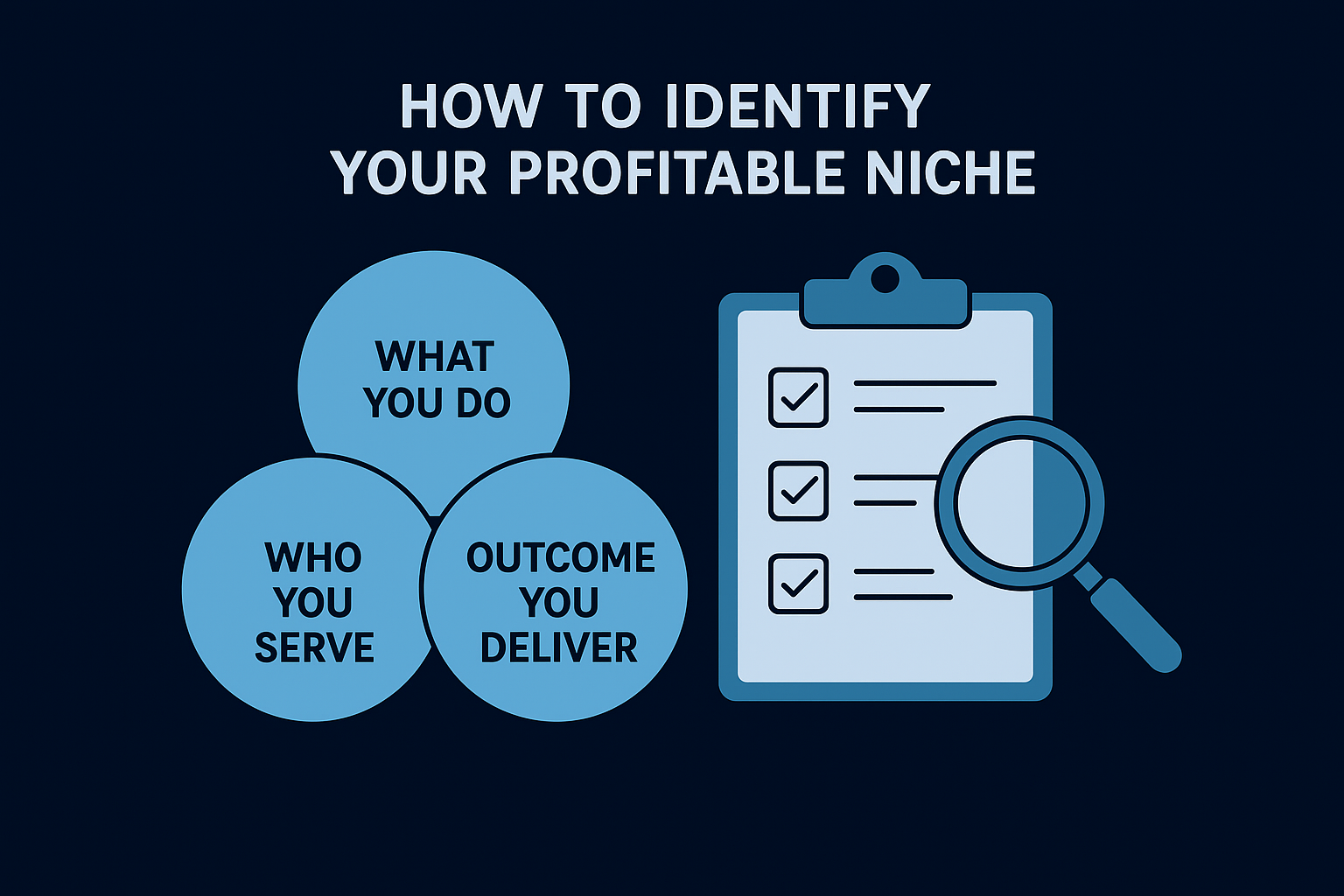
Your niche sits at the intersection of three factors: what you produce real results in, what a specific market pays a premium for, and where you have verifiable experience. Work through these questions before you write another word of content:
- What type of client have you delivered your best work for? Consider industry, company size, and stage of growth.
- What specific problem do you solve? Not a category like "strategy," but a concrete outcome like "cutting operational costs by 20% within 90 days."
- What do clients thank you for most often? That answer tells you where your actual value sits.
Once you have answers, test your niche against this framework:
| Niche Element | Weak Example | Strong Example |
|---|---|---|
| Who you serve | Small businesses | Series A SaaS founders |
| What you do | Marketing help | Email revenue optimization |
| Outcome you deliver | Better results | 30% increase in trial-to-paid conversion |
Combine those three columns into a single sentence and you have the foundation for every positioning and content decision you make going forward. The tighter your niche, the faster your brand builds momentum.
Step 2. Write a positioning statement that converts
Your niche decision only creates value if you communicate it clearly. A positioning statement is the single sentence that tells a prospect exactly who you serve, what you do, and what outcome they get. This is the core of your personal brand. Every profile headline, website intro, and conversation opener should trace back to this sentence. Get it right, and it does the qualifying work for you before the first call ever happens.
A sharp positioning statement makes the right prospects say "that's exactly what I need" and the wrong ones self-select out, which saves you both time.
The anatomy of a strong positioning statement
Most consultants write positioning statements that describe their process instead of the client's outcome. That's the wrong direction. Prospects don't buy your methodology. They buy the result they want. A strong positioning statement has four components: who you serve, the specific problem you solve, the concrete outcome you deliver, and a timeframe or differentiator that makes it credible.

Use this structure as your template:
I help [specific client type] who struggle with [specific problem]
to [concrete outcome] [timeframe or differentiator].
Here is the difference between a weak statement and a strong one:
| Version | Example |
|---|---|
| Weak | I help businesses grow with better marketing strategy. |
| Strong | I help B2B SaaS companies with high churn increase trial-to-paid conversion by 25% within 60 days. |
The strong version works because every element is specific. The prospect can immediately tell whether it describes them.
How to write your own
Pull out the niche work you did in Step 1 and run it through the template above. Write three to five variations, then test each against one question: would your ideal client read this and feel like you built the entire offer just for them? If the answer is yes, that version is your positioning statement.
Once you land on the right version, place it in every high-visibility location: your LinkedIn headline, your website hero section, and your email signature. Consistent repetition across channels is how personal branding for consultants compounds over time. Prospects who see your statement in multiple places start to associate your name with the specific outcome you deliver, which is exactly the kind of recognition that converts to inbound conversations.
Step 3. Build your trust surface area
Your positioning statement tells prospects what you do. Trust surface area is what convinces them that you actually deliver on it. The term refers to the total number of places where a stranger can independently verify your credibility before they ever speak with you. Most consultants have a very small trust surface: a LinkedIn profile and maybe a few past job titles. That's not enough for a high-value client to commit a significant budget. Expanding your trust surface area is one of the highest-leverage moves in personal branding for consultants.
The more places a prospect can independently verify your expertise, the shorter your sales cycle becomes.
Make your past results visible
Many consultants do strong work but never document it publicly. Every project with a measurable outcome is a trust asset you're leaving unused. Start converting your past work into visible proof by writing short case studies that follow a simple structure: the client's situation, the specific action you took, and the measurable result.
Use this case study template as a starting point:
Client Situation: [Industry, company stage, and core problem]
What you did: [Specific steps or deliverables you provided]
Result: [Quantified outcome + timeframe]
Quote: [Optional client line that reinforces the result]
Publish these case studies on your website and LinkedIn Featured section, and reference them in every proposal you send. Even two or three strong case studies will separate you from the majority of consultants who only list credentials and job titles.
Collect and display social proof
Testimonials are trust in written form. The problem is most consultants wait for clients to offer them voluntarily, which rarely happens. You need to ask directly and make it easy for the client to respond. Send a short, specific request within a week of a project ending, when the results are still fresh in their mind.
Here is a proven request template you can send by email:
Hi [Name],

I really enjoyed working together on [project].
Would you be willing to write a short note about the experience?
It would help if you could mention:
- The problem we worked on
- What changed as a result
- Who you would recommend me to

Even two or three sentences works perfectly.
I can draft something for your review if that's easier.

Thanks,
[Your name]
Place the testimonials you collect on your website, LinkedIn profile, and any proposal document you send to new prospects. Each one extends your trust surface and does credibility work for you around the clock.
Step 4. Publish a repeatable short-form system
Consistency is the engine behind personal branding for consultants. One strong post every few months does nothing for your visibility. What builds authority is showing up with relevant content on a predictable schedule, so your target audience starts to associate your name with the specific expertise you want to own. The challenge most consultants face is not knowing what to publish or burning out after two weeks. A repeatable system solves both problems before they derail your progress.
Pick one platform and one format
Before you create anything, choose one platform where your ideal clients already spend time and commit to it fully. For most B2B consultants, that means LinkedIn. Short-form posts under 300 words with a single, clear point drive more visibility per unit of effort than any other format available to consultants right now.
You do not need to be everywhere. You need to be consistently excellent in one place before you think about expanding.
Choose one content format to anchor your calendar: a short lesson, a client result, a contrarian take on your industry, or a personal observation tied to business outcomes. Rotating between formats randomly wastes time and dilutes your brand signal. Lock in one format for 30 days, then evaluate whether it generates engagement from the right people before you add variety.
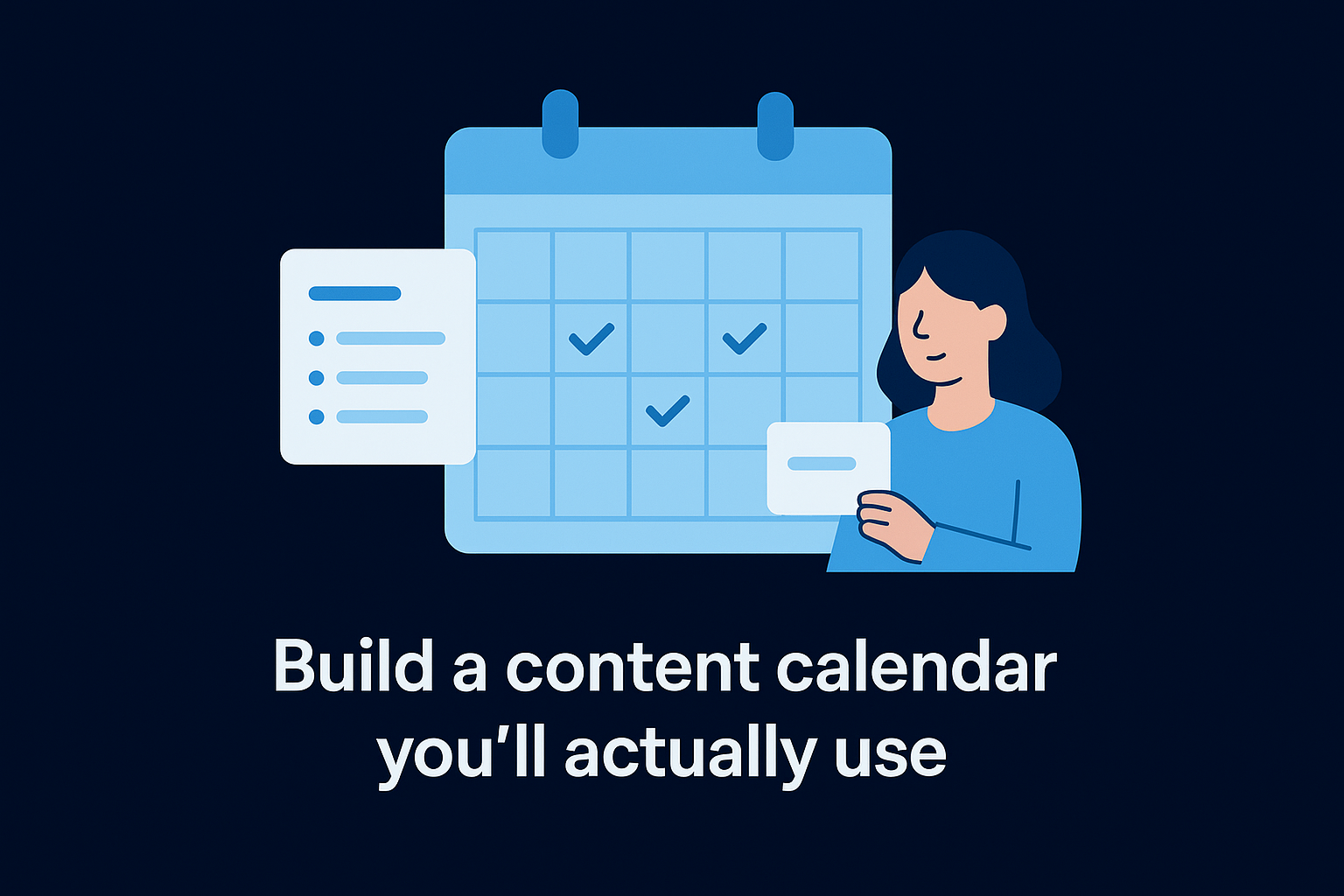
Build a content calendar you'll actually use
A content calendar does not need to be complicated to work. You need a simple repeating structure that removes the weekly decision of what to post. Use the following template as your starting framework:
| Week | Post Type | Core Topic |
|---|---|---|
| Week 1 | Client result or case insight | A measurable outcome you delivered |
| Week 2 | Contrarian take | A common mistake your niche makes |
| Week 3 | Short lesson | One tactic your audience can apply today |
| Week 4 | Personal story tied to expertise | What a recent project taught you |
Repeat this rotation every month and swap in fresh topics as your client work generates new material. Every post should connect directly back to your positioning statement from Step 2. When your content consistently reinforces the same niche and outcome, platform algorithms and human memory both start working in your favor. Your name becomes the answer to a specific question your audience already carries, and that recognition is what turns passive followers into inbound client conversations.
Step 5. Turn content into conversations and clients
Publishing content builds visibility, but visibility alone does not pay your invoices. The final piece of personal branding for consultants is building a system that converts the attention your content generates into actual client conversations. Most consultants post consistently for weeks and then wait passively for inbound messages that never arrive. You need to take deliberate action to close the gap between someone reading your content and that same person booking a call with you.
Move from passive visibility to direct outreach
Every time one of your posts generates meaningful engagement, such as a comment, a share, or a new connection from your target niche, that person has signaled clear interest in your expertise. Do not let that signal go cold. Send a short, direct message within 24 hours that references the specific post they engaged with and opens a genuine conversation rather than launching straight into a pitch.
The window between someone engaging with your content and them being open to a conversation is short. Act on it the same day.
Use this outreach template as your starting point:
Hi [Name],

Thanks for engaging with my post on [topic].

I noticed you're in [their industry or role], and I work with
[your niche] to [your core outcome].

Would a 20-minute call make sense this week?

[Your name]
Keep your message short and specific. A long pitch immediately after first contact pushes people away. Your goal here is to open a conversation, not deliver a full proposal through a LinkedIn message.
Convert inbound interest into booked calls
When prospects reach out to you directly, whether through LinkedIn or your website contact form, your response speed and clarity determine whether the conversation moves forward or dies quietly. Reply within the same business day and include a direct link to your calendar so the friction of scheduling does not kill momentum before it starts.
Write a standard reply template you can send in under two minutes:
Hi [Name],

Great to hear from you. I'd love to learn more about
what you're working on.

Here's a link to book a 20-minute call: [calendar link]

Looking forward to it.

[Your name]
Treat every inbound message as a warm lead, because that is exactly what it is. The combination of sharp positioning, consistent content, and fast follow-up is what closes the loop between your personal brand and your actual revenue.
Keep your brand compounding
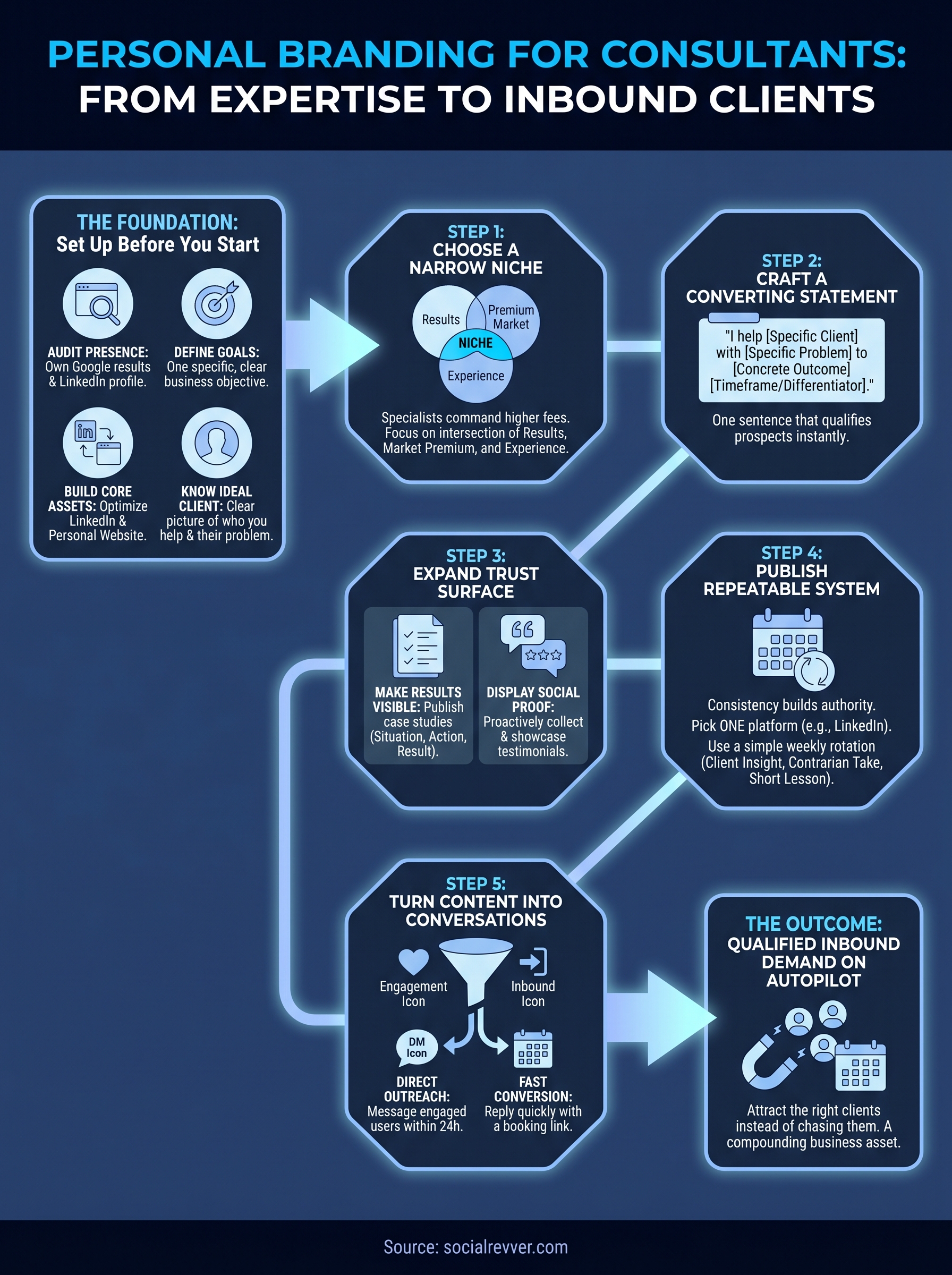
Personal branding for consultants is not a project you finish once and move on from. It is a system you maintain and improve as your expertise deepens. Every post you publish, every case study you add, and every conversation you open from your content adds another layer of credibility to your name. The consultants who build lasting authority treat their brand like a core business asset, reviewing it quarterly and tightening their positioning as their work evolves.
Your next move is to run through the five steps above and find your biggest gap today. Start with that gap, close it, and keep the system running. If you want to accelerate the process with a data-driven content engine built specifically around your niche and voice, apply to work with the SocialRevver team and receive a free 40-slide strategy built for your brand.