
If you're vetting influencer marketing software, you've probably landed on the Fohr influencer platform in your research. It's one of the more established names in the space, built for brands and agencies that need to find creators, run campaigns, and prove the ROI on that spend. But before you request a demo, you want real answers on what it actually does, whether it's worth the investment, and how it holds up against competitors.
This article breaks down exactly that. You'll get a clear picture of Fohr's core features, from creator discovery and campaign management to reporting, plus honest coverage of pricing and what actual users say in reviews. No marketing fluff, just the details you need to decide if it fits your workflow.
We put this together because at SocialRevver, we work daily with the tools and data behind short-form content performance, and we know how much a platform choice affects your results. Whether Fohr ends up on your shortlist or not, you'll walk away knowing exactly what you're evaluating and what questions to ask before you sign a contract.
Why Fohr matters for brands running influencer campaigns
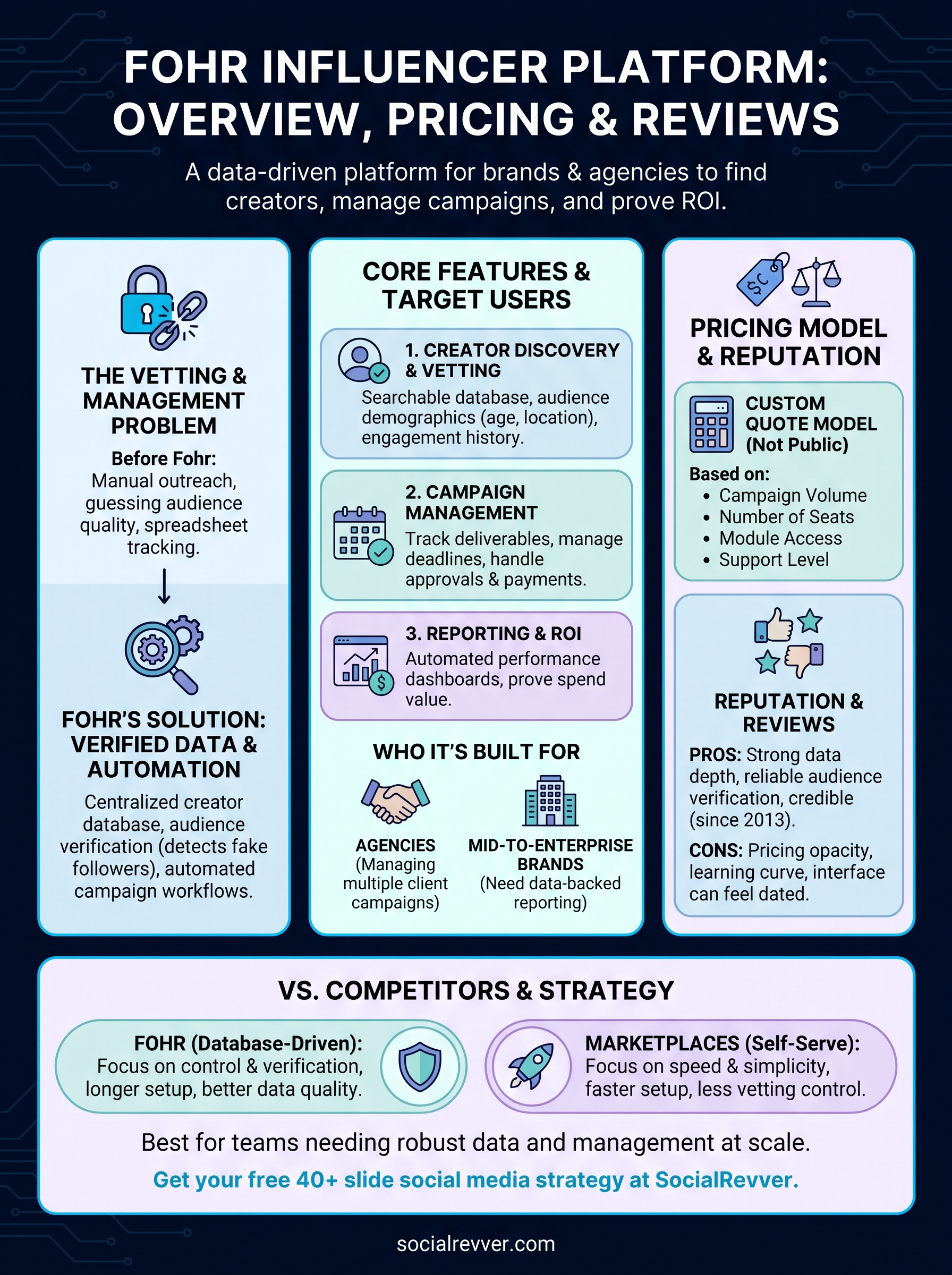
Before platforms like Fohr existed, influencer marketing ran on spreadsheets, DMs, and gut feeling. A marketing manager would scroll Instagram for hours, guess at follower authenticity, and hope a creator's audience actually matched the target demographic. Fohr solves that discovery problem by centralizing creator data, engagement history, and audience demographics in one searchable database, so brands stop guessing and start filtering by real numbers.
The vetting problem Fohr was built to fix
Fake followers and inflated engagement rates have cost brands millions in wasted spend over the past decade. Fohr's audience verification tools flag suspicious follower growth patterns and pull in demographic breakdowns like age, gender, and location for a creator's actual audience, not just their follower count. This matters because a creator with 200,000 followers but a bot-heavy audience is worth less than one with 20,000 highly engaged, relevant followers.
A platform is only as valuable as the fraud it catches before you pay for it.
Who actually relies on Fohr
Agencies managing dozens of client campaigns simultaneously make up a large chunk of Fohr's user base, because the platform lets them run multiple briefs, track deliverables, and pull reports without juggling separate tools for each client. In-house marketing teams at mid-size to enterprise brands use it too, particularly when they need to justify influencer spend to finance or leadership with hard performance data rather than screenshots of likes and comments.
What Fohr changes for campaign management
| Before Fohr | After Fohr |
|---|---|
| Manual creator outreach via email or DMs | Centralized creator database with contact and rate history |
| Guessing at audience quality | Verified demographic and authenticity data |
| Tracking deliverables in spreadsheets | Built-in campaign management with deadlines and approvals |
| Pulling screenshots for ROI reports | Automated performance dashboards |
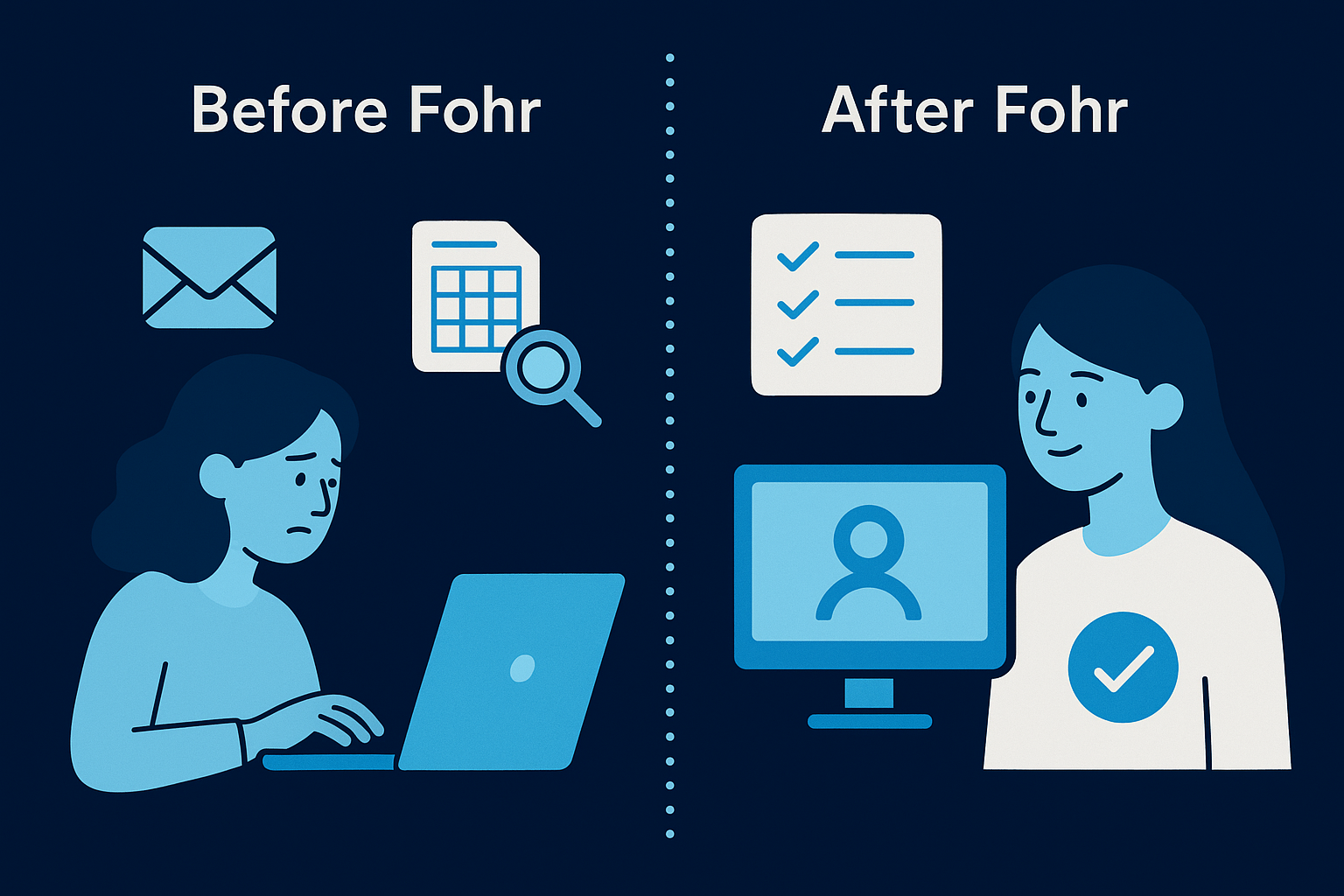
Deadlines slip and creators go quiet mid-campaign more often than most brands admit. Fohr's campaign management layer tracks every deliverable against a timeline, so account managers can see at a glance which creators are on track and which need a follow-up nudge, instead of finding out three days before launch that half the content isn't ready.
Growth-focused founders and brand leaders, the kind of audience that also invests in systems like SocialRevver's short-form content engine, care about this because influencer spend without measurement is just an expensive guess. Fohr gives that spend a paper trail. It won't replace a full content strategy or a production pipeline, but for the specific job of finding, vetting, and managing creator relationships at scale, it removes a lot of the manual friction that used to eat up a marketing team's week.
How to evaluate Fohr for your influencer marketing needs
Picking influencer software isn't about finding the platform with the most features. It's about matching the tool to how your team actually works. Fohr fits certain workflows far better than others, so run through a real evaluation before you sign anything.
Start with your campaign volume
Running one or two campaigns a year? Fohr's depth is probably overkill, and you'd be paying for capacity you won't use. Managing 10+ campaigns across multiple brands or clients simultaneously? That's where the platform's database and reporting tools start paying for themselves. Ask yourself how many creators you're vetting monthly and whether spreadsheets are already breaking down under that load.
Check your team's technical comfort
Some marketing teams want a tool they can hand to a junior coordinator with minimal training. Others have dedicated influencer marketing managers who can dig into demographic filters and custom reporting. Fohr leans toward the latter. If your team is small and non-specialized, factor in onboarding time before you commit budget.
Run a structured trial before committing
Don't take a sales demo at face value. Request trial access or a paid pilot and test it against your real workflow:
- Search for 15-20 creators in your actual niche and check data accuracy against what you know firsthand
- Run one full campaign brief through the platform, from outreach to deliverable tracking
- Pull a performance report and compare it to your current manual reporting process
- Ask your account rep for references from brands in your industry, not just generic testimonials
If a trial doesn't mirror your real campaign conditions, it won't tell you anything useful.
Weigh cost against internal time saved
Calculate what your team currently spends in hours on creator vetting, outreach, and reporting each month. Compare that against Fohr's subscription cost. If the platform's automation doesn't meaningfully cut that time, the investment isn't justified yet, regardless of how polished the interface looks.
Fohr pricing tiers and what each plan includes
Fohr doesn't publish a public pricing page with fixed numbers, which frustrates buyers who want to comparison-shop before talking to a sales rep. Instead, Fohr's pricing structure works on a custom quote model, built around your campaign volume, number of seats, and which modules you need access to. That's common in enterprise influencer software, but it means you can't budget precisely until you've had a sales conversation and shared your actual usage numbers.
What typically drives the quote
Sales reps price Fohr based on a handful of variables rather than a flat subscription fee. Expect these factors to move the number up or down:
- Number of team seats you need logged into the platform simultaneously
- Campaign volume, since agencies running dozens of briefs pay more than a single in-house team
- Access to the creator database versus just campaign management tools
- Reporting and analytics depth, including custom dashboards for client-facing reports
- Onboarding and support level, with dedicated account management costing more than self-serve access
Custom pricing means your real cost depends entirely on how much of the platform you'll actually use.
What's usually included regardless of tier
Across the quotes we've seen discussed by agencies and brand marketers, core access to the creator search database, campaign brief creation, and basic performance reporting tend to be standard even at lower tiers. Higher tiers add things like audience fraud detection at scale, deeper demographic filtering, and API access for teams that want to pull Fohr data into their own dashboards. Support responsiveness also scales with spend, so smaller accounts may wait longer for a resolved ticket than enterprise clients with a dedicated rep.
Budgeting realistically
Mid-size brands running a handful of campaigns a quarter should expect a meaningfully lower quote than agencies managing dozens of client accounts across the year. Before your sales call, calculate your monthly campaign volume and required seats so you're negotiating from data, not guessing at what number sounds reasonable.
Fohr features, reputation, and real user reviews
Beyond creator search, the Fohr influencer platform bundles a full suite most brands actually use: contract management, payment processing, content approval workflows, and a media kit system that lets creators self-report their own stats for faster vetting. Fohr also built its name early through Fohr Card, a media kit tool that predates the full platform, and that history still shapes how the industry views the brand today.
Industry standing
Among agencies and mid-size brand teams, Fohr's reputation leans solidly credible rather than hyped. It's been operating since 2013, which in influencer software is practically ancient, and that longevity buys trust that newer, flashier competitors haven't earned yet. Marketers who've used it describe it as a workhorse platform built for people who run campaigns for a living, not a tool designed to impress in a sales demo.
A decade of uptime says more about reliability than any feature list ever could.
What users actually say
Review patterns across marketing forums and software comparison sites tend to repeat a few consistent themes:
- Praise: strong creator database depth, reliable audience verification, solid customer support for enterprise accounts
- Complaints: pricing opacity, a learning curve for new users, occasional lag in search filters during high-traffic periods
- Neutral notes: interface feels functional rather than modern, better suited to power users than casual marketers
Genuinely negative reviews are rare, but they cluster around cost transparency and onboarding speed rather than core functionality failing to deliver. Smaller teams sometimes report feeling underserved compared to enterprise accounts with dedicated reps.
Overall, the pattern across reviews suggests Fohr earns trust through consistency rather than innovation. If you need a platform that won't surprise you six months into a contract, that consistency counts for something most flashier tools can't match.
How Fohr compares to other influencer platforms
No influencer platform is the right fit for every team, and comparing Fohr to alternatives only makes sense once you know what category you're shopping in. Broadly, competitors split into three buckets: enterprise database tools like Fohr, self-serve marketplaces built for smaller budgets, and creator-first apps that skip campaign management entirely in favor of quick matchmaking.
Database depth versus marketplace speed
Marketplace platforms let you post a campaign and wait for creators to apply, which is faster to set up but gives you less control over vetting. Fohr flips that model: you search first, verify audience data, then reach out directly. That approach takes longer upfront but cuts down on the mismatched partnerships that marketplaces tend to produce when creators self-select into campaigns that don't fit their actual audience.
Speed without vetting just moves the guesswork further down the funnel.
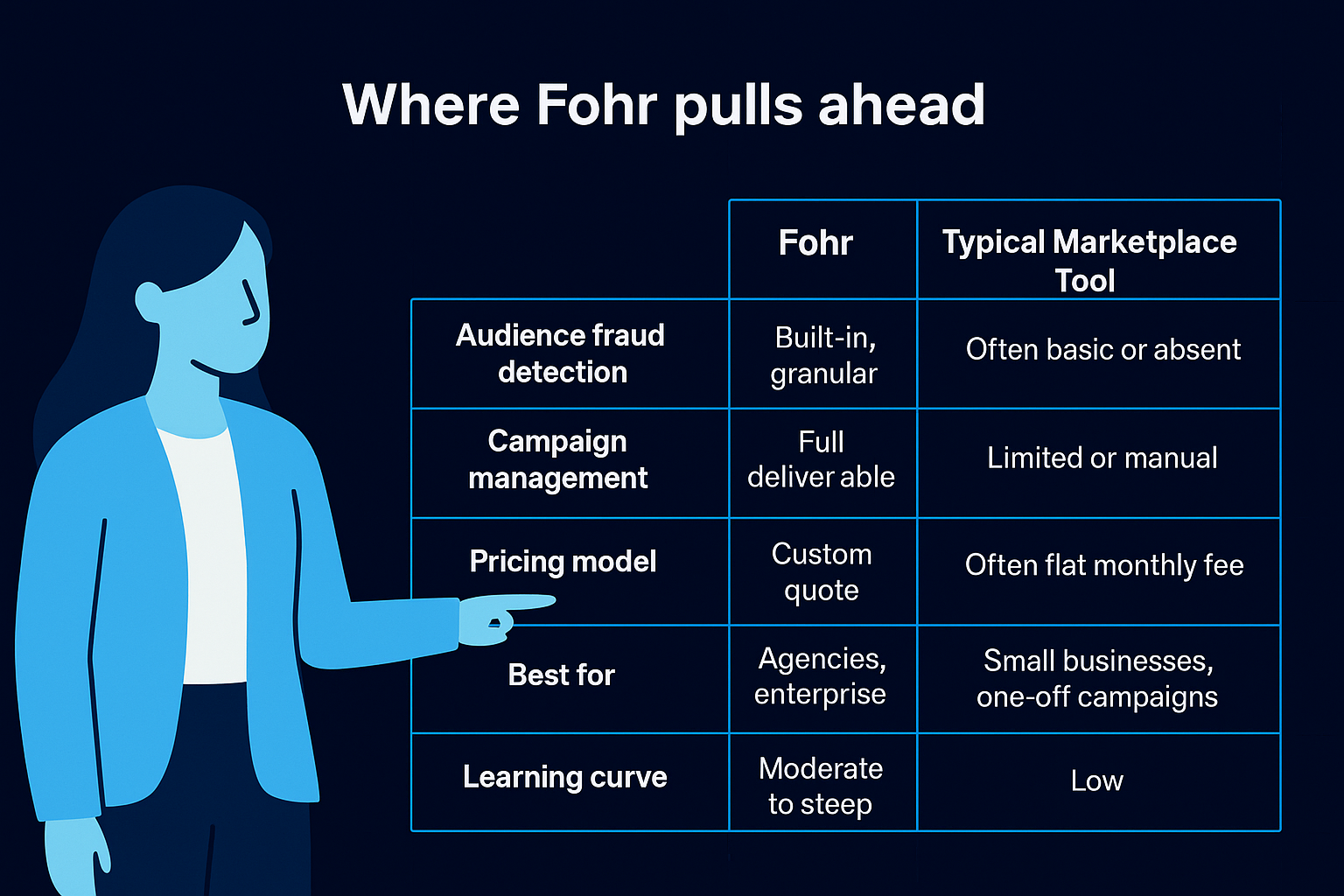
Where Fohr pulls ahead
| Factor | Fohr | Typical Marketplace Tool |
|---|---|---|
| Audience fraud detection | Built-in, granular | Often basic or absent |
| Campaign management | Full deliverable tracking | Limited or manual |
| Pricing model | Custom quote | Often flat monthly fee |
| Best for | Agencies, enterprise brands | Small businesses, one-off campaigns |
| Learning curve | Moderate to steep | Low |
Where competitors win instead
Smaller marketplace tools often beat Fohr on price transparency and speed to first campaign, which matters if you're testing influencer marketing for the first time without a dedicated manager running point. Newer platforms also tend to ship flashier interfaces and faster onboarding, since they're building for volume rather than depth.
Ultimately, the choice comes down to whether you're optimizing for control and verification or speed and simplicity. Fohr rewards teams willing to invest time in setup with better long-term data quality, while lighter tools serve brands that need to move fast and can tolerate more manual vetting on the back end.
Where Fohr fits in your influencer strategy
Fohr earns its reputation for a reason. It solves the vetting and campaign management problems that used to eat up entire marketing weeks, and it does so with data most brands never had access to before. If your team runs enough campaigns to justify the learning curve and custom pricing, Fohr belongs on your shortlist. If you're just starting out or need something lighter, one of the marketplace alternatives might serve you better right now.
Either way, remember that finding creators is only half the equation. The other half is having a content system that turns that visibility into actual revenue instead of vanity metrics. That's where most influencer strategies quietly stall out, no matter how good the platform is.
If you want a clear plan for converting attention into leads and customers, get your free 40+ slide social media strategy from our team before you finalize your next platform decision.