
You keep hearing brand positioning vs brand identity thrown around in the same breath, and most explanations blur the two together instead of drawing a real line. That confusion costs you strategy time. If your logo, colors, and tone are locked in but your revenue still stalls, or your messaging is sharp but your visuals feel generic, you're likely mixing up a strategic decision with a design output.
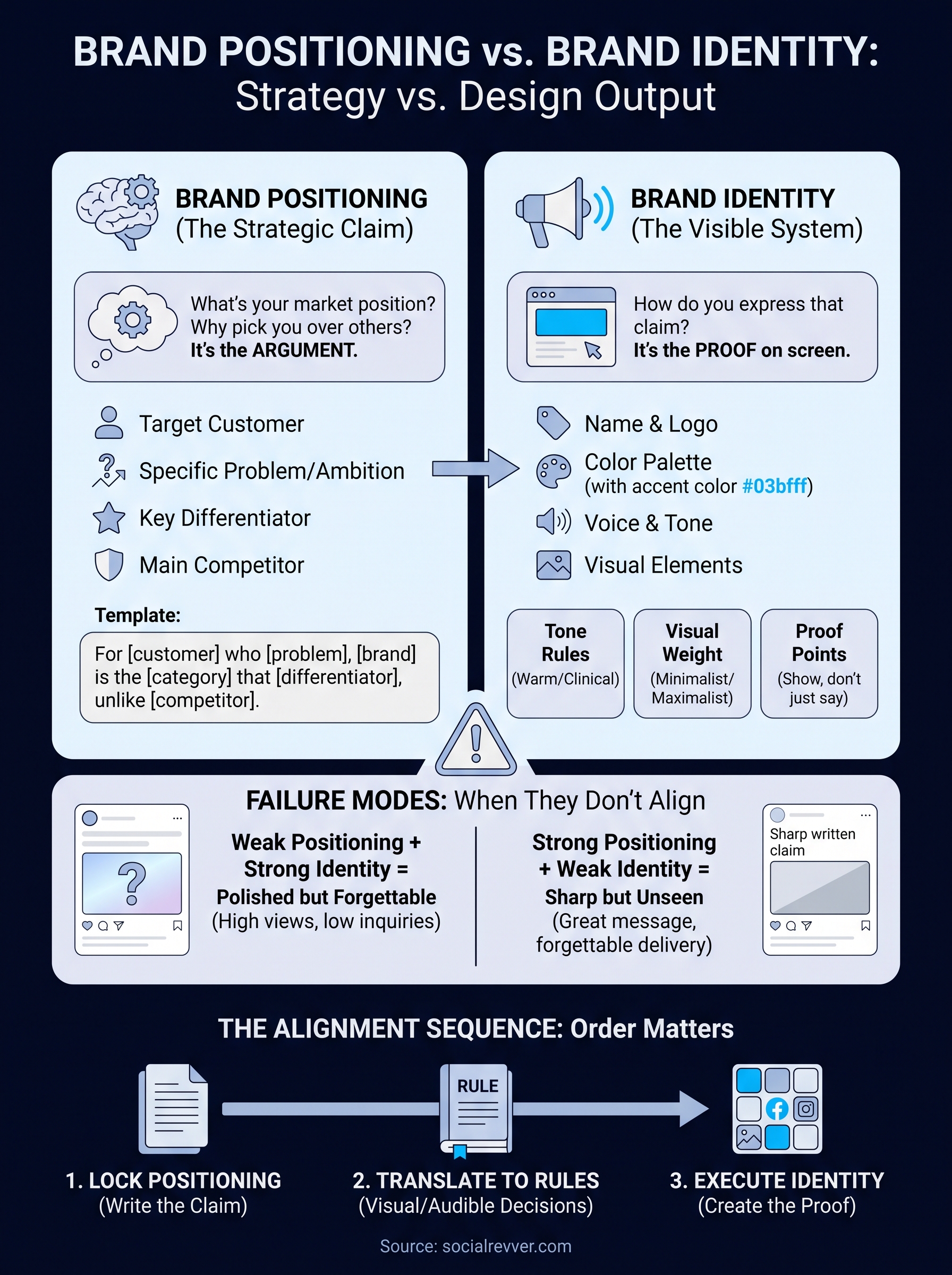
Here's the direct answer: brand positioning is the strategic claim you make about where you sit in the market and why customers should pick you over the next option. Brand identity is the visible system, your name, logo, color palette, and voice, that expresses that claim. Positioning is the argument. Identity is the proof you show on screen.
This article breaks down how each concept works on its own, where they overlap, and why founders and creators trying to build real authority need both dialed in before scaling content. We'll cover the practical differences, how they feed into each other, and what happens when one is strong and the other is weak, something we see constantly when auditing accounts before building out a content system.
Why confusing the two costs you growth
Most founders treat this as an academic distinction until they watch a rebrand fail. You spend six figures on a new logo, a slick color palette, and a polished voice guide, then wonder why leads still aren't converting. The problem usually isn't the design work. It's that nobody made the strategic decision the design was supposed to express. When you confuse brand positioning vs brand identity, you end up polishing the wrong layer while the actual growth lever sits untouched.
Skipping the strategic decision entirely
Teams jump straight to visuals because visuals feel productive. A new deck, a new Instagram grid, a new tagline someone workshopped over a weekend, all of that is tangible and easy to approve. Positioning work, by contrast, requires hard conversations about who you're not serving, what you're willing to lose, and why a prospect should pick you over a competitor with a bigger budget. Skip that conversation and your identity becomes decoration with nothing underneath it. Your content might look expensive and still say nothing memorable, because there was never a claim to communicate in the first place.
Customers can't explain why they chose you
Watch what happens when you ask a client why they hired you instead of a competitor. If the answer is vague, something like "they seemed professional" or "I liked their vibe," your positioning isn't doing its job, no matter how sharp your visual system looks. Strong positioning gives customers language they can repeat to other people. Weak positioning leaves them relying on generic praise that could describe anyone in your category.
If your best customers can't explain why they chose you over a competitor, your positioning isn't working, no matter how good your logo looks.
This matters more for founders and creators building authority through content, because short-form video multiplies whatever confusion already exists. A single inconsistent post is forgettable. A hundred posts built on the same fuzzy positioning is a pattern your audience picks up on, even if they can't name it.
The two failure modes look different
Weak positioning and weak identity produce distinct symptoms, and diagnosing the wrong one wastes budget on the wrong fix.
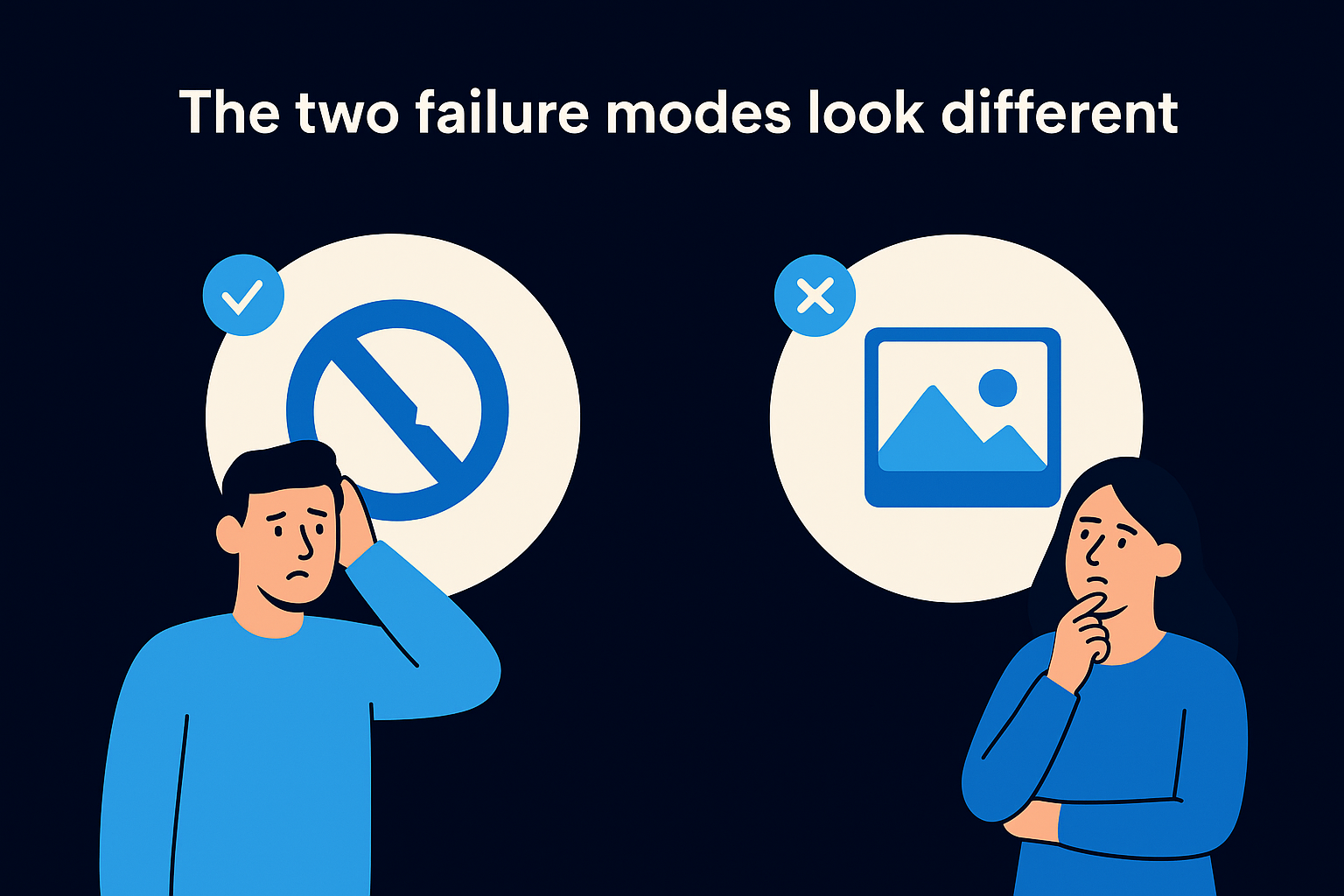
| Symptom | Root cause | Wrong fix people try |
|---|---|---|
| High views, low inquiries | Weak positioning, message doesn't create urgency | Redesigning the logo or feed |
| Polished content, no recognition | Weak identity, execution doesn't match the strategy | Writing a new tagline |
| Sounds like every competitor | Weak positioning, no differentiated claim | Hiring a new videographer |
| Great message, forgettable delivery | Weak identity, inconsistent visuals and tone | Rewriting the mission statement |
Running the wrong fix doesn't just waste money, it buys you time you don't have. Every month you spend perfecting visuals on top of a shaky strategic claim is a month your competitor spends locking down the exact market position you should have owned first. Content compounds, for better or worse. Post consistently against a weak positioning and you're building recognition for a message nobody remembers wanting.
How to align your positioning and identity
Alignment isn't a values exercise or a mood board session, it's a sequencing problem. Positioning has to exist first as a written claim, and identity has to translate that claim into something a customer can see, hear, and repeat back. Skip the order and you're designing toward a target that was never set.
Lock the positioning statement before touching design
Write the positioning down in one sentence before you brief a designer or editor on anything else. Use a simple positioning template and force your team to fill in every blank, not just the parts that feel comfortable.
For [target customer]
who [specific problem or ambition],
[brand name] is the [category]
that [key differentiator],
unlike [main competitor or default option].
Anyone still guessing at your differentiator after reading that sentence hasn't finished the strategy work, no matter how confident the pitch sounded in the boardroom.
Translate the claim into visible and audible rules
Once the sentence is locked, break it into rules your creative team can actually apply, not abstract adjectives like "bold" or "premium." Convert language into decisions your editors can follow without asking you every time:
- Tone: does your differentiator sound clinical, blunt, warm, or technical? Write three sample sentences in that voice as a reference.
- Visual weight: does the claim demand minimalism or maximalism? Pick one, not both, and apply it everywhere.
- Proof points: what does the identity need to show, not just say, to back up the claim on screen?
Identity should read like proof of a claim, not decoration around an empty one.
Audit existing content against the statement
Pull your last twenty posts and check each one against the positioning sentence, line by line. Anything that could belong to a competitor's feed without editing gets flagged and rebuilt. This audit step is the fastest way to catch drift before it compounds across another quarter of content, and it's the same first move we run before building a client's content system from scratch.
Positioning vs identity in real brand examples
Abstract definitions only click once you see them applied. Look at how two competitors in the same category make completely different strategic claims, then dress those claims in completely different visual systems. The pattern repeats across every industry, and once you spot it, you'll never confuse the two concepts again.
Two rivals, two different claims
Apple and Dell both sell computers, but their positioning statements point in opposite directions. Apple claims simplicity for creative professionals who want tools that disappear into the work. Dell claims configurable performance for buyers who want control over specs and price. Each identity system exists to prove its own claim, not a generic version of "quality."
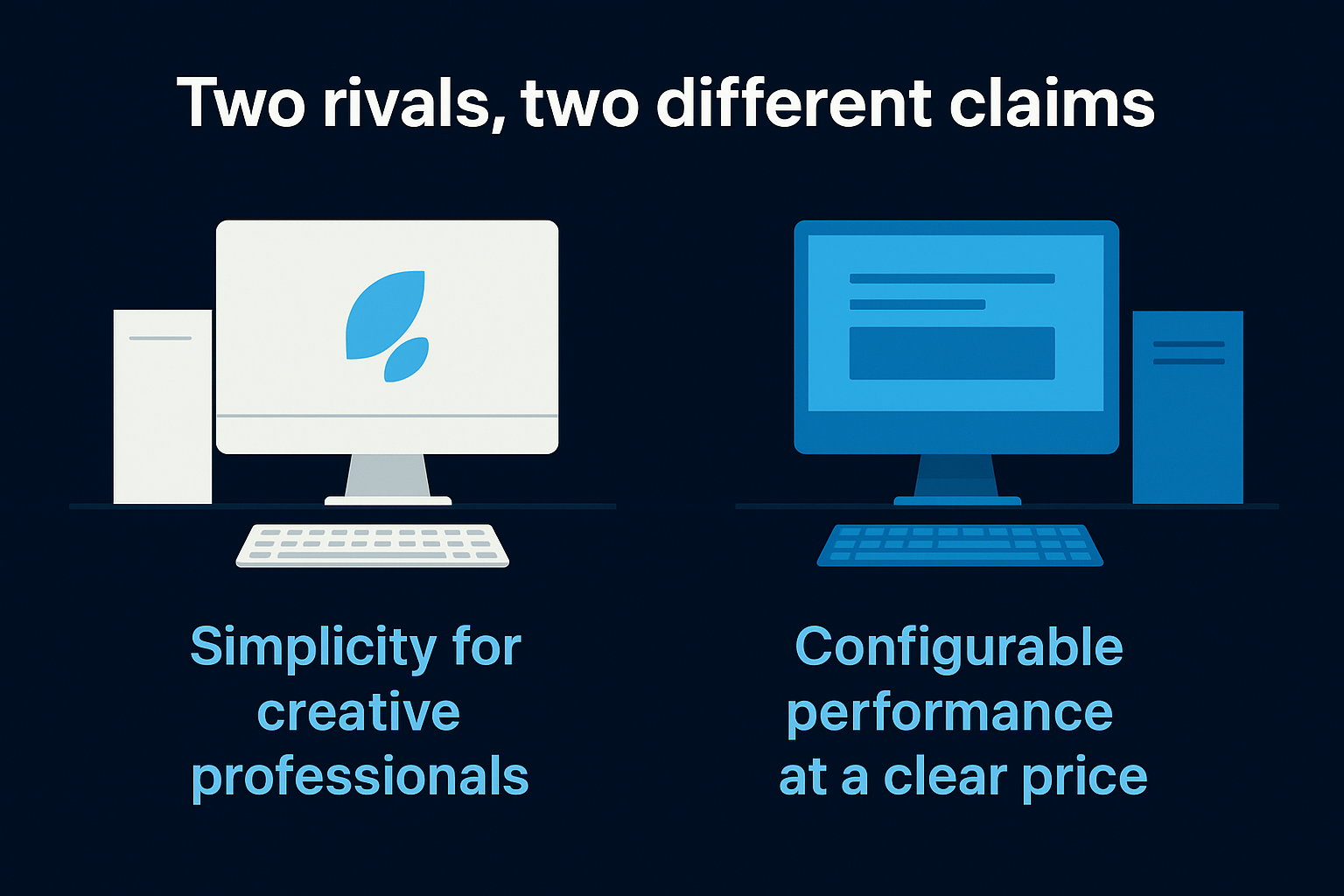
| Brand | Positioning claim | Identity signals |
|---|---|---|
| Apple | Simplicity for creative professionals | Minimal packaging, white space, restrained typography |
| Dell | Configurable performance at a clear price | Spec-heavy pages, blue palette, technical language |
| Nike | Performance for athletes who push limits | Bold motion graphics, athlete imagery, direct copy |
When identity outgrows the strategy behind it
Tropicana's 2009 packaging overhaul is the textbook case of identity without positioning support. The new design was cleaner and more modern, but it dropped the visual cues that told shoppers this was the same trusted orange juice they'd bought for years. Sales dropped roughly 20% in weeks, and the company reverted the design. Nothing about the underlying claim, quality orange juice for families, had changed. Only the proof of it had, and shoppers stopped recognizing it on the shelf.
A brand can look completely different and still say nothing new, which is exactly why identity changes without positioning changes so often backfire.
When the claim has no visible proof
The reverse failure shows up constantly with founders scaling short-form content. The script nails a sharp differentiator, but the visual execution looks like every other talking-head video in the niche. Viewers hear a claim worth remembering, then watch a delivery that gives them nothing to recognize on the next scroll. The message and the proof have to travel together, or neither one sticks.
Common mistakes that blur the two concepts
Most teams don't confuse brand positioning vs brand identity on purpose. They fall into the same handful of traps repeatedly, usually because nobody assigned ownership of the strategic decision before the creative work started. Spotting these mistakes early saves you from rebuilding a content system around a claim that was never actually made.
Treating a tagline as a strategy
A catchy tagline feels like positioning because it's memorable, but a phrase isn't a strategic claim unless it names a specific customer, a specific problem, and a reason you win against a named alternative. Naming the feeling you want customers to have isn't the same as naming why they should choose you. Taglines without substance get workshopped for weeks and still leave a sales team improvising an answer when a prospect asks the obvious question.
Copying a competitor's visual system
Founders often assume that looking premium means looking like the market leader. So they copy the color palette, the pacing, the caption style, everything except the one thing that would actually differentiate them: a distinct claim. Visual mimicry without a distinct position just makes you the second-best version of someone else's brand, and audiences notice the resemblance faster than you think.
Copying a competitor's look without copying their strategy just makes you a worse version of them.
Letting preference override strategy
Decision-makers frequently pick fonts, colors, and video pacing based on personal taste rather than what the positioning actually requires. A founder who loves minimalism will push for it even when the claim demands bold, loud, maximalist proof. Personal preference feels like a safe default because it's fast to decide, but it disconnects the identity from the argument it's supposed to make.
A quick self-check catches most of these before they cost you a quarter of content:
- Can you name the customer, problem, and competitor your positioning statement addresses?
- Does every visual choice trace back to that statement, or to someone's personal taste?
- Would a stranger scrolling your feed repeat your differentiator back to you accurately?
Turning strategy into a brand people remember
Get this straight and everything downstream gets easier. Positioning is the claim, the reason someone should pick you over every other option in your category. Identity is the proof, the name, visuals, and voice that make that claim visible on a screen. Neither one fixes the other. A sharp claim wrapped in generic visuals gets scrolled past, and a polished identity with no claim behind it gets forgotten the moment the video ends.
Founders who scale content without locking this order first end up rebuilding their entire system a year in, after they've already spent the budget on the wrong layer. Skip that mistake. Write the positioning sentence, translate it into rules your team can execute, and audit your content against it before you post another video.
If you want a team that builds that system for you instead of guessing at it, apply for a free 40+ slide social media strategy and see exactly where your positioning and identity currently stand.